






In India, it’s important to know the GST state codes for businesses to stay compliant and operate smoothly. These codes are unique to each state and Union Territory and play an important role in GST processes. In this blog, we’ll break down what GST state codes are, how they work, where they’re used, and why they’re important for businesses.
| Generate GST e-Invoice Instantly in TallyPrime | GST Codes: What are the SAC and HSN Code List? |
What are GST State Codes?
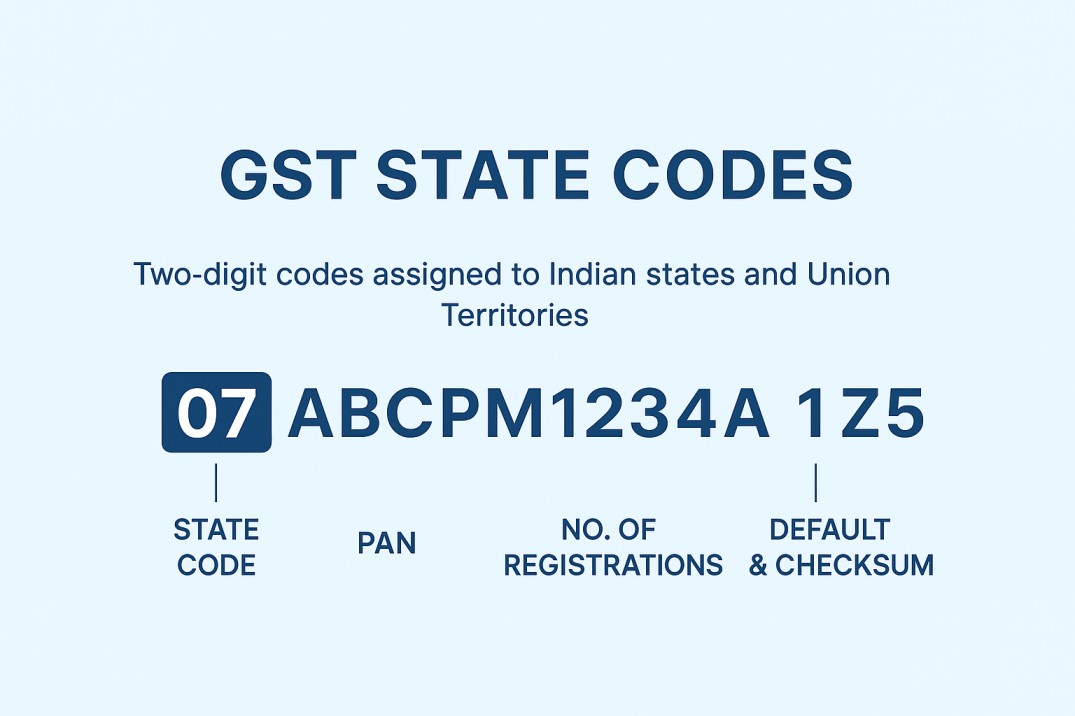
GST state codes are two-digit numbers that are assigned to every state and Union Territory in India. These codes are part of the 15-digit GSTIN (Goods and Services Tax Identification Number) that every registered taxpayer receives. The first 2 digits of the GSTIN indicate the state where the business is registered; then the 10-digit PAN number; 1 digit signifying the number of registrations; and 2 digits having default and checksum values.
GST State Code List of India
Thus, it is important for businesses to know about the GST state code list, which forms the first 2 digits of the GSTIN. This state code list under GST is prescribed as per the Indian Census of 2011 and is as follows:
|
State |
State code list under GST |
|
Jammu & Kashmir |
01 |
|
Himachal Pradesh |
02 |
|
Punjab |
03 |
|
Chandigarh |
04 |
|
Uttarakhand |
05 |
|
Haryana |
06 |
|
Delhi |
07 |
|
Rajasthan |
08 |
|
Uttar Pradesh |
09 |
|
Bihar |
10 |
|
Sikkim |
11 |
|
Arunachal Pradesh |
12 |
|
Nagaland |
13 |
|
Manipur |
14 |
|
Mizoram |
15 |
|
Tripura |
16 |
|
Meghalaya |
17 |
|
Assam |
18 |
|
West Bengal |
19 |
| Jharkhand | 20 |
| Odisha | 21 |
| Chhattisgarh | 22 |
| Madhya Pradesh | 23 |
|
Gujarat |
24 |
|
Daman & Diu |
25 |
|
Dadra & Nagar Haveli |
26 |
| Maharashtra | 27 |
|
Andra Pradesh (Old) |
28 |
|
Karnataka |
29 |
|
Goa |
30 |
|
Lakshadweep |
31 |
| Kerala | 32 |
|
Tamil Nadu |
33 |
|
Puducherry |
34 |
|
Andaman & Nicobar Islands |
35 |
|
Telangana |
36 |
| Andhra Pradesh | 37 |
| Ladakh | 38 |
| Other Territory | 97 |
| Centre Jurisdiction | 99 |
Examples of GST State Code List for India
Objective of GST State Code
GST State Code shows which State or Union Territory a business is registered in under GST. This helps both the business and the tax department decide whether CGST, SGST or IGST applies on a transaction.
It also ensures the correct sharing of tax revenue between the Centre and the respective State, since GST collected must be properly allocated to the right government. By using the code, the system can easily identify whether a supply is intra-state (attracting CGST + SGST) or inter-state (attracting IGST).
The State Code is also built into the GSTIN structure, where the first two digits of every GSTIN represent the GST State Code. This coding system makes compliance smoother and reduces reporting effort, as authorities can efficiently track registrations, returns and audits based on the business’s location.
How are GST State Codes Used?
GST state codes are important for several key processes:
- GST Registration: When registering for GST, you need to provide the correct state code to ensure the right location and district are recorded.
- Invoice Generation: The state code helps determine the tax liability during invoicing.
- Filing GST Returns: The state code in your GSTIN lets authorities know where your business needs to file returns, making compliance easier.
What is GST jurisdiction?
GST jurisdiction refers to the specific area a GST officer or tax authority is responsible for. It decides which tax authorities will handle the assessment, auditing, and collection of GST from businesses operating in that region.
Why is GST Jurisdiction Important?
Knowing the correct jurisdiction tells you exactly which department to approach for registration amendments, cancellation, clarifications, and dispute resolution, avoiding run‑around between multiple offices.
It also decides which authority can issue notices, conduct audits, and pass assessment orders in your case so there is no overlap or double action from different wings of the department. If you need help or have questions about your taxes, knowing your jurisdiction helps you connect with the right tax authorities. And most importantly your GST returns need to align with your jurisdiction's rules to avoid delays or errors.
How is GST jurisdiction classified?
There are two main types of GST jurisdictions:
Central Jurisdiction: This covers transactions between different states or union territories. For example, a manufacturer in Maharashtra selling to a retailer in Uttar Pradesh would fall under Central Jurisdiction, with Integrated GST (IGST) applied.
State Jurisdiction: This applies to transactions within the same state. A restaurant in Kerala serving only local customers would be subject to State GST (SGST) and would interact with Kerala's tax authorities.
How to Find Your GST Jurisdiction
To figure out your GST jurisdiction, you can:
- Check your GST registration certificate.
- Visit the CBIC portal and use the “know your jurisdiction” feature.
- Check your state’s commercial tax website for more information.
Understanding GST state codes and jurisdictions is important for businesses working within India’s tax system. These codes help businesses comply with GST regulations and make operations more efficient. By getting familiar with GST state codes and knowing your jurisdiction, you can stay on top of your tax responsibilities with ease.
How to Correct a Wrongly Informed GST Jurisdiction?
To modify a wrongly allocated jurisdiction for GST requires amendments to core fields of GST on the GST portal or submission of a request for officer reassignment or revised via Form REG-14 or REG-06. This adequately allows control over tax authorities to avoid compliance problems like non-matching of returns and penalties.
Steps to Change GST Jurisdiction
(updated on 10-June-2026)
Log into gst.gov.in > go to Services > Registration > Amendment of Registration Core Fields, select jurisdiction details, upload proofs like address documents, and submit for approval—usually within 15-30 days. Contact your jurisdictional officer via the portal if needed for reassignment.
Conclusion
To sum up, having a clear understanding of GST state codes and jurisdictions is essential for businesses to stay compliant and ensure efficient tax management. These codes are vital for GST registration, invoicing, return filing, and determining the correct jurisdiction. Using the right GST state code minimizes errors, prevents tax mismatches, and reduces the risk of compliance issues. By regularly referring to the official GST State Code List and verifying jurisdiction details during registration, businesses can simplify their GST operations and avoid potential legal challenges.
Read More on GST Rates & Charges
GST Rates, GST Rate Finder, GST Rate on Labour Charges, HSN Codes, SAC Codes
GST
GST Software, GST Calculator, GST on Freight, GST on Ecommerce, GST Impact on TCS, GST Impact on TDS, GST Exempted Goods & Services, Reverse Charge Mechanism in GST, GST Declaration, GST Compliance, GST Record Keeping
Types of GST
CGST, SGST, IGST, UTGST, Difference between CGST, SGST & IGST
GST Returns
GST Returns, Types of GST Returns, New GST Returns & Forms, Sahaj GST Returns, Sugam GST Returns, GSTR 1, GSTR 2, GSTR 3B, GSTR 4, GSTR 5, GSTR 5A, GSTR 6, GSTR 7, GSTR 8, GSTR 9, GSTR 10, GSTR 11