






Introduction
Goods and Services Tax is a comprehensive tax levied on the supply of goods and services across India. GST is a destination-based consumption tax, and the taxable event supplies as against the existing taxable events of sale, manufacture or provision of service.
Background
The federal structure of India has resulted in indirect taxes being administered by both the Centre and State. The lack of the facility to utilize credits across these two entities had resulted in the cascading of taxes across the supply chain and across state borders. In addition, the burden of compliance had also increased due to the involvement of multiple agencies. It was in keeping with this sentiment, that GST was conceived, wherein it strives to address these concerns by driving uniformity across India through a single tax and ensuring an unrestricted flow of tax credit.
GST Regime – Some salient features
Some of the salient features of the GST regime are:
-
Dual GST
In consideration of the federal structure of India, Dual GST has been chosen as the apt model wherein tax would be jointly levied by both Centre and the states on the supply of goods and services. -
Components of GST
-
Levy of GST
On intrastate transactions, CGST + SGST will be applicable and on interstate transactions & Imports, IGST will be applicable. -
Taxes subsumed under GST
Central Excise, Service Tax, CST, VAT, Entertainment Tax, Luxury Tax, Octroi, Entry Tax and Purchase Tax. -
Taxes not subsumed under GST
Basic Customs Duty, Stamp Duty, Property Tax and Toll Tax. -
Items exempt from GST
Petrol / Diesel / Aviation fuel / Natural Gas, Electricity
GST Rates
The GST rates in India have been determined as follows:
- Exempt – 0%
- Precious Stones – 0.25%
- Gold – 3%
- Merit Rates – 5%
- Standard Rates – 12% & 18%
- Demerit Rates – 28%
- Compensation Cess – levied over and above the demerit rates
GST Registration
Under the GST regime, the registration threshold is INR 10 Lakh for special category states (Arunachal Pradesh, Assam, Jammu and Kashmir, Manipur, Meghalaya, Mizoram, Nagaland, Sikkim, Tripura, Himachal Pradesh and Uttarakhand) and INR 20 Lakh for Rest of India. Small dealers with turnover below INR.
With the recent changes, the threshold for registration is increased to 20 lakhs for special category states and 40 lakhs for rest of India. However, states are free to opt for a new threshold or retain the old threshold.
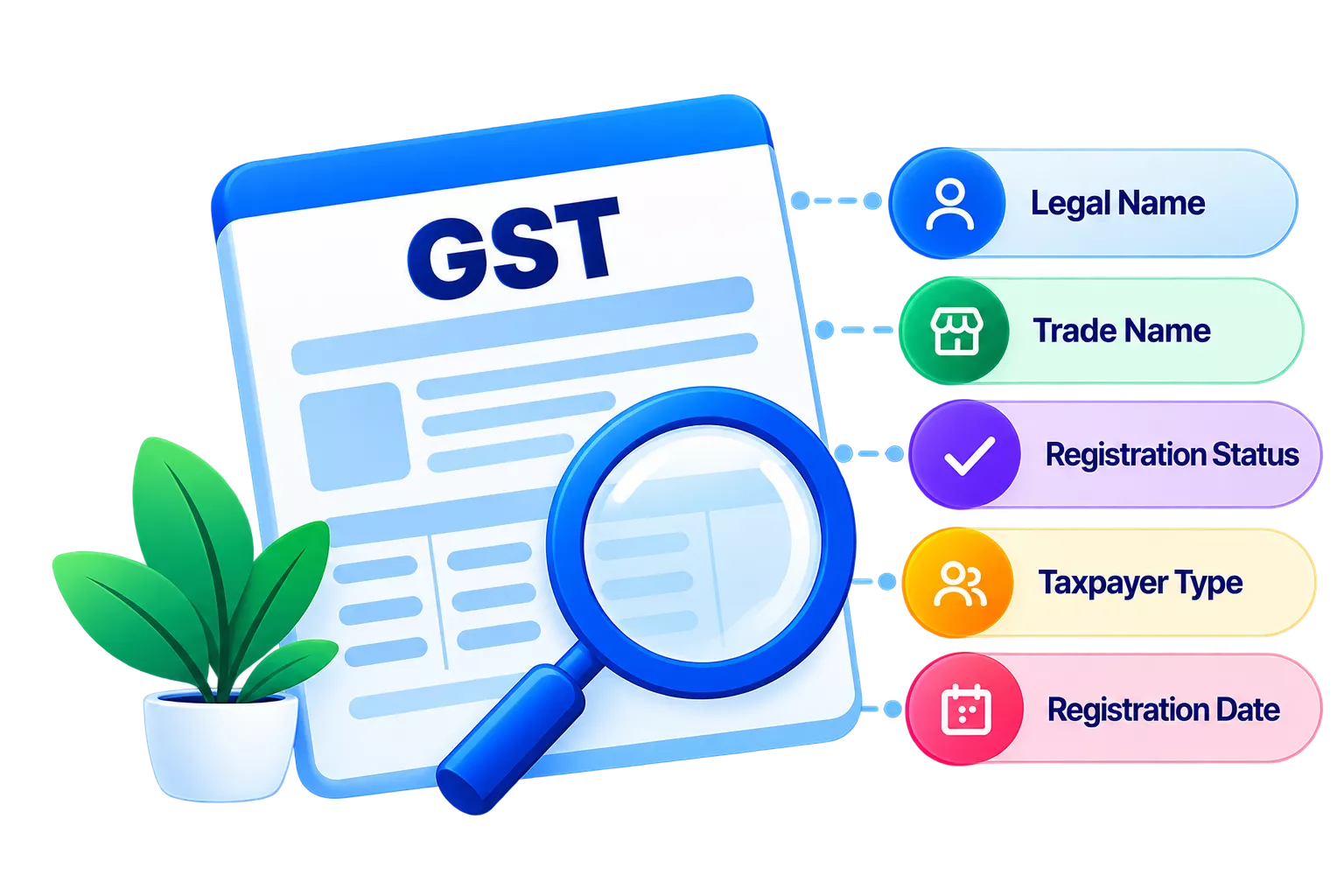
Existing dealers would be auto-migrated into the GST regime and given a 15-digit PAN-based GSTIN – 2 digits to represent state code, 10 digits of PAN, 1 entity code digit applicable for taxpayers having multiple business verticals within the state, 1 blank digit and 1 checksum digit. All taxable persons will need to process the GST registration online on the portal.
GST Returns
The GST regime requires all businesses to mandatorily file GST returns online every month/ quarter along with the requisite annual returns.
-
Regular Dealer
-
- Quarterly Returns: Turnover up to 1.5 crores
- Monthly Returns: Turnover more than 1.5 crores
-
Composition Dealer
- Quarterly self-assessed payment and annual returns.
Return Forms
-
Regular Dealer
- Form GSTR-1: Monthly or Quarterly basis the turnover threshold
- Form GSTR-3B: Self-assessed monthly returns
-
Composition Dealer
-
- Form GST CMP-08: Quarterly self-assessed return statement-cum-challan
- Form GSTR-4: Annual return
GST Payments
- Mandatory e-payment for amount > INR 10,000
- Pay GST Online via NEFT/RTGS/IMPS
- Pay GST Offline via Cash/Cheque/DD/NEFT/RTGS etc.
- Challan is auto-populated and can be downloaded
- Automated refunds process
Conclusion
Clearly the biggest indirect tax reform since Independence, the GST regime is bound to herald a golden age of tax transparency, and seamlessness of tax credit across businesses, which will hopefully reduce costs for the end consumer in the long run.