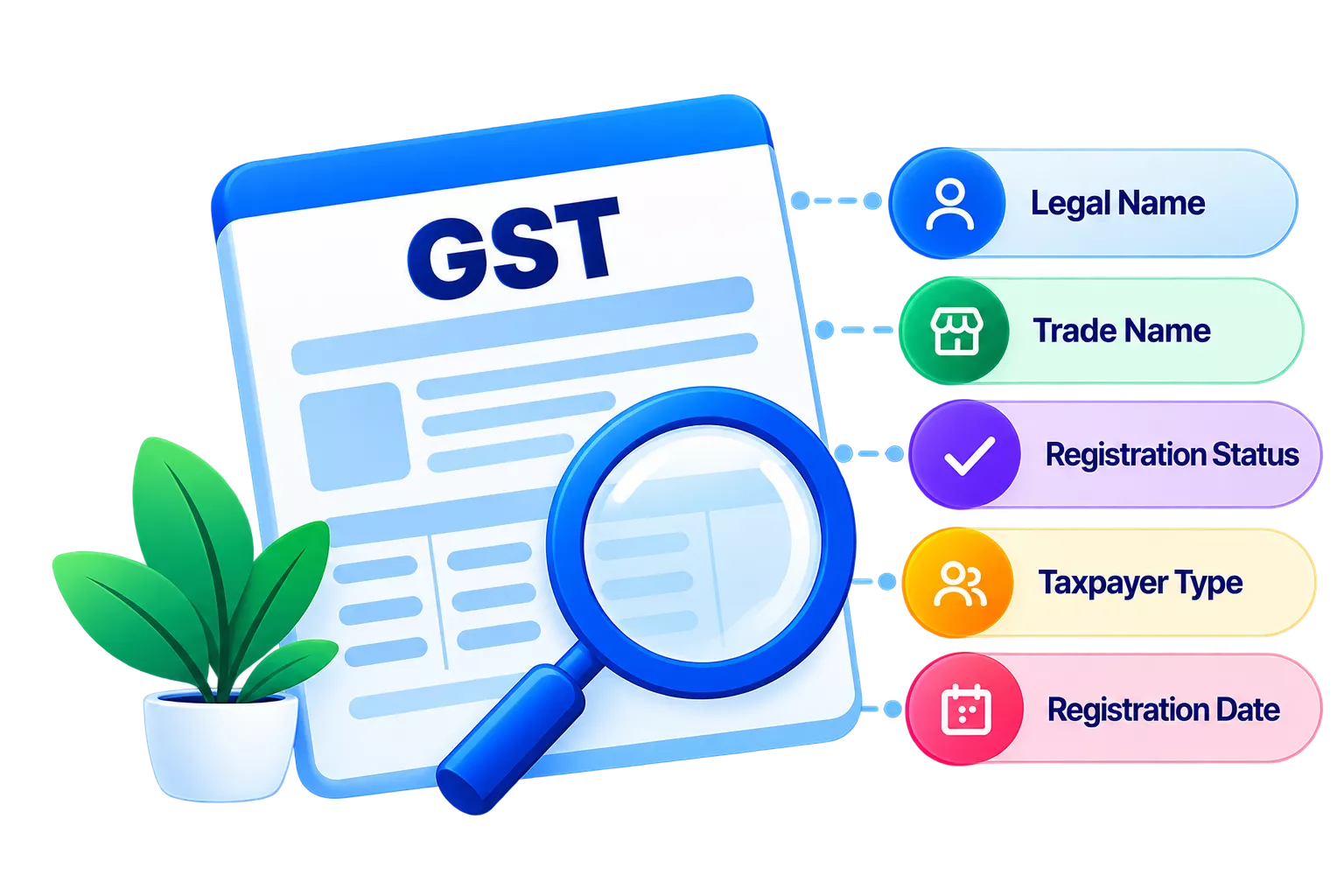







The Goods and Services Tax (GST) is one of the most consequential tax reforms in India's economic history. Rolled out on 1st July, 2017, under the slogan "One Nation, One Tax," GST replaced a tangled web of central and state levies with a single, unified indirect tax system.
Nearly a decade later, the Indian GST continues to evolve, most recently through the sweeping "GST 2.0" reforms that took effect on 22nd September, 2025, which simplified the tax structure even further.
What was India's tax system like before GST?
Before GST, businesses had to manage multiple taxes imposed by the central and state governments, including:
- Central excise duty on manufacturing
- Service tax on services
- Value Added Tax (VAT) on intra-state sales, which varied from state to state
- Central Sales Tax (CST) on inter-state sales
- Entry tax, octroi and local body taxes on the movement of goods across states and cities
- Luxury tax, entertainment tax and purchase tax
The Journey to GST
The idea of a unified goods and services tax was first proposed by the Kelkar Task Force on Indirect Taxes in 2003 and formally announced in the Union Budget speech for 2006-07, targeting an April 2010 rollout.
However, disagreements between the Centre and states over revenue-sharing, compensation for potential losses and the design of the tax delayed implementation for years.
The breakthrough came with the 101st Constitutional Amendment Act, 2016, which empowered both the Centre and states to levy GST concurrently. This was followed by the passage of the Central GST (CGST), State GST (SGST), Integrated GST (IGST) and Union Territory GST (UTGST) Acts in 2017. GST was finally launched at a special midnight session of Parliament on 1st July, 2017.
How does the GST system work?
GST in India follows a dual model:
- CGST and SGST are levied on intra-state supplies, split between the Centre and the concerned state.
- IGST is charged on inter-state supplies and imports. The Centre collects the tax and distributes it to the destination state. This is because GST is a destination-based tax, so revenue belongs to the state where the goods or services are consumed rather than where they are manufactured or supplied.
- UTGST applies to Union Territories without their own legislature.
Why was GST introduced in India?
The government's rationale for GST rested on several core objectives:
Broadening the tax base
By making transactions more transparent through technology and invoice matching, GST aimed to curb tax evasion, bring more businesses into the formal tax system and increase government revenue.
Boosting economic growth
By lowering the cost of doing business and improving logistics efficiency, GST aimed to boost manufacturing, exports and GDP growth. Fewer check-posts and faster interstate transport helped make Indian goods more competitively priced.
Enhancing transparency
At the core of GST is the GST Network (GSTN), a digital platform that supports e-invoicing, online registration, electronic returns and real-time transaction tracking. This helps reduce human intervention and improve transparency.
Formalising the economy
By linking the input tax credit to supplier compliance, GST created a strong incentive for businesses to register, issue proper invoices and move away from the informal, cash-based economy.
What are the key benefits of GST?
Here are the key benefits of India’s GST mechanism:
-
Removes cascading effect
Earlier, businesses often could not claim credit for taxes paid at one stage against taxes due at another. For example, excise duty could not be set off against VAT. This caused the same value to be taxed multiple times as goods moved through the supply chain, increasing the final price for consumers. GST resolved this issue.
-
Reduced compliance complexity
Before GST, businesses operating across states had to comply with multiple tax laws, maintain separate records, and file different returns. GST simplified this by introducing a unified tax framework, state-wise registration, and standardised return formats.
-
No fragmented national market
In the pre-GST era, interstate movement of goods was taxed and often physically checked at state borders, leading to long queues at check-posts. This effectively split India into 29+ separate tax jurisdictions rather than a single unified market, raising logistics costs and delaying delivery times. With GST, companies can now consolidate warehouses into fewer, larger regional hubs rather than maintaining one in every state purely for tax reasons.
-
Rates uniformity
Before GST, VAT rates varied across states for the same goods. This encouraged tax arbitrage, increased the risk of smuggling and influenced business decisions based on tax benefits rather than operational efficiency.
-
Prevent tax evasion
The earlier system's complexity, limited invoice matching, and weak digital tracking made tax evasion easier. GST addresses this through digital invoicing, e-way bills, and automated return matching, improving compliance and reducing under-reporting.
How has GST affected businesses in India?
Here is how the introduction of GST has affected Indian businesses:
Large enterprises and manufacturers
Large businesses with pan-India operations have benefited significantly from a single tax regime, simplified logistics and consolidated warehousing. The removal of inter-state check-posts has cut transit times and transportation costs, improving supply chain efficiency.
MSMEs (Micro, Small and Medium Enterprises)
For smaller businesses, GST initially posed compliance challenges, including mandatory digital record-keeping, multiple returns and unfamiliarity with the new system. Over time, however, measures like the Composition Scheme (offering simplified, lower-rate compliance for small taxpayers) and quarterly return filing options have eased the burden.
E-commerce and logistics
GST's uniform tax structure and the e-way bill system have been particularly beneficial for e-commerce companies and logistics providers, enabling faster, more predictable interstate delivery and reduced warehousing costs.
Sector-specific effects
Sectors such as automobiles, consumer durables (TVs, ACs, dishwashers), cement and construction materials saw their GST rates cut from 28% to 18% under the 2025 reforms, thereby lowering costs for both businesses and consumers.
The hospitality and personal care sectors also benefited. Hotel accommodation priced between ₹1,001 and ₹7,500 per night was reduced from 12% to 5% GST (rooms below ₹1,000 are now exempt), while services like gyms, salons and yoga were cut from 18% to 5%.
What challenges still remain under GST?
Despite the progress with GST, some issues remain unresolved.
- Auto dealers have faced stranded pre-reform cess credits worth thousands of crores of rupees
- The tax treatment of online gaming remains legally ambiguous
- Legacy inverted-duty-structure refund claims continue to block working capital
- The tax category for hyper-local e-commerce delivery services remains undefined.
Additionally, the National Anti-Profiteering Authority (NAA) was dissolved in December 2022, with its functions transferred to the Competition Commission of India (CCI). As CCI considered anti-profiteering outside its core mandate, oversight shifted to the GST Appellate Tribunal (GSTAT) Principal Bench in October 2024.
With the proposed GST 2.0 rate cuts, the government is considering reviving dedicated anti-profiteering provisions to ensure businesses pass on the benefits to consumers.
Conclusion
With GST requirements evolving over time, businesses must stay informed about regulatory updates and maintain well-organised financial records. Regular reconciliations, timely return filings and regular process reviews can help ensure smoother compliance.
Accounting software like TallyPrime can simplify GST management by automating bookkeeping, supporting compliant reporting and helping businesses keep pace with regulatory changes.