The Goods and Services Tax (GST) system assigns every Indian state a unique numeric code, and understanding these codes is essential for accurate tax filing and accounting. In India, running a business involves navigating several legal registrations, and at the centre of this framework is the Goods and Services Tax Identification Number (GSTIN), which acts as your official business identity.
You may have noticed that every GSTIN begins with two digits, such as 24 or 27. These numbers are not random. They represent the state in which your business is registered and determine how your invoices are taxed. Knowing these state codes helps you identify the correct jurisdiction, apply the right tax rates, and avoid costly errors.
Meaning and importance of the GST state code
The GST state code is a unique two-digit number assigned to each state as well as union territory in India. It is at the beginning of the fifteen-digit GST number, showing in which state the business is registered. For example, if the business is registered in Mumbai, the GST number will be the two-digit state code for Maharashtra, which is 27.
The present GST framework in India helps the authorities monitor tax inflows in an effective manner and ensures there is a proper distribution of funds in these states. There are different types of businesses, and each receives a GST code on the basis of official Indian Census data to maintain transparency and accountability in the tax system.
Here are some key reasons why understanding the GST state code matters:
- It is crucial to understand the accurate GST code to select appropriate tax components like CGST, SGST, or IGST.
- It can help the business verify the address of its suppliers and also claim input tax credit accurately.
- Having an incorrect state code on invoices in business can lead to compliance issues that can make them receive notices from tax authorities.
- The GST state code helps facilitate reconciliation of bills between buyers and sellers.
- The GST state code ensures smooth credit flow between different parties in business.
- A minor error here can give rise to a major discrepancy that can further delay the funds of the business.
GSTIN format and state codes
The GST Identification Number (GSTIN) follows a 15-character structure:
- First 2 digits: Represent the state code (01–37 for all states and Union Territories)
- Next 10 characters: The PAN of the business or taxpayer
- 13th character: Entity code that indicates the type of registration (e.g., 1 for individuals, 2 for partnerships)
- Last 2 characters: Checksum values used to verify the accuracy of the GSTIN
GST state codes
The following table lists the GST state codes assigned to every Indian state and Union Territory:
|
SL. No. |
State/Union Territory |
State Code |
|
1 |
Andaman and Nicobar Islands |
35 |
|
2 |
Andhra Pradesh |
37 |
|
3 |
Arunachal Pradesh |
12 |
|
4 |
Assam |
18 |
|
5 |
Bihar |
10 |
|
6 |
Chandigarh |
04 |
|
7 |
Chhattisgarh |
22 |
|
8 |
Dadra and Nagar Haveli and Daman and Diu |
26 (merged UTs) |
|
9 |
Delhi |
07 |
|
10 |
Goa |
30 |
|
11 |
Gujarat |
24 |
|
12 |
Haryana |
06 |
|
13 |
Himachal Pradesh |
02 |
|
14 |
Jammu and Kashmir |
01 |
|
15 |
Jharkhand |
20 |
|
16 |
Karnataka |
29 |
|
17 |
Kerala |
32 |
|
18 |
Ladakh |
38 |
|
19 |
Madhya Pradesh |
23 |
|
20 |
Maharashtra |
27 |
|
21 |
Manipur |
14 |
|
22 |
Meghalaya |
17 |
|
23 |
Mizoram |
15 |
|
24 |
Nagaland |
13 |
|
25 |
Odisha |
21 |
|
26 |
Puducherry |
34 |
|
27 |
Punjab |
03 |
|
28 |
Rajasthan |
08 |
|
29 |
Sikkim |
11 |
|
30 |
Tamil Nadu |
33 |
|
31 |
Telangana |
36 |
|
32 |
Tripura |
16 |
|
33 |
Uttar Pradesh |
09 |
|
34 |
Uttarakhand |
05 |
|
35 |
West Bengal |
19 |
How to identify a state from a GST number?
One can check the registered state of any business operating in India by its starting two digits in GSTIN. This two-digit code is one of the most authentic ways to understand the tax department in which the supplier is registered. For example, a number starting with 24 belongs to Gujarat, while 27 belongs to a business in Maharashtra, and so on.
One must make sure to match this code with the address on the bill to know how genuine the supplier is, and checking the codes will help to avoid fake dealers and keep the tax credit safe for the future.
Understanding GST jurisdiction
Any business in India is managed by either the central government or the state tax department officers. The system divides taxpayers between these two groups to make sure there is a smooth flow of work in business, and they do not face double control. One should know their concerned GST officer for their company in the state, and this control is determined on the basis of one’s turnover.
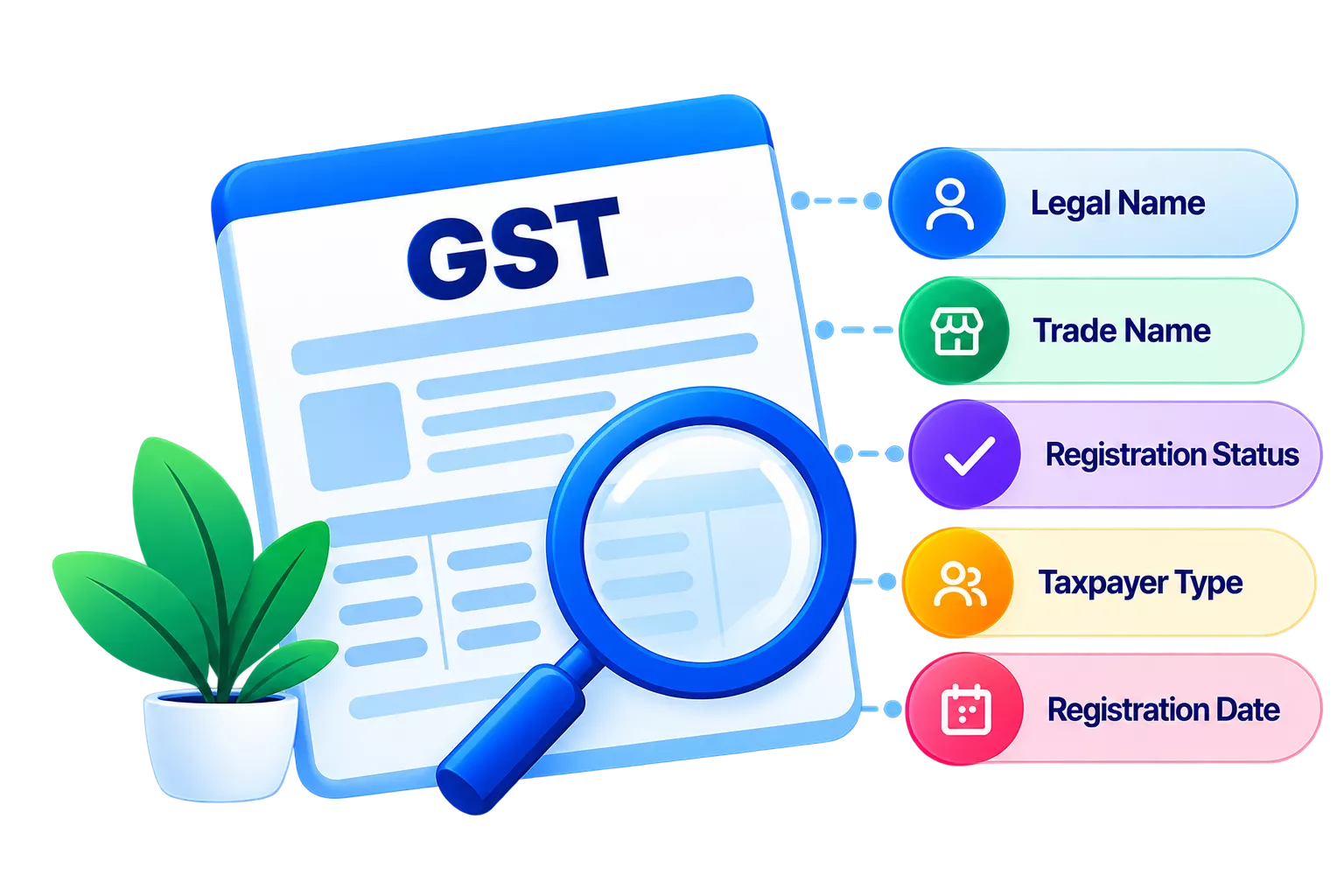
It is necessary to understand one’s jurisdiction; this can help to send letters to the appropriate office in the state without facing any kind of confusion. One can find their specific officer in the state by using the search option available on the official GST website by entering the GST number and checking out the particular administrative details. The result is the place where the business file is maintained in the state, based on the specific ward/circle.
Each state has its own tax jurisdiction that governs the registration and filing of GST for its taxpayers who are located in that state. One has to make sure to be aware of their specific jurisdiction to make sure there is proper compliance with local GST regulations.
How are GST state codes used in GSTIN & invoices?
The state GST code helps to decide if one must charge local tax or interstate tax on the bills, and one must look at the buyer's code to see if the sale is within the state or outside. For example, if there is a sale from Ahmedabad to a buyer in Surat (Code 24), one has to only charge CGST and SGST.
But if there is a sale to a client in Mumbai (Code 27), one must charge IGST for the interstate supply.
GST filing tips with TallyPrime
Once you understand GSTIN structure and state codes, the next challenge is applying them correctly during everyday transactions. Manual calculations, incorrect entries, or mismatched state codes can easily lead to filing errors, rejected returns, or loss of input tax credit. This is where using a reliable accounting system becomes crucial.
TallyPrime simplifies the entire process by integrating GST rules into your routine workflows, ensuring compliance without extra effort. Here’s how it supports accurate and stress-free GST filing:
- Tally Prime ensures the correct GSTIN format and state code are used at the time of entering into transactions.
- Tally Prime calculates GST automatically on the basis of tax rates applicable to the particular state by making accurate calculations.
- Tally Prime has the latest features that keep regular updates and compliance related to GST.
- Tally’s GST reports provide comprehensive insights into one’s tax liabilities, input credits, and filed returns.
- Tally helps to keep detailed records of all the invoices and transactions to help support GST filing and audits.
Conclusion
Knowing GST state codes is essential for all qualifying businesses in India. This knowledge will enable you to work smoothly and get input tax credit on time, improving your cash flow.
Using a robust platform like TallyPrime makes this entire process easy and lets you focus on growing your business sales. When GST codes are applied correctly, the overall efficiency of your financial processes improves, allowing your business to operate with greater confidence and clarity.