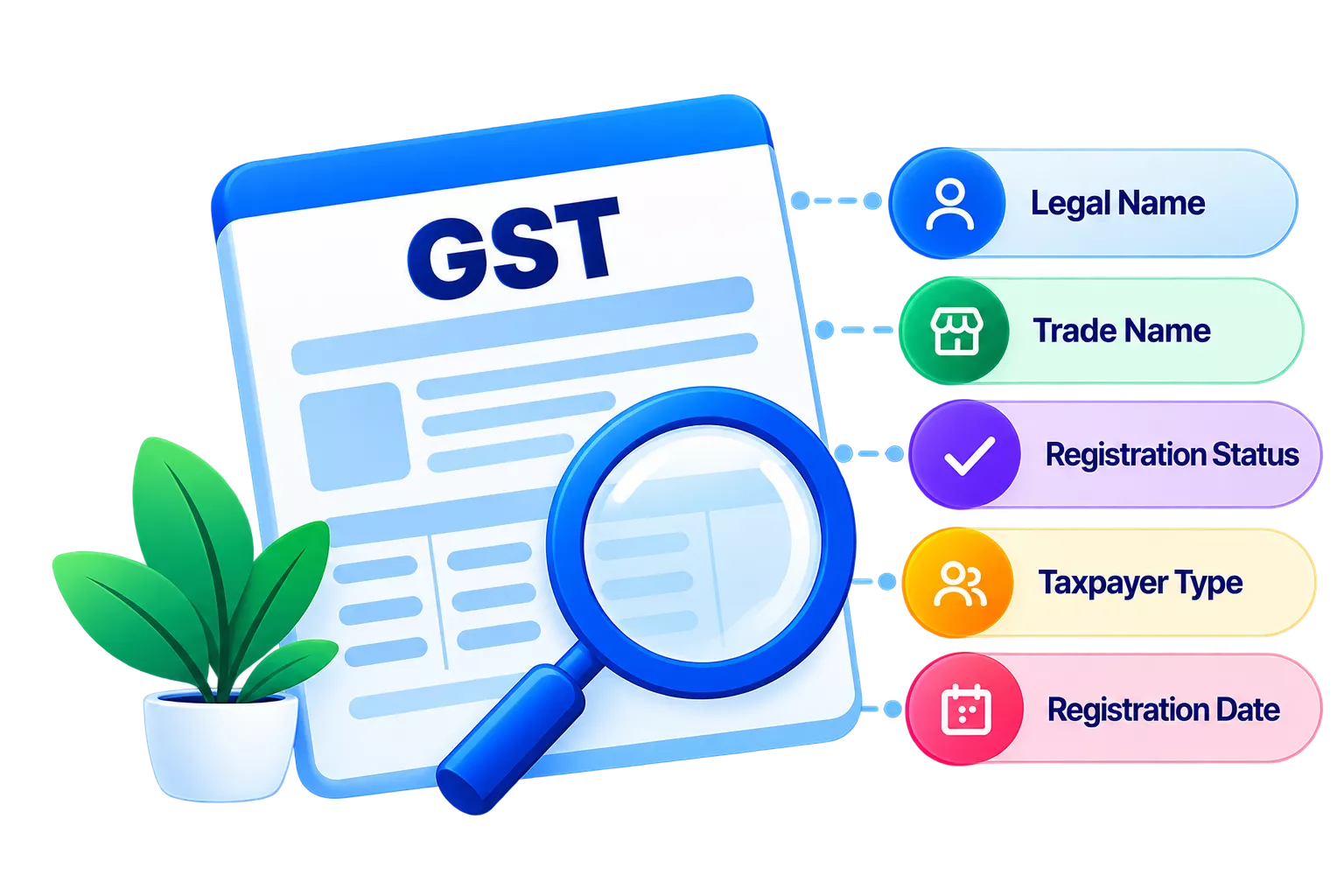







GSTR-1 is filed on the GST portal to report a taxpayer’s outward supplies, including sales, exports, debit notes and credit notes. A blank GSTR-1 PDF is not available for filing, but taxpayers can access filed return PDFs, prepare data through the GST Offline Tool or use GST-compliant software for easier filing.
The details reported in GSTR-1 help recipients view purchase information and support accurate Input Tax Credit (ITC) claims under GST.
Can you download a blank GSTR-1 PDF form?
No, the GST system does not provide a downloadable blank GSTR-1 PDF form that can be filled manually and uploaded later. GSTR-1 must be prepared and filed through approved digital methods.
Taxpayers can prepare and file GSTR-1 using:
- Online filing on the GST Portal
- GST Offline Tool (Excel/JSON-based utility)
- GST-compliant accounting software
- ASP/GSP platforms integrated with the GST system
How to download the GSTR-1 form (filed return as PDF)
To download a filed GSTR-1 return as a PDF, log in to the GST portal and access your filed returns from the Returns Dashboard.
Follow these steps:
- Log in to the GST portal using your GSTIN, username and password.
- Go to Services → Returns → Returns Dashboard.
- Select the relevant Financial Year and Tax Period (month or quarter).
- On the GSTR-1 tile, click View Filed Returns.
- Select the filed return period and click Download or Preview.
- The filed GSTR-1 return will be downloaded as a PDF on your device.
You can use this PDF copy for records, audits or reconciliation. However, filed GSTR-1 returns can only be accessed within the permitted period, as taxpayers cannot file GSTR-1 beyond three years from the relevant due date under Section 37 of the CGST Act.
How to download the GSTR-1 offline tool (for preparing your return)
To download the GSTR-1 Offline Tool, visit the GST portal and install the Returns Offline Tool. It allows taxpayers to prepare GSTR-1 data offline, validate details, generate a JSON file and upload it to the GST portal.
Follow these steps to download the tool:
- Go to https://www.gst.gov.in.
- Click Downloads → Offline Tools from the top menu.
- Select Returns Offline Tool (applicable for GSTR-1).
- Download the ZIP file, extract it and run the installer.
Once installed, you can enter invoice details, validate the data and create the file required for GSTR-1 filing.
Previewing and downloading your draft GSTR-1 as a PDF (before filing)
To preview and download your draft GSTR-1 as a PDF before filing, use the Preview GSTR-1 option on the GST portal after entering or uploading your return details.
Follow these steps:
- Fill in the required invoice details in GSTR-1 online or upload the JSON file generated through the Offline Tool.
- Click Generate GSTR-1 Summary on the Returns Dashboard.
- Select Preview GSTR-1 (PDF) to download a draft copy of your return.
- Review the invoice details, GSTINs, tax values and Harmonised System of Nomenclature (HSN) summaries carefully.
- After confirming the details, click Submit and then file the return using EVC or DSC.
Remember, GSTR-1 cannot be revised after submission. Any corrections must be made through amendment tables (such as Tables 9, 9B, 9C and 10) in a subsequent GSTR-1, or through the GSTR-1A facility where applicable.
GSTR-1A: The amendment form (reintroduced in July 2024)
GSTR-1A allows you to amend or add details in your GSTR-1 before filing GSTR-3B for the same tax period. It was reintroduced through Central Board of Indirect Taxes and Customs (CBIC) Notification 12/2024 dated 10th July 2024 and is available on the Returns Dashboard after GSTR-1 is filed or its due date has passed, until GSTR-3B is filed.
To access GSTR-1A on the portal:
- Log in to the GST portal.
- Go to Services → Returns → Returns Dashboard.
- Select the relevant financial year, quarter and month.
- Click Prepare Online on the GSTR-1A tile.
Due dates for GSTR-1: FY25-26 and FY26-27
GSTR-1 must be filed within the due date to avoid late fees and ensure buyers receive timely invoice details for input tax credit (ITC) claims.
Monthly filers (annual turnover above ₹5 crore or taxpayers not opting for Quarterly Return Monthly Payment (QRMP) Scheme):
- Due date: 11th of the following month
- Example: GSTR-1 for May 2026 must be filed by 11th June 2026.
Quarterly filers under QRMP Scheme (annual turnover up to ₹5 crore):
- Due date: 13th of the month following the quarter
Quarter-wise due dates for FY 2026–27:
- April-June 2026 → 13th July 2026
- July-September 2026 → 13th October 2026
- October-December 2026 → 13th January 2027
- January-March 2027 → 13th April 2027
Note: Every registered person must file GSTR-1 irrespective of whether there are any transactions during the period. Nil returns are compulsory. The late fee is technically ₹50 per day (₹25 CGST + ₹25 SGST) for returns with transactions, subject to a maximum limit. For Nil returns, it is ₹20 per day (₹10 CGST + ₹10 SGST) with a maximum of ₹500.
Step-by-step: Filing GSTR-1 online on the GST portal
To file GSTR-1 online, log in to the GST portal, enter your outward supply details, review the return and submit it using Electronic Verification Code (EVC) or Digital Signature Certificate (DSC).
Follow these steps
- Log in to the GST portal using your GSTIN and credentials.
- Go to Services → Returns → Returns Dashboard.
- Select the relevant Financial Year and Tax Period.
- On the GSTR-1 tile, click Prepare Online.
- Fill in the applicable invoice and supply details in the relevant tables:
- Table 4: B2B invoices (taxable supplies to registered persons)
- Table 5: B2C large invoices (inter-state supplies above ₹2.5 lakh to unregistered persons)
- Table 6: Exports
- Table 7: B2C small invoices (summary details)
- Table 9: Amendments to previously filed returns
- Tables 9A/9B: Credit and debit notes for changes to B2B/B2C invoices
- Table 11: Advances received or adjusted
- Table 12: HSN-wise summary of outward supplies
- Table 13: Documents issued (invoices, delivery challans, credit/debit notes issued during the period)
- Click Generate GSTR-1 Summary.
- Click Preview GSTR-1 (PDF) to review the draft return.
- After checking the details, click Submit and file the return using EVC (Electronic Verification Code) or DSC (Digital Signature Certificate).
Conclusion
Managing GSTR-1 filing becomes easier when businesses maintain accurate sales records, reconcile invoices regularly and keep track of filed returns, acknowledgements and supporting documents. A structured GST process not only helps avoid errors but also makes audits, reconciliations and future compliance checks smoother.
With tools like TallyPrime, businesses can simplify GST record management, improve data accuracy and reduce the manual effort involved in tracking transactions and preparing returns. By combining reliable records with the right technology, businesses can stay GST-ready throughout the financial year.