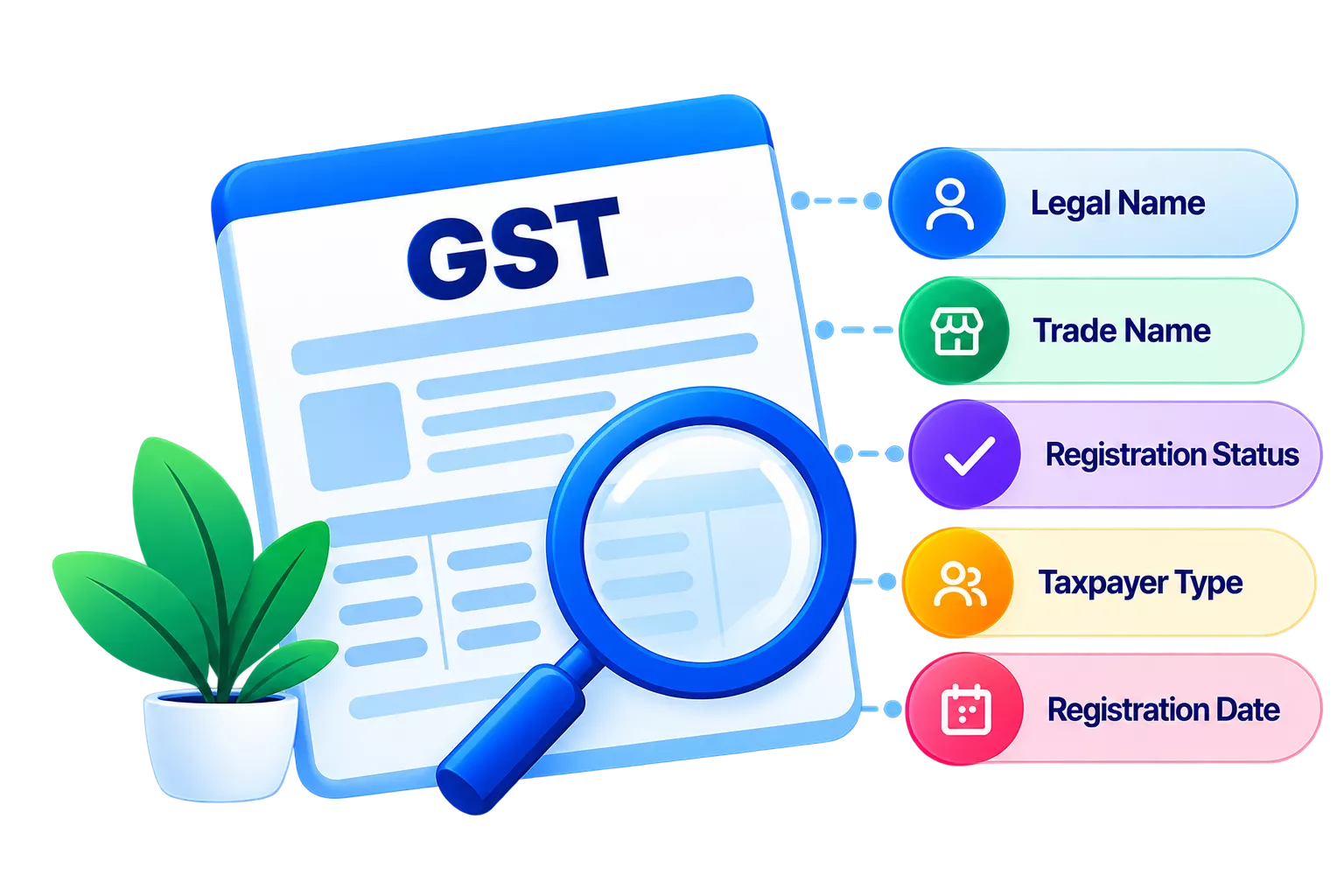
A Goods and Services Tax Identification Number (GSTIN) has a registration status on the GST portal that indicates whether a taxpayer's GST registration is active, suspended or cancelled. This status helps businesses understand whether the supplier can issue GST tax invoices and charge GST. That status, whether active, cancelled, suspended or inactive, has direct consequences for both the registered business and anyone buying from them. Booking an invoice from a supplier whose GSTIN is not active can lead to ITC rejection, interest charges and notices from the tax department.
What does each GSTIN status mean at a glance?
Before looking at each status individually, the table below shows what each one means, whether you can transact and what action to take.
|
Status |
Meaning |
Can you transact? |
Business action |
|---|---|---|---|
|
Active |
Registration is valid and in good standing. |
Yes |
Proceed normally. |
|
Cancelled |
Registration has been revoked, voluntarily or by the GST officer. |
No |
Stop transactions and contact the supplier immediately. |
|
Suspended |
Registration is temporarily frozen during an inquiry. |
No |
Do not book invoices. Await resolution. |
|
Inactive |
Registration is dormant or non-operational. |
No |
Verify with the supplier before any transaction. |
What does an active GSTIN mean?
An active GSTIN means the taxpayer’s registration is valid under the GST portal. They can charge GST on invoices, file returns and pass on ITC to their buyers. If you verify a supplier’s GSTIN and the portal shows ‘Active’, you can book the invoice and claim ITC, provided the invoice also appears in your GSTR-2B. An active status alone does not guarantee ITC. The supplier must also have filed the relevant return for it to reflect in your GSTR-2B.
What does a cancelled GSTIN mean?
A cancelled GSTIN means your registration has been formally terminated. This happens in one of the following two ways:
- The taxpayer may have applied for voluntary cancellation after closing their business or falling below the GST turnover threshold.
- Alternatively, the GST officer may have cancelled the registration for non-compliance, such as persistent failure to file returns or fraudulent activity.
If you book an invoice from a supplier whose GSTIN is cancelled, you cannot claim ITC on that purchase. Section 16 of the Central Goods and Services Tax (CGST) Act, 2017, permits ITC only when the supplier holds a valid registration and has filed their returns. A cancelled GSTIN fails both conditions. If such invoices are already in your books, the tax authority can reverse the ITC and charge interest at 18% per annum under Section 50 of the CGST Act.
What does a suspended GSTIN mean?
A suspended GSTIN is temporarily on hold. Rule 21A of the CGST Rules, 2017, allows the GST officer to suspend a registration when there are significant mismatches between GSTR-1 and GSTR-3B, or when an inquiry or inspection is underway. During suspension, the taxpayer cannot file returns or issue valid tax invoices. Suspension is not permanent, and the registration can be restored once the officer is satisfied.
For a buyer, the risk during suspension is the same as a cancellation. Invoices issued during the suspension period do not carry valid ITC.
What does an inactive GSTIN mean?
An inactive GSTIN means that the registration is no longer valid. If a taxpayer stops filing returns or closes their business without formal voluntary cancellation, the GST portal will not show them as “Active” indefinitely. Instead, the system automatically marks the status as “Suspended” or “Cancelled Suo Moto”.
A major source of error for buyers is relying on an unchecked GSTIN or overlooking a “Suspended” status, during which a supplier cannot legally issue tax invoices or pass on Input Tax Credit (ITC). Always verify a supplier’s real-time portal status (Active, Suspended, or Cancelled) on the GST Portal before processing any invoice to safeguard your ITC.
How does your supplier’s GSTIN status affect your ITC claim?
ITC is available only when the supplier’s registration was valid at the time of supply, and their returns are filed. The GST portal reflects this through your GSTR-2B. Invoices from non-active suppliers simply do not appear in it. If you claimed ITC in GSTR-3B for such an invoice, the mismatch will surface during reconciliation and can be reversed with interest.
A useful practical check is to compare GSTR-2A against GSTR-2B. If a supplier’s invoice appears in one but not the other, verify their GSTIN status immediately. The gap could indicate a filing delay, but it can also mean the supplier’s registration was cancelled or suspended after the invoice was raised. Do not wait until return filing to investigate.
How do you check GSTIN status online?
The GST portal provides a free GSTIN verification tool at gst.gov.in. No login is needed.
- Go to gst.gov.in.
- Select ‘Search Taxpayer’ from the top navigation bar.
- Click ‘Search by GSTIN/UIN.
- Enter the 15-digit GSTIN.
- Click ‘Search’.
The result shows the legal name, registration date and current status. For large vendor lists, the portal also allows bulk verification. Run this check before closing accounts at the end of any reporting period.
What should you do if a supplier’s GSTIN is cancelled or inactive?
When verification shows a non-active status, act before the invoice enters your books.
- Verify with the supplier. Contact them to confirm whether the status reflects a closure, an administrative lapse or an unresolved inquiry. Ask for written clarification before proceeding.
- Update your vendor master. Mark the GSTIN as non-active in your records. Do not process future invoices against this GSTIN until the status is restored.
- Avoid booking the invoice. If goods or services have already been received, park the entry in your accounts until the supplier’s status is confirmed.
- Recheck before filing. Before submitting GSTR-3B, run a status check on all new vendors and any suppliers with a GSTR-2B mismatch. Correcting an error before filing is significantly easier than reversing it afterwards.
Conclusion
Supplier registrations can be cancelled or suspended after a business relationship has started. A vendor who was fully active six months ago may not be today. The practical habit is to verify GSTIN status at the start of each quarter and again before filing returns. TallyPrime lets you validate GSTIN status for suppliers directly during invoice entry, so mismatches surface before they affect your ITC.