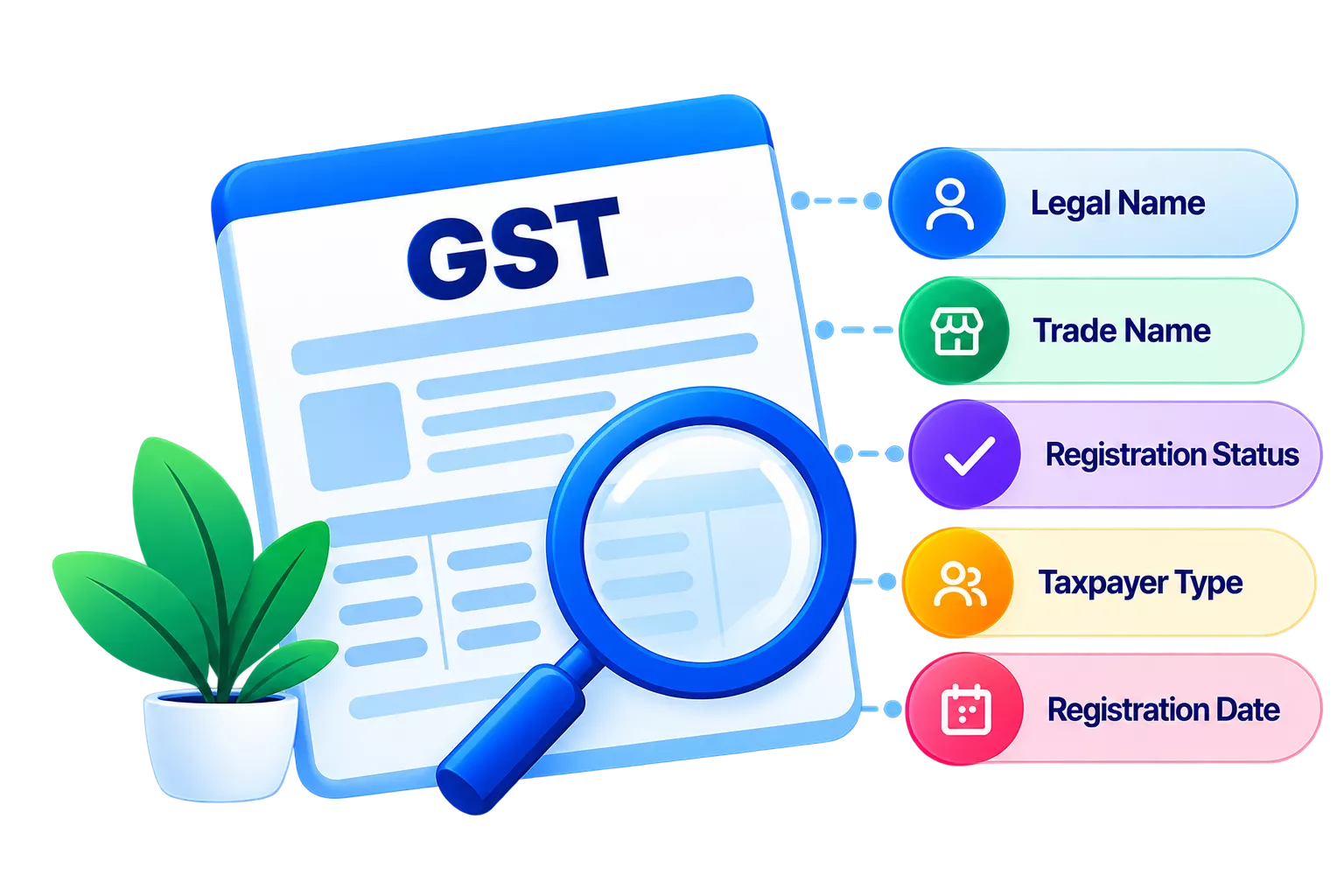
GST registration is required for a partnership firm when it becomes liable to register under the CGST Act, 2017. The process involves submitting details of the firm, partners, authorised signatory and principal place of business on the GST portal.
Key documents generally include the partnership deed, PAN details, photographs, identity and address proofs and proof of the business premises. The official GST registration checklist specifically lists the partnership deed as proof of the constitution of the business.
Does a partnership firm always need to register for GST?
Not every partnership firm is required to register. The obligation arises when any of the following conditions apply.
- GST registration thresholds: ₹40 lakh for eligible goods suppliers, ₹20 lakh for services or mixed supplies; in specified special-category states, ₹20 lakh for goods and ₹10 lakh for services.
- The firm makes taxable inter-state supplies of goods or services.
- The firm sells goods through an e-commerce operator, unless it qualifies for exemption under Notification No. 34/2023-Central Tax
A firm below the threshold can opt for voluntary registration under Section 25(3) of the CGST Act. This makes sense when the firm’s customers are registered businesses that want to claim input tax credit (ITC) on purchases from the firm.
What documents does a partnership firm need for GST registration?
The GST portal requires documents in three groups, covering the firm itself, each partner and the business premises.
Firm-level documents
These documents establish the legal and financial identity of the firm.
- PAN card of the partnership firm
- Partnership deed, whether registered or unregistered
- Bank account proof showing the firm’s name, account number and IFSC code (a cancelled cheque or the first page of a bank passbook)
- Authorisation letter signed by all partners, authorising one designated partner as the primary signatory for GST purposes
Partner-level documents
The following are required for every partner named in the deed.
- PAN card
- Aadhaar card
- Passport-size photograph
- Address proof, if the Aadhaar address differs from the current address
Business premises documents
The documents depend on whether the firm owns or rents its principal place of business.
Owned premises
- Latest electricity bill, water bill or property tax receipt in the name of the firm or any partner
Rented premises
- Rent or lease agreement in the name of the firm
- A utility bill for the same address (electricity or water)
All documents must be uploaded in JPEG or PDF format and each file must not exceed 1 MB. Files that fall outside these specifications are rejected at the upload stage before the application is submitted.
How does a partnership firm complete GST registration on the portal?
The registration runs in two stages on the GST portal at gst.gov.in.
Generating the temporary reference number
This stage takes a few minutes and produces a temporary reference number (TRN) valid for 15 days.
- Go to gst.gov.in and click ‘Register Now’ under the Taxpayers section.
- Select ‘New Registration’ and choose ‘Taxpayer’ as the type.
- Enter the state, district, firm name, PAN, email address and mobile number.
- Verify the OTPs sent to the registered email address and mobile number.
- A TRN is issued and sent to both registered contacts.
Submitting the full application
The second stage must be completed within 15 days of receiving the TRN, or it expires.
- Log in to gst.gov.in using the TRN.
- Complete Part B of Form GST REG-01, covering business details, partner information, principal place of business and bank account details.
- Upload all required documents in JPEG or PDF format.
- Submit using a digital signature certificate (DSC) or e-verification code (EVC).
What happens after the GST registration application is submitted?
The assigned GST officer has 7 working days to process the application. If everything is in order, the officer issues the registration certificate in Form GST REG-06 containing the 15-digit GSTIN.
If clarification is needed, a notice is issued in Form GST REG-03. The firm must reply within 7 working days using Form GST REG-04 with supporting documents. Non-response leads to rejection through Form GST REG-05, after which the firm must re-apply.
The most common rejection reasons are a name mismatch between the PAN and the partnership deed, unclear or expired address proof, Aadhaar details that do not match PAN records, and an authorisation letter not signed by all partners listed in the deed.
Conclusion
Once registered, a partnership firm must update its GST registration within 15 days of any change in business details, including a change in partners. TallyPrime tracks the GSTIN, return due dates and partner information in one place, which reduces the risk of missing an update or filing a return with outdated records.