






Inventory management is essential in many businesses, from retail to manufacturing. Good inventory management improves cash flow and reduces expenses. Some inventory management problems, however, are common across industries.
Top challenges in managing inventory
1. Visibility problems
When your inventory becomes hard to find, you have a visibility problem. This is one of the most common inventory management issues. Being able to locate the right item quickly is essential.
If hard-to-find inventory is part of your manufacturing supply chain, it can disrupt the entire production process. If stock cannot be located for shipping, it leads to incomplete or wrong shipments and damages customer satisfaction. Either way, visibility problems hurt business performance and are a clear sign of poor inventory management.
| Top 5 Inventory Management Reports | Best Inventory Management Software for Businesses |
2. Lack of real-time reporting
Inventory reports are essential for decision-making. A manual system cannot summarise or report on real-time inventory data, and historical trend reports are equally difficult to prepare quickly. Without visibility into stock and trends, management struggles to make informed purchase and inventory decisions. That directly affects the bottom line.
3. Inefficiency
Managing inventory manually is cumbersome and tedious. Even routine tasks take longer than they should. As companies scale, the process gets slower and less efficient, especially across multiple warehouse locations.
Slow inventory management slows shipping, which hurts customer satisfaction. Even software does not help if it is poorly designed or outdated, since it just replicates the manual process. Inefficiency and redundancy are clear signs of poor inventory management.
4. Overstocking
Money spent on unused inventory gets locked up. Overstocking hurts profitability because more stock is bought than sold. Managing inventory at the right quantity is essential to a company's financial health.
Overstocking also builds up obsolete stock, which is material bought or stocked in excess that is no longer in demand. In a manual system, this stock may be forgotten. When it is needed again, the company may buy more of it instead of using what it already has.
5. Understocking
Understocking is another common inventory problem. In manual systems, flagging materials for reorder depends on the vigilance of the people managing inventory. One slip-up and the company can find itself unable to meet demand.
In a supply chain, inventory feeds the entire production process, so understocking can slow production or bring it to a halt. Underutilised warehouse space is also money wasted. Improper inventory management means paying overheads on space you are not making full use of.
6. Lack of trend forecasting
Trend forecasting is essential to managing a business. Inventory projections and forecasts are only accurate when based on actual numbers and trends. Manual systems cannot deliver summaries and reports quickly enough. Inaccurate forecasting also means the company may miss seasonal rises and falls in demand. Historical data is essential to avoid both overstocking and understocking.
7. Lack of centralisation
Centralisation is not a problem for smaller businesses that store inventory in one location. But as companies grow, they expand into multiple locations. Manual records make it hard to communicate and access inventory data across sites.
Manual reports and lists do not show real-time stock, and this disconnected data is often the cause of delayed or incorrect shipping. Management also cannot get an accurate real-time view of inventory across all locations.
How inventory management software can help you overcome challenges
1. Improved visibility and transparency
An inventory management solution like TallyPrime helps you locate any item quickly, with complete data on the item and its availability. Being able to find inventory improves company efficiency.
At the management level, the ability to visualise inventory supports better decision-making. Managers can review past trends and base forecasts and planning on actual numbers.
2. Increased customer satisfaction
More transparency lets the company measure the efficiency of its inventory management.
You can see how stock flows through the system and identify bottlenecks. For companies that ship directly to customers, shipping speed can also be measured. Accurate item identification and shipping further improve customer satisfaction.
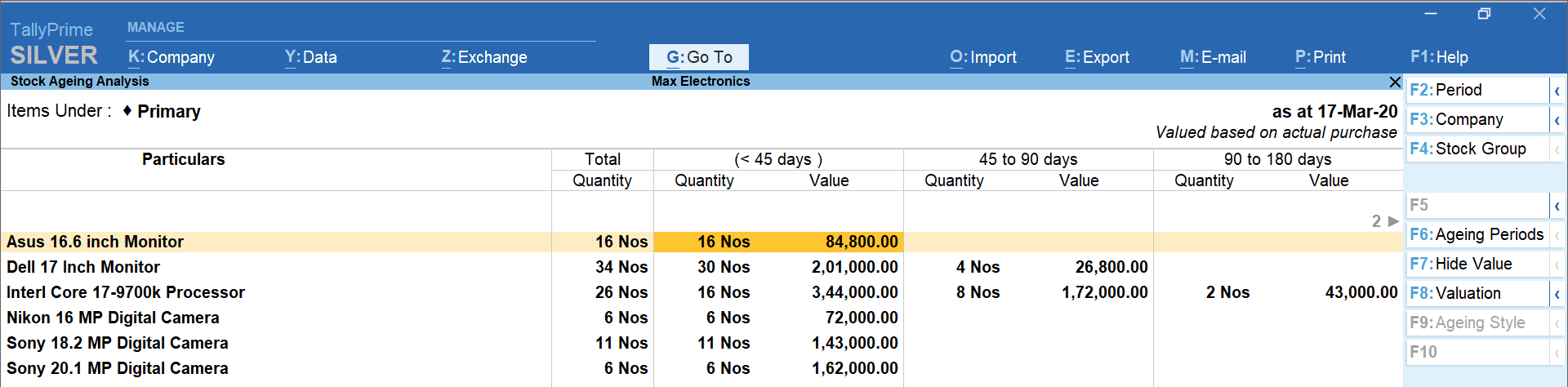
Stock analysis in TallyPrime
3. Increase in productivity
Inventory management software improves the efficiency and productivity of everyone involved. Items can be found without a manual search. Scaling up does not cause the usual inventory problems when you use a proper system. Computerised inventory management also lets you go paperless.
4. Accuracy in recording and tracking inventories
Managing stock through inventory software reduces human error and provides accurate, up-to-date data. A computerised system like TallyPrime tells you exactly where your inventory items are. The data is updated and accurate in real time.
5. Easy to manage and track inventories
An inventory management system like TallyPrime gives you better control over stock levels. You can easily track items that are being unnecessarily stockpiled. Even obsolete inventory is tracked, so you avoid buying more of what you already have.
6. Get to know the fast-moving and highly profitable inventories
When you can visualise inventory movement and profit margins together, you can identify both fast-moving items and items with the best profit margins.
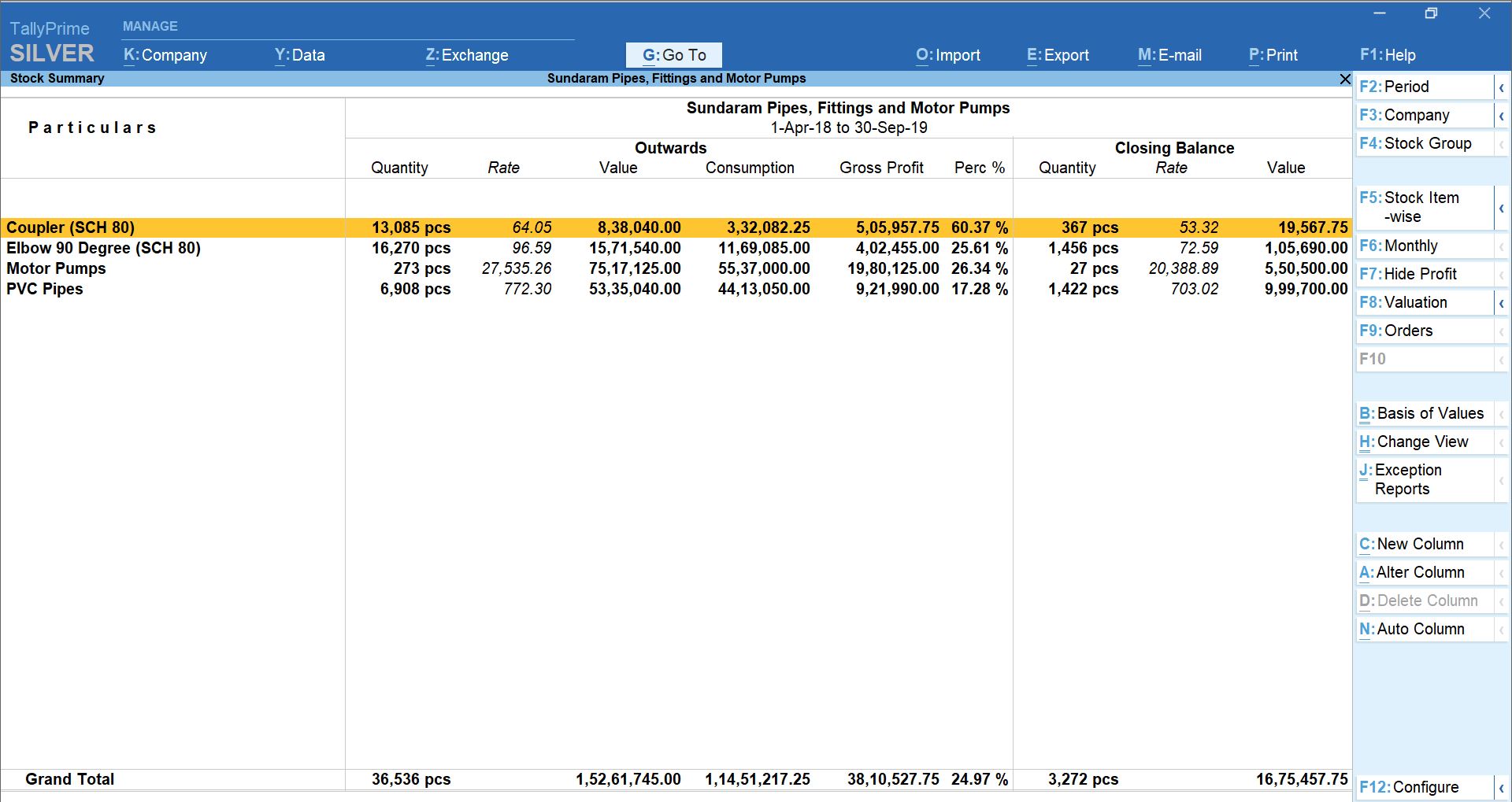
Stock item-wise profitability analysis in TallyPrime
7. No worries of understocking and overstocking of inventories
Inventory management shows you the items that are falling below the set reorder level. You can promptly order the required materials so that you do not fall short.
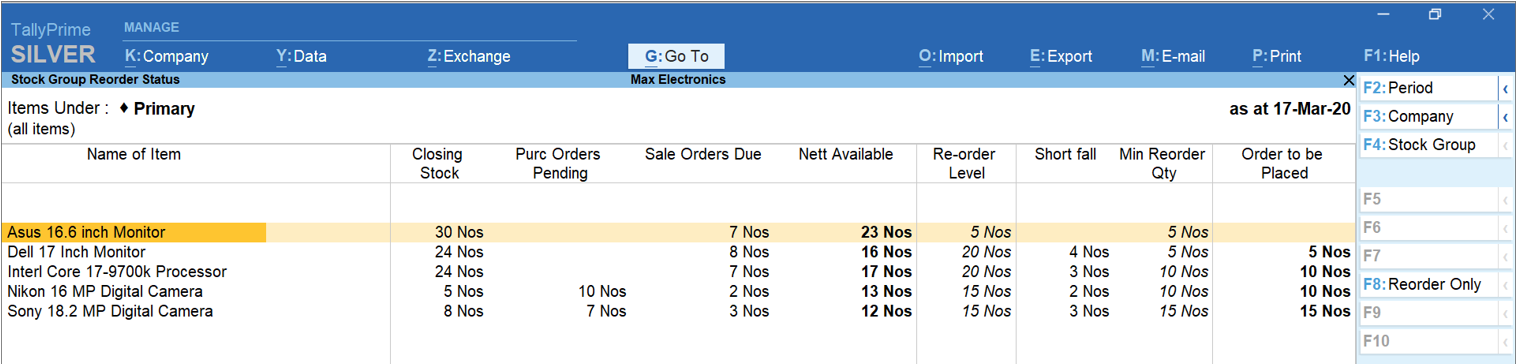
Reorder Levels On TallyPrime
8. Insights from reports help you in on-time business decisions
The easy access to reports that analyse inventory over time also empowers the company to better forecast trends and manage inventory accordingly. Decision-making in the company becomes fact-driven.
9. Connectivity and centralisation
An integrated solution like TallyPrime centralises inventory data and lets it flow seamlessly between locations. This keeps the system quick and efficient even when items ship from inventory across locations.
TallyPrime also monitors inventory in different storage areas. You can manage inventory across warehouses within the same location or across geographies.
10. Cost optimisation at all levels of inventories
Inventory management through software like TallyPrime is also a strong cost control measure. It prevents overstocking that locks up capital, and enhances the productivity of inventory and warehouse staff.
Software also helps you use warehouse space optimally. Empty, unused space is wasted money, something you can prevent by properly visualising and locating stock.
11. Help you get rid of the risk of old and expired Stock
Goods that sit in inventory too long are a waste of money too! Efficient inventory management helps you attain that perfect balance of inventory to reduce costs and increase profits.
Switch to a smart integrated business solution with inventory management such as Tally to make the most of your inventory and warehousing processes. It will make a big difference to the efficiency, productivity and profitability of your business.
| Read more: