










A letter of credit (LC), also known as a credit letter, is a financial document that improves your credibility by facilitating payment to sellers once they meet the LC’s document requirements.
As a business owner, you may have to buy materials and other equipment from domestic or international suppliers and trust is essential in these transactions. Using an LC helps strengthen your relationship with suppliers and supports overall business profitability.
Meaning of a credit letter
An LC is issued by a bank or financial institution and sets out the conditions sellers must meet to receive payment. Sellers must submit the required documents as specified in the LC and the bank ensures payment if these documents comply with the terms.
Letters of credit are most commonly used for international transactions. Buyers can obtain an LC against collateral, credit limits, bank deposits or other security, and banks usually charge a commission calculated as a percentage of the LC amount.
The three main parties involved in an LC transaction are:
- The applicant (usually the importer or buyer)
- The issuing bank
- The beneficiary (usually the exporter or seller)
Types of credit letters
Businesses in India should be aware of the common types of credit letters issued by banks:
- Commercial LC
This is the most widely used form of documentary credit in international trade. It enables payment to the seller once compliant documents, such as the commercial invoice and bill of lading, are submitted and verified by the bank.
- Standby LC
Under this arrangement, banks pay the seller only if the buyer fails to fulfil payment or contractual obligations within the due date. Standby LCs act as a financial safety net rather than the primary payment method.
- Revolving LC
Used for repeated transactions between the same parties, a revolving LC automatically renews its value after each use, allowing sellers to present documents multiple times within the agreed credit limit and period.
- Confirmed LC
A second bank, usually in the seller’s country, confirms the LC issued by the first bank. Both banks then ensure payment, which is useful for high-risk international transactions.
- Sight LC
The issuing bank makes payment immediately or within a short period after verifying the submitted documents.
- Revocable and irrevocable LC
An irrevocable LC cannot be amended or cancelled without agreement from all parties, including the issuing bank, confirming bank (if applicable) and the beneficiary. Under modern international trade rules, such as UCP 600, LCs are considered irrevocable by default.
- Back-to-back LC
Used when intermediaries are involved between buyers and suppliers. The issuing bank provides an LC for the intermediary, which is then used as security to obtain another LC issued in favour of the supplier.
- Transferable LC
The LC can be transferred from the first beneficiary (intermediary) to the ultimate beneficiary (supplier). Generally, it can be transferred only once unless specified otherwise in the LC terms.
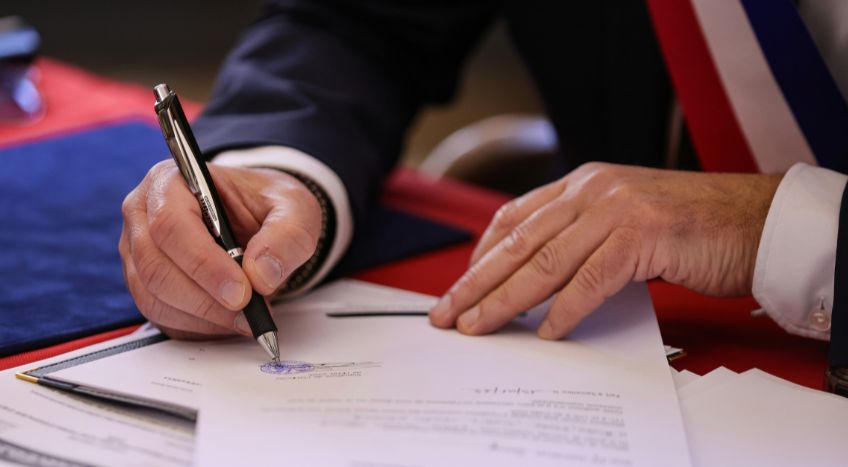
Mandatory documents for a letter of credit
The documents required under a letter of credit depend on the terms specified in the LC.
Commonly requested documents include:
- Commercial invoice
- Bill of lading or other transport document
- Packing list
- Insurance document (if required under the trade contract)
- Certificate of origin
- Inspection or quality certificate (if specified in the LC)
- Properly filled LC application form
- Financial records or credit details of the buyer
- Transport and cargo documentation
Banks carefully examine these documents to ensure they comply with the terms of the LC before releasing payment.
How letters of credit can help businesses succeed
Letters of credit improve security in trade and support the overall profitability and operations of a business in several ways:
- Reduced risk of payment failures
Sellers depend on the revenue from the sale of goods for their growth, expansion and diversification. When they transact with buyers backed by bank-issued LC, they can be assured of receiving payment.
Even if buyers fail to pay within the due dates, the issuing bank honours the LC once compliant documents are submitted, reducing financial risk for sellers.
- Confidently deal in international transactions
Networking is key to business success. The security provided by LCs allows even small-scale businesses, such as MSMEs, to transact confidently with unknown international suppliers.
As LCs ensure the mitigation of payment risks, sellers are confident to deal with different currencies and legal procedures with greater financial security.
These LCs also ensure that all parties involved in the transaction follow international trade rules and document requirements, helping businesses expand their operations and improve cash flow stability.
Conclusion
A letter of credit is an important financial document that fosters international transactions and a cordial relationship between the buyers and sellers. By offering payment assurance to the sellers, LCs act on behalf of buyers to improve confidence and credibility among all the parties involved in the deal, including the middlemen.
Today, with global scenarios undergoing a lot of uncertainty, LCs certainly open the doors for buyers and sellers to improve the size and quality of their operations effectively.
To manage your LCs and track LC-based transactions efficiently, try TallyPrime today.














