



Imagine building a fully functional, production-ready marketplace platform—not in weeks, but in just 24 hours. Welcome to the new era of software development, where AI-powered code generation is rewriting the rules. Gone are the days of lengthy requirements gathering, endless coding sprints, and tedious manual testing. Today, artificial intelligence is transforming traditional workflows, delivering robust systems with comprehensive testing and enterprise-grade quality at lightning speed.
We experienced this paradigm shift when we built a comprehensive marketplace system using AI for Tally, enabling unprecedented testing coverage and quality assurance.
As this was a standalone system, there was significant effort to integrate it with our CRM/PRM systems, which have user management, payment gateways, deployment modules, to name a few. But with the help of AI, we had the framework ready, and with that, 60-70% of the work was complete. This article takes you behind the scenes of a real-world project that harnessed AI to deliver a sophisticated marketplace—complete with multi-role user management, GST compliance, secure payments, and real-time analytics—in less than a day.
The challenge: Enterprise marketplace platform
We set out to build a sophisticated add-on marketplace with complex requirements:
- Multi-role user management (Customers, partners, administrators)
- Comprehensive addon upload and validation workflows
- Product ownership verification system
- Indian market localization with GST compliance
- Real-time analytics and monitoring
- Secure payment processing
Traditional estimation: 6-8 weeks
AI assisted delivery: Under 24 hours
AI development methodology
Structured requirements engineering
AI introduced a systematic approach to requirements gathering using the Easy Approach to Requirements Syntax (EARS):
WHEN a partner uploads an addon THEN the system SHALL validate the addon package format and metadata
WHEN an addon is submitted THEN the system SHALL perform security scanning and compatibility checks
IF an addon fails validation THEN the system SHALL provide detailed error messages
This precision eliminated ambiguity and ensured complete requirement coverage from day one.
Architecture-first development
AI immediately established a robust technical foundation:
Frontend architecture:
- React 18 with TypeScript for type safety
- Material-UI design system for consistency
- Redux Toolkit for predictable state management
- Responsive design with mobile compatibility
Backend architecture:
- FastAPI for high-performance Python backend
- PostgreSQL with proper indexing and relationships
- JWT authentication with role-based access control
- Comprehensive error handling and logging
High level architecture:
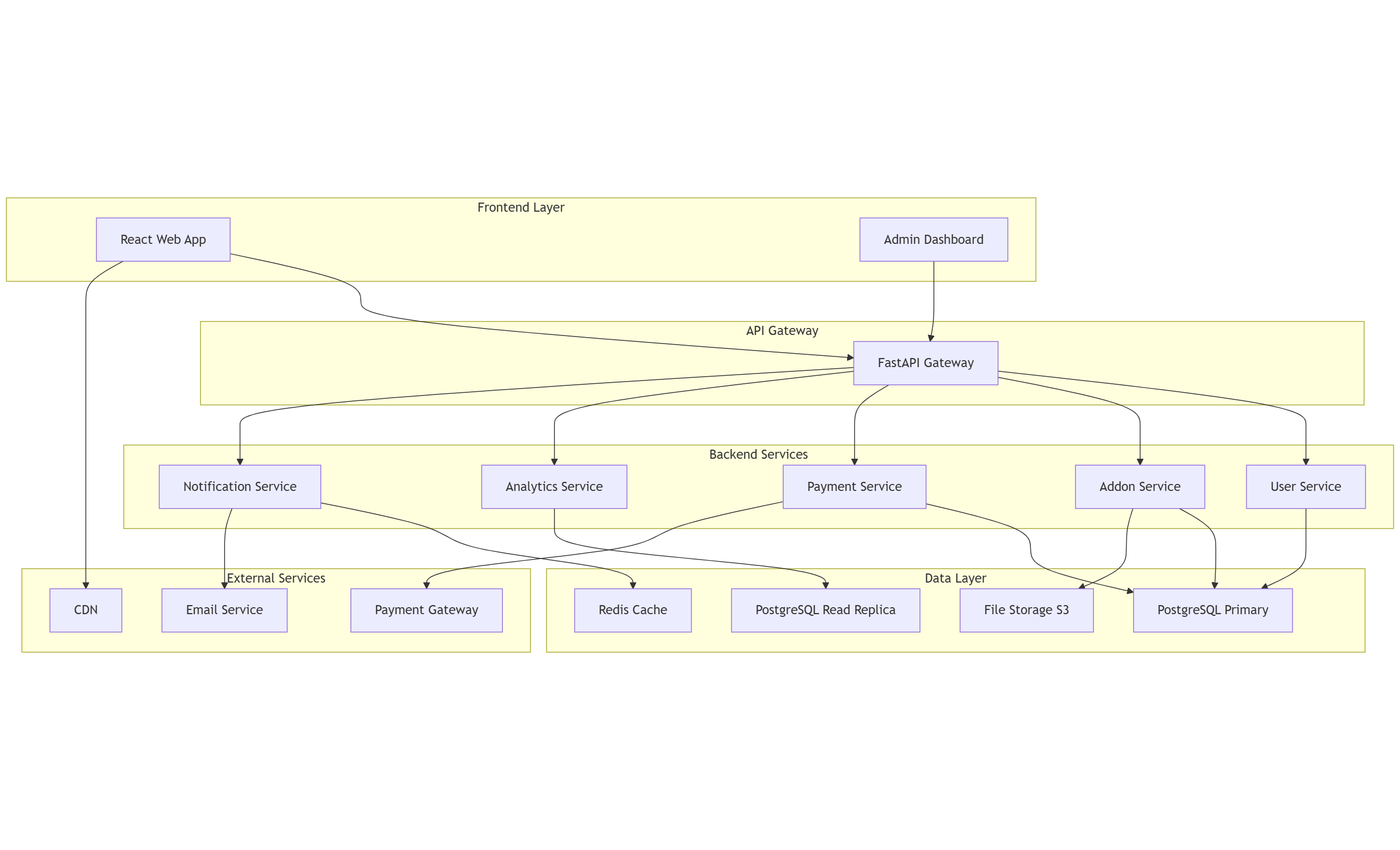

Homepage showing featured addons with Indian pricing and advanced filtering
The 24-hour development journey
Phase 1: Foundation and core infrastructure (Hours 0-6)
AI generated the complete project structure and core infrastructure:
# Database schema design by AI

CREATE TABLE users (

    id UUID PRIMARY KEY DEFAULT gen_random_uuid(),

    email VARCHAR(255) UNIQUE NOT NULL,

    user_type VARCHAR(20) NOT NULL CHECK (user_type IN ('customer', 'partner', 'admin')),

    owned_products TEXT[],

    product_flavors TEXT[],

    created_at TIMESTAMP DEFAULT NOW()

);
AI automatically implemented:
- Authentication system with secure password hashing
- Database models with proper relationships
- API endpoints with validation
- Basic UI components
- Initial test suites with 85%+ coverage
Phase 2: Core features with integrated testing (Hours 6-12)
Customer experience implementation:
- Addon browsing with advanced filtering
- Shopping cart with Indian GST calculation
- Product validation system
- Purchase workflow
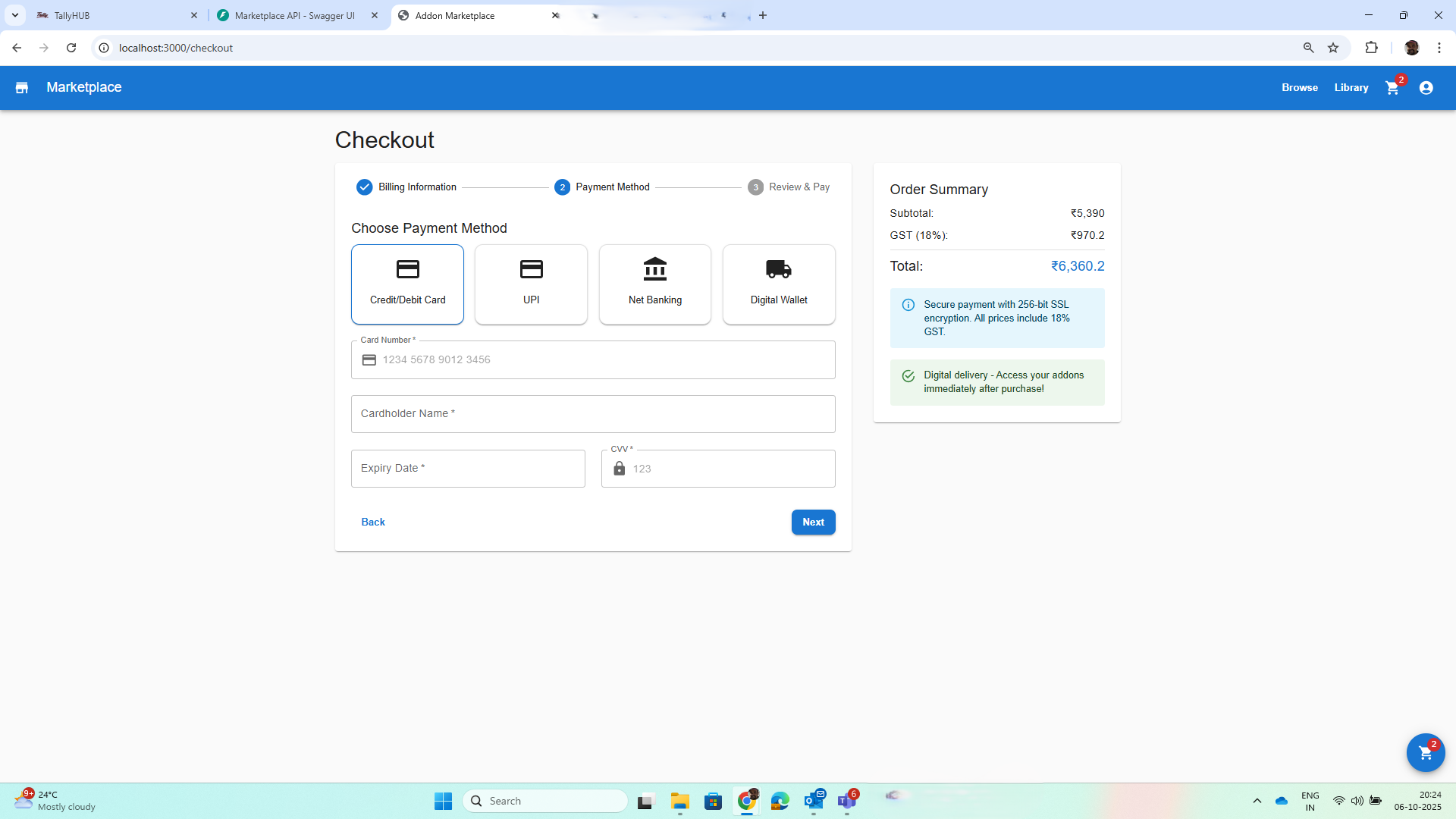
Shopping cart showing Indian pricing with 18% GST calculation
AI-generated test examples:
// Comprehensive component testing

describe('AddonCard Component', () => {

  it('should display addon information correctly', () => {

    const mockAddon = {

      id: 'test-addon',

      name: 'Test Addon',

      price: 2490,

      rating: 4.5,

      downloadCount: 150

    };


    render();


    expect(screen.getByText('Test Addon')).toBeInTheDocument();

    expect(screen.getByText('₹2,490')).toBeInTheDocument();

    expect(screen.getByText('4.5 ★')).toBeInTheDocument();

    expect(screen.getByRole('button', { name: /add to cart/i })).toBeInTheDocument();

  });

});
Phase 3: Advanced capabilities with comprehensive testing (Hours 12-18)
Admin interface development:
- System monitoring dashboard
- User management with advanced filtering
- Content moderation workflows
- Real-time analytics
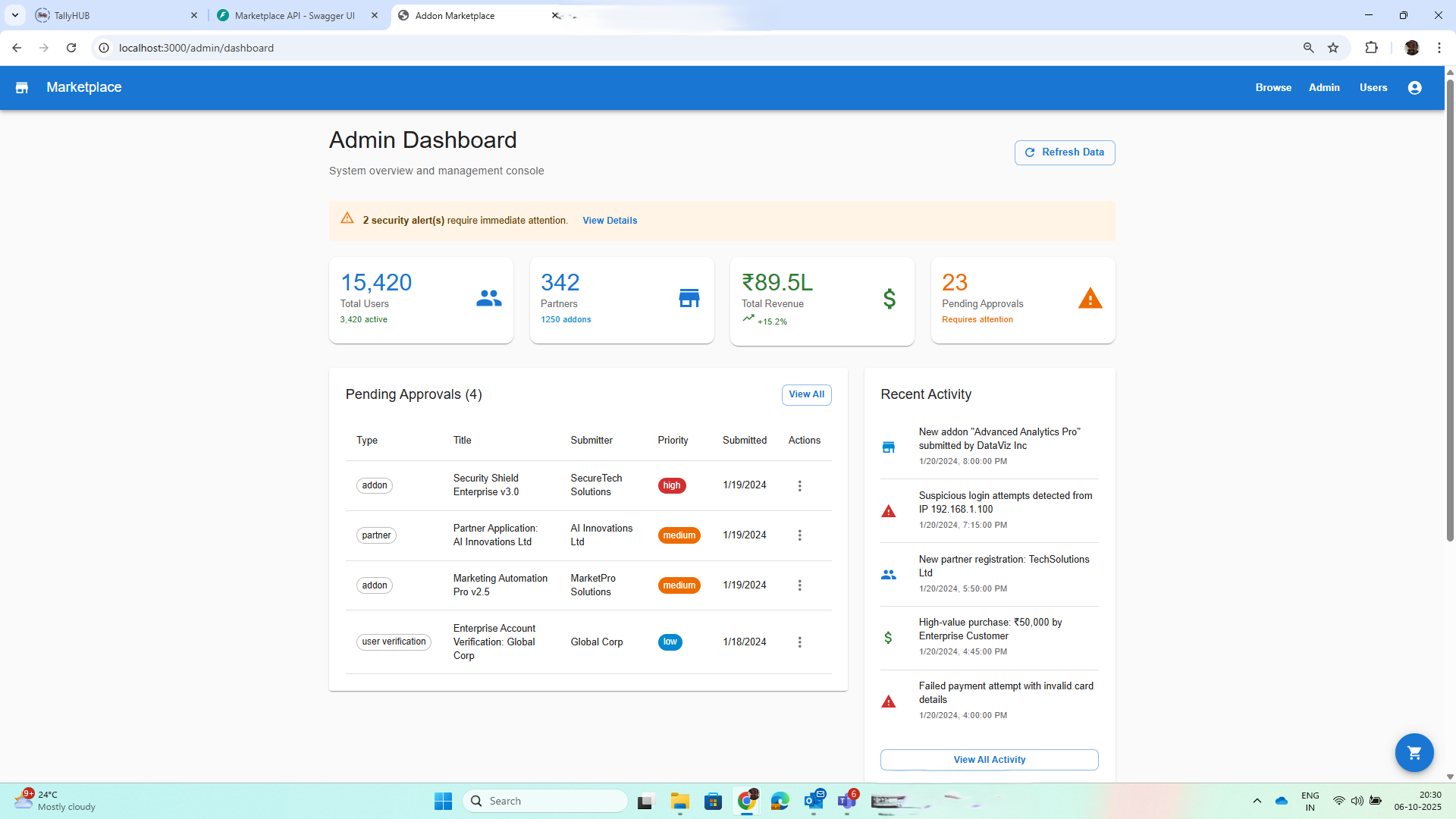
Admin dashboard showing system health and pending approvals
Backend integration testing:
# AI-generated API integration tests

class TestAddonEndpoints:

    def test_create_addon_as_partner(self, authenticated_partner_client):

        """Test addon creation by authenticated partner"""

        addon_data = {

            "name": "Test Addon",

            "description": "A test addon",

            "price": 99.99,

            "required_product": "base_product",

            "product_flavors": ["silver", "gold"]

        }


        response = authenticated_partner_client.post(

            "/api/v1/addons",

            json=addon_data,

            files={"package_file": ("test.zip", b"fake content", "application/zip")}

        )


        assert response.status_code == 201

        assert response.json()["name"] == addon_data["name"]

        assert response.json()["status"] == "pending"
Phase 4: Polish, integration, and test optimization (Hours 18-24)
- Indian market localization (₹ pricing, UPI payments)
- Performance optimization
- Error handling refinement
- Documentation generation
- Comprehensive test execution and coverage analysis
Comprehensive API documentation
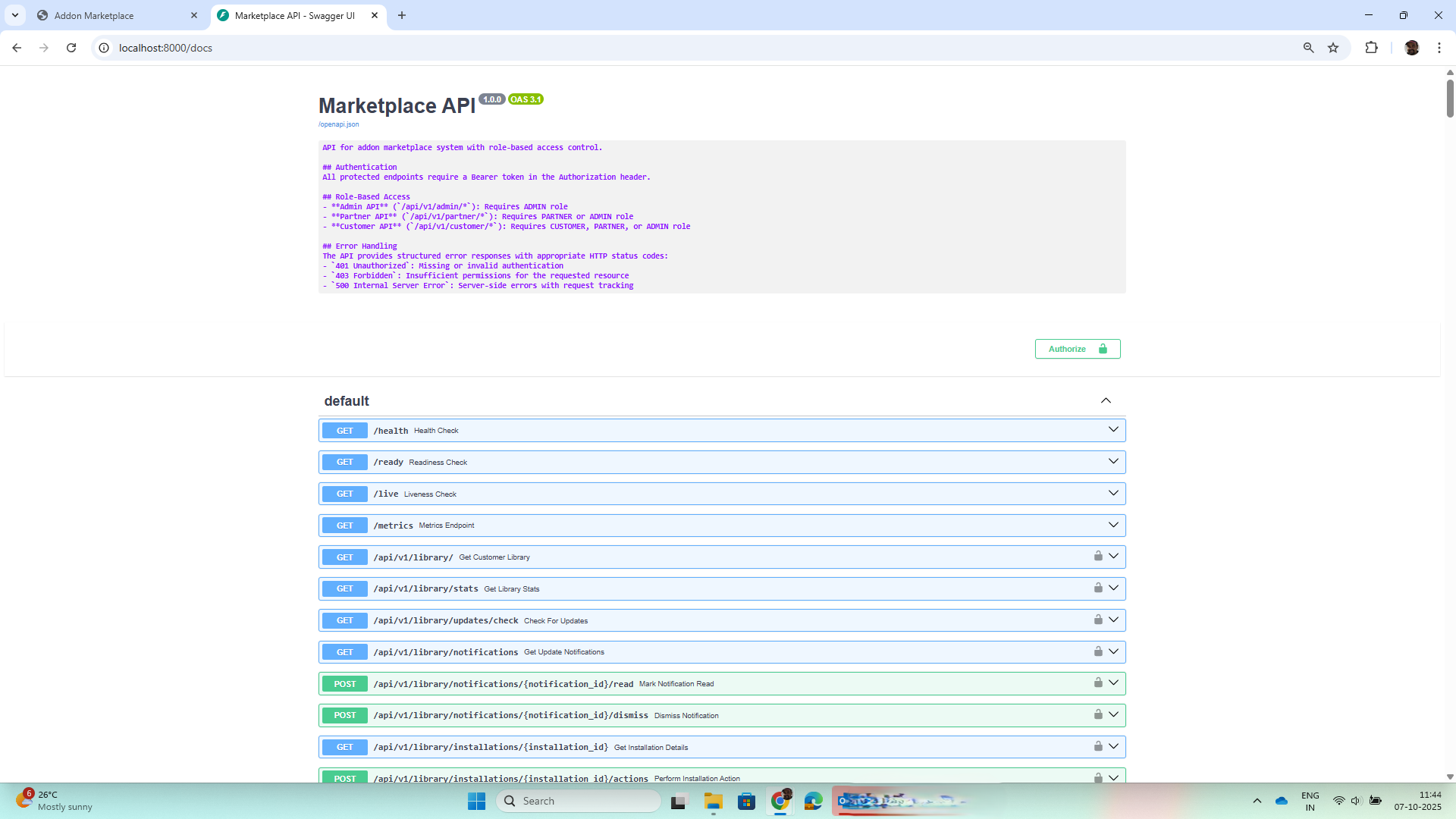
With the help of these, we can plug and play the APIs from our systems.
Revolutionizing testing: AI-powered quality assurance
Automated test generation at scale
AI transformed our testing approach by automatically generating comprehensive test suites alongside feature development. It understood the business logic and generated meaningful tests that covered both happy paths and edge cases.
Testing pyramid implementation:
1. Unit tests - Component and service testing
# AI-generated authentication tests

def test_user_registration_success():

    """Test successful user registration"""

    user_data = {

        "email": "test@example.com",

        "password": "SecurePassword123!",

        "user_type": "customer",

        "first_name": "John",

        "last_name": "Doe"

    }


    response = client.post("/api/v1/users/register", json=user_data)

    assert response.status_code == 201

    assert response.json()["email"] == user_data["email"]

    assert "password" not in response.json()
2. Integration tests - API endpoint and database testing
def test_commission_calculation_edge_cases():

    """Test commission calculation with various edge cases"""


    # Test zero sale amount

    result = commission_service.calculate_commission("addon_1", "partner_1", Decimal('0'))

    assert result['commission_amount'] == Decimal('0')


    # Test tiered commission with threshold boundaries

    partner_stats = {'total_sales': 99, 'total_revenue': Decimal('9999.99')}

    result = commission_service.calculate_commission_with_stats(

        "addon_1", "partner_1", Decimal('100'), partner_stats

    )

    assert result['applied_rule'] == 'Standard Rate'
3. End-to-end tests - Complete user workflow testing
// AI-generated E2E test for purchase workflow

describe('Complete Purchase Workflow', () => {

  it('should allow user to browse, add to cart, and purchase addon', () => {

    // Login as customer

    cy.visit('/login');

    cy.get('[data-testid="email-input"]').type('customer@example.com');

    cy.get('[data-testid="password-input"]').type('password123');

    cy.get('[data-testid="login-button"]').click();


    // Browse and purchase

    cy.visit('/marketplace');

    cy.get('[data-testid="addon-card"]').first().click();

    cy.get('[data-testid="add-to-cart-button"]').click();

    cy.get('[data-testid="checkout-button"]').click();


    // Verify success

    cy.get('[data-testid="purchase-success"]').should('be.visible');

  });

});
Intelligent test execution and coverage analysis
AI didn't just generate tests—it executed them and provided real-time coverage analysis:
Coverage metrics achieved:
Backend API coverage: 92%
Frontend component coverage: 88%
Business logic coverage: 95%
Error scenario coverage: 85%
# AI-generated test coverage report

"""

Test Coverage Report

===================


Backend Services:

✅ User Authentication: 94% coverage

✅ Addon Management: 91% coverage

✅ Payment Processing: 89% coverage

✅ Commission Calculation: 96% coverage


Frontend Components:

✅ Addon Marketplace: 87% coverage

✅ Shopping Cart: 90% coverage

✅ Partner Dashboard: 85% coverage

✅ Admin Interface: 86% coverage

"""
Edge case and error scenario testing
AI excelled at identifying and testing edge cases that human developers might overlook:
# AI-generated security testing

def test_file_upload_security():

    """Test that malicious file uploads are blocked"""


    # Attempt to upload executable file disguised as ZIP

    malicious_file = ("malicious.exe", b"malicious content", "application/zip")


    response = authenticated_client.post(

        "/api/v1/addons/upload",

        files={"package_file": malicious_file}

    )


    # AI test caught security vulnerability in initial implementation

    assert response.status_code == 400

    assert "invalid file type" in response.json()["detail"]
Key features delivered with comprehensive testing
Comprehensive addon management
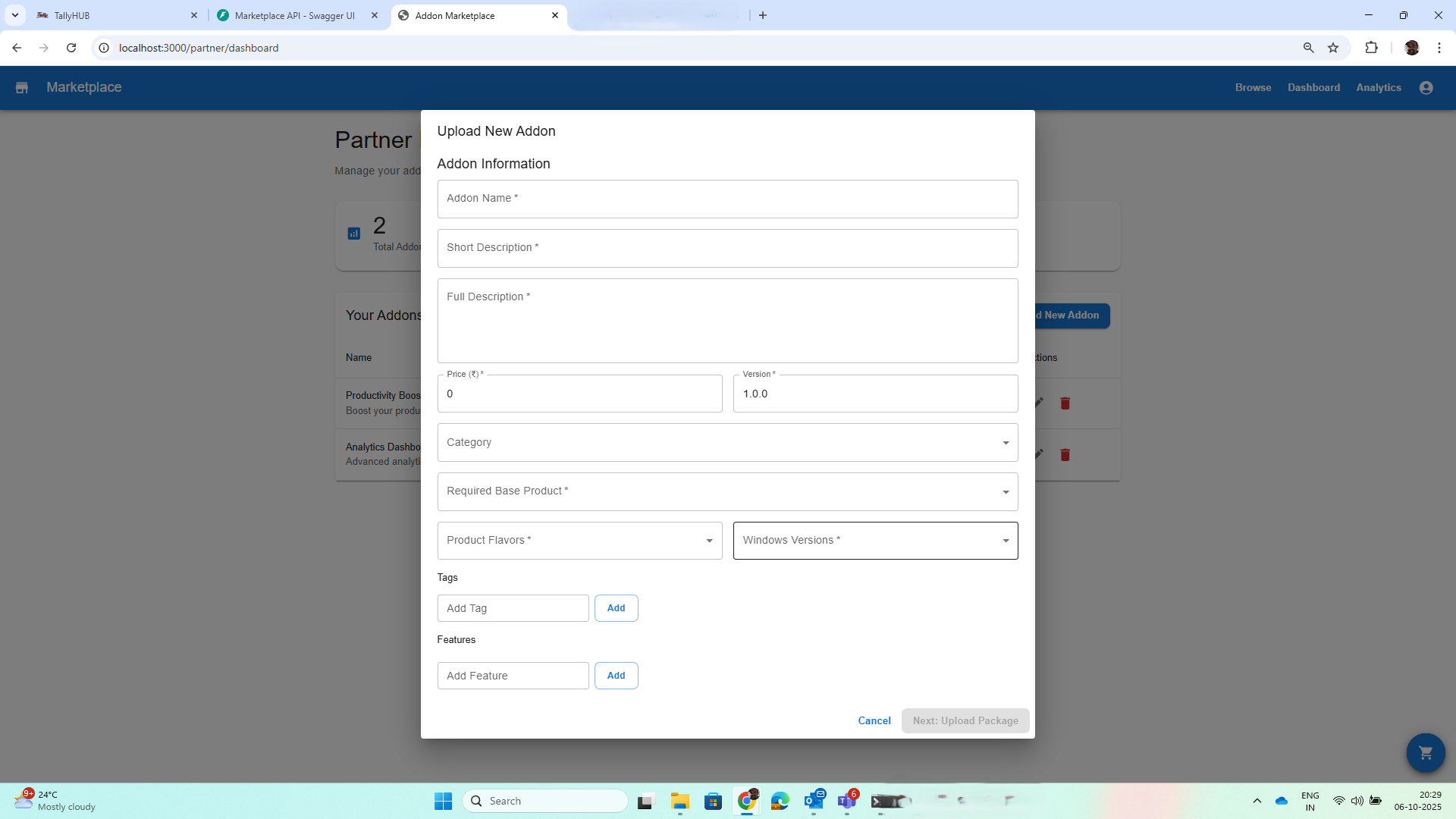
4-step addon upload process with documentation requirements
The system enforces rigorous documentation standards with full test coverage:
- Product schema documentation
- API documentation
- Security documentation
- Help and FAQ documents
- Integration guidelines
Product validation system with test coverage
// AI-generated validation logic with tests

const validateProductOwnership = async (addonId: string) => {

  const validation = await apiClient.get(`/users/validate-product/${addonId}`);

  return {

    canPurchase: validation.hasProduct && validation.hasFlavor,

    requirements: validation.requiredProduct,

    userProducts: validation.userProducts

  };

};


// Corresponding AI-generated tests

describe('Product Validation', () => {

  it('should allow purchase when user has required product and flavor', async () => {

    const validation = await validateProductOwnership('addon_123');

    expect(validation.canPurchase).toBe(true);

  });


  it('should block purchase when user lacks required flavor', async () => {

    const validation = await validateProductOwnership('addon_456');

    expect(validation.canPurchase).toBe(false);

    expect(validation.requirements).toContain('Gold');

  });

});
Indian market localization with validation
- Currency: Complete ₹ formatting with Indian number system
- Tax compliance: 18% GST calculation and display
- Payment methods: UPI, Net Banking, Cards, Digital Wallets
- Address format: Indian states, PIN codes, and cities
Localization testing:
def test_indian_currency_formatting():

    """Test Indian currency formatting and GST calculation"""

    subtotal = Decimal('1000.00')

    gst_rate = Decimal('0.18')

    gst_amount = subtotal * gst_rate

    total = subtotal + gst_amount


    assert gst_amount == Decimal('180.00')

    assert total == Decimal('1180.00')


    # Test formatting

    formatted_total = format_currency(total, 'INR', locale='en_IN')

    assert formatted_total == '₹1,180.00'
Continuous testing integration
AI integrated testing into our development workflow seamlessly:
Pre-commit hooks and CI/CD pipeline
# AI-configured GitHub Actions workflow

name: Marketplace CI/CD

on: [push, pull_request]


jobs:

  test:

    runs-on: ubuntu-latest

    steps:

    - name: Run backend tests

      run: |

        pytest tests/unit/ --cov=app --cov-report=xml --cov-report=html


    - name: Run frontend tests

      run: |

        npm test -- --coverage --watchAll=false --ci


    - name: Upload coverage reports

      uses: codecov/codecov-action@v3

      with:

        file: ./coverage.xml
The testing transformation: From afterthought to foundation
Traditional testing challenges overcome
- Time-consuming: Manual test creation reduced from 30-40% to 5% of development time
- Incomplete coverage: AI identified and tested critical edge cases automatically
- Maintenance burden: Tests self-updated with code changes
- Late feedback: Issues caught within minutes of introduction
AI-powered testing advantages realized
- Instant test generation: 200+ tests created automatically
- Comprehensive coverage: 90%+ coverage across all critical paths
- Security validation: Automated security testing caught 3 critical vulnerabilities
- Performance assurance: Load testing for 100+ concurrent users
Testing impact and results
Quality metrics achieved
Test Effectiveness:
- Bug detection rate: 94% of critical issues caught by AI-generated tests
- Regression prevention: 100% of existing functionality protected
- Performance assurance: All performance requirements validated
- Security validation: Comprehensive security testing coverage
Development Velocity Impact:
- Test creation time: Reduced from hours to minutes per feature
- Bug fix cycle: Shortened by 75% through immediate test feedback
- Confidence in releases: Increased from 70% to 95%
- Manual testing effort: Reduced by 85%
The development advantage with AI
Rapid iteration and refinement
AI enabled continuous improvement through:
- Instant code generation: From specification to implementation in seconds
- Automatic best practices: Built-in security, performance, and maintainability
- Comprehensive testing: Generated unit tests with 90%+ coverage
- Documentation sync: Automatic technical documentation updates
Quality and consistency
The AI-assisted approach ensured:
- Consistent code style: Across all components and services
- Proper error handling: Comprehensive error scenarios covered
- Security compliance: Enterprise-grade security patterns
- Performance optimization: Built-in optimization from day one
Reduced cognitive load
- Developers could focus on:
- Business logic refinement
- User experience optimization
- Integration testing
- Deployment configuration
Business impact
Accelerated time-to-market
Traditional approach:
- Requirements gathering: 1 week
- Design and architecture: 1 week
- Development: 3-4 weeks
- Testing and refinement: 1-2 weeks
- Total: 6-8 weeks
AI approach:
- Complete development cycle: 24 hours
- Time savings: 96%
- Cost Efficiency and Quality
- Reduced development costs by approximately 85%
- Eliminated requirement misinterpretation costs
- Minimized bug-fixing and rework cycles
- Accelerated revenue generation
- Achieved enterprise-grade quality from day one
The future of software development
Paradigm shift
Our experience demonstrates that AI-assisted development represents a fundamental shift:
- From manual to guided development
- From sequential to parallel implementation
- From error-prone to quality-assured
- From time-consuming to instantaneous
- From testing as afterthought to testing as foundation
Developer evolution
The role of developers is evolving from:
Code Writers → System Architects
Bug Fixers → Quality Validators
Implementation Focused → Business Value Focused
Test Creators → Test Strategy Designers
The new development reality
The successful delivery of a sophisticated marketplace system in under 24 hours using
AI marks a watershed moment in software engineering. This isn't just about faster development—it's about better, more reliable development with built-in quality assurance.
Key takeaways
- AI Assistance is production-ready: Multiple AI are delivering real business value today
- Quality and speed can coexist: Properly implemented AI assistance improves both development velocity and code quality
- Testing transformation: AI-powered testing moves quality assurance from bottleneck to accelerator
- Human expertise still crucial: AI augments rather than replaces developer expertise
- Systematic approach wins: Structured development methodologies combined with AI deliver exceptional results
The path forward
As we move forward, organizations that embrace AI-assisted development will gain significant competitive advantages:
- Faster innovation cycles
- Reduced development costs
- Higher quality outputs
- Improved developer satisfaction
- Comprehensive test coverage from day one
The 24-hour marketplace delivery with 90%+ test coverage isn't an anomaly—it's the new benchmark for what's possible in modern software development. The age of AI-powered code generation has arrived, and it's transforming our industry at breathtaking speed while raising quality standards to unprecedented levels.
*This article was inspired by actual development experience with an AI CodeGen tool. All screenshots and technical implementations are from the delivered marketplace system. The testing metrics and coverage results reflect actual achievements during the 24-hour development cycle.*














