










Most business owners think branding is handled by someone else.
The marketing team runs campaigns. The agency manages ads. The PR team handles visibility. And the founder stays behind the scenes, doing what feels like the real work.
That arrangement held for a long time. It is quietly breaking.
I have watched businesses spend lakhs on advertising every month and still struggle to fill their pipeline. In the same market, in the same category, I have watched founders with almost no marketing budget build serious trust, just by sharing what they think, what they have learnt, and what they got wrong.
Same market. Very different outcomes. The difference was not the product.
The difference was who was doing the talking.
Today, people trust people more than they trust companies. That changes what a CEO's job actually is. The founder's voice has become a distribution channel, and often it is the cheapest and most defensible one the business owns. So the title of this article is meant literally. The CEO is becoming the new Chief Distribution Officer.
You are renting attention
Most businesses today depend completely on platforms: Instagram for reach, LinkedIn for credibility, Google Ads for demand. It works well, right up to the day costs rise or the algorithm changes.
I remember a conversation with a founder whose entire lead flow ran on paid ads. Healthy business, decent margins. Then ad costs in his category jumped and he trimmed the budget. Leads dropped the same week.
His words stayed with me:
“The moment I stop paying, I stop existing.”
That is the whole problem in one sentence.
He didn't own his audience. He was borrowing attention from platforms, on rent, at a price the platform decides.
A personal brand works on the opposite logic. When people follow a founder for his ideas and thinking, that visibility does not disappear when the ad spend stops. The audience came for the person, not for the placement.
|
CFO Insight: Ad spend is an expense. It buys visibility for a month and then expires. A founder's brand behaves like a capital asset: it costs time instead of money, and its value compounds. Very few line items in a business behave that way. |
People trust people, not perfect marketing
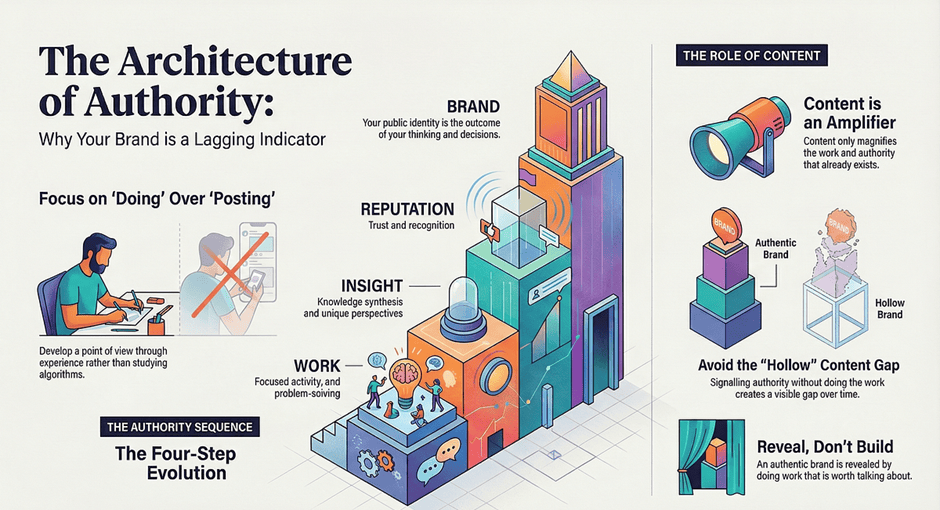
Open any feed today and everything looks the same. Perfect graphics. Perfect captions. Perfect thirty-second videos.
Audiences are visibly tired of it.
What cuts through now is almost embarrassingly simple: real experiences, honest lessons, plain language. A founder writing four unpolished lines about a pricing mistake will regularly outperform the agency-produced campaign sitting two posts above it.
I have seen this repeatedly. Posts where founders share what actually went wrong perform better than anything the marketing calendar produced that month.
The reason is not mysterious. Polished content signals budget. Honest content signals character. People buy from character.
The founder's face is a distribution channel
Here is the part most companies miss: the same message travels completely differently depending on whose name is on it.
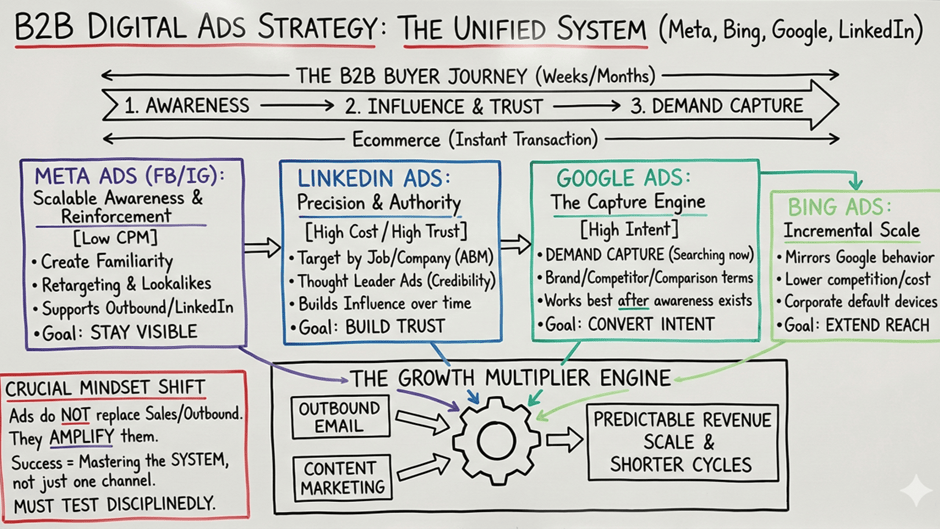
A company page announcement gets scrolled past. The identical thought, written in first person by the founder, gets read, shared, and replied to. On LinkedIn especially, content from a person consistently travels several times further than content from a logo. People connect with faces, and the algorithms follow people's behaviour.
When the founder is visible, the sales conversation itself changes. Prospects arrive already warm. I have watched customers open meetings with:
“I've been following your content for months.”
That sentence changes everything. The customer already knows how you think, what you believe, and what kind of business you run. The trust-building phase, usually the longest and most expensive part of the sale, has already happened for free, before the first call.
Lower hesitation means faster decisions. Faster decisions mean a shorter sales cycle. A shorter sales cycle is a distribution advantage, not a marketing vanity metric.
From followers to community
A large follower count looks impressive in a pitch deck. But followers alone don't build businesses. Connection does.
A founder with 2,000 engaged followers (people who read, reply, and remember) will routinely create more business impact than an account with 100,000 passive ones. Because attention is not the same as trust, and reach is not the same as relationship.
This is the same shift I wrote about in the distribution moat piece: the value is moving from audiences you rent to communities you own. The executive personal brand is how that community gets built in the first place. People rarely join a company's community. They join a person's.
Personal branding is balance-sheet thinking
The most common objection I hear from founders is some version of: “I don't want to become an influencer.”
Fair. But that objection confuses the output with the asset.
Likes, views, and followers are the visible surface. The asset underneath is trust, and trust quietly reprices everything the business does. Customers hesitate less, so acquisition gets cheaper. Partners respond faster, because your name carries context. Investors do less convincing of themselves, because they have watched you think in public for a year. Even vendors extend more comfort to a face they know.
I have seen businesses become measurably easier to run simply because the leadership became visible and consistent online. Nothing else changed. People feel safer working with a business when they know the person behind it.
|
CFO Insight: Trust reduces friction, and friction is cost. Lower customer hesitation cuts acquisition cost. Faster partner responses cut deal cycles. Warmer investor conversations cut fundraising time. None of these appear as a line item. All of them show up in the numbers. |
Good talent now interviews the leader first
Hiring has changed in the same direction, and few founders have noticed.
Earlier, a candidate checked two things: the salary and the company name. Now, before the interview, they have already checked the leadership. How you think. How you treat people. What the culture feels like from your posts.
I have sat across candidates who said, in almost these exact words:
“I followed your posts, and I liked how you think.”
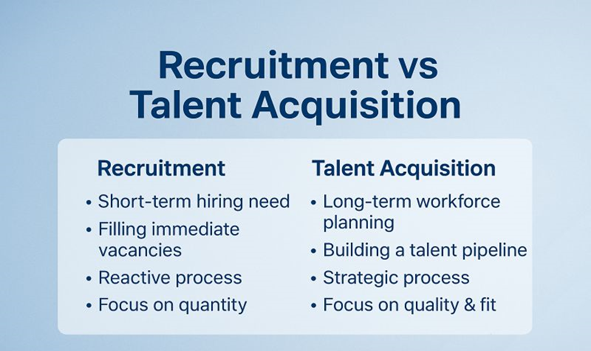
That candidate walked in pre-sold, the same way the warm customer did. In a market where good talent has options, the founder's visible thinking is doing recruitment work no HR budget can buy. People want to work with leaders they trust and respect, and they now have a public record to judge that by.
The asset that cannot be copied
A personal brand is not built in a month, and that is exactly what makes it valuable.
It grows through unglamorous inputs: consistency, useful insight, honest communication, and time. There is no shortcut, which means there is no shortcut for your competitor either.
Think about what can be copied in your business. The product can be copied. The pricing can be matched. The ads can be outspent. The features can be cloned in a quarter.
Now think about what cannot. Nobody can copy three years of a founder showing up, thinking in public, and being right often enough to be trusted. That history is the moat.
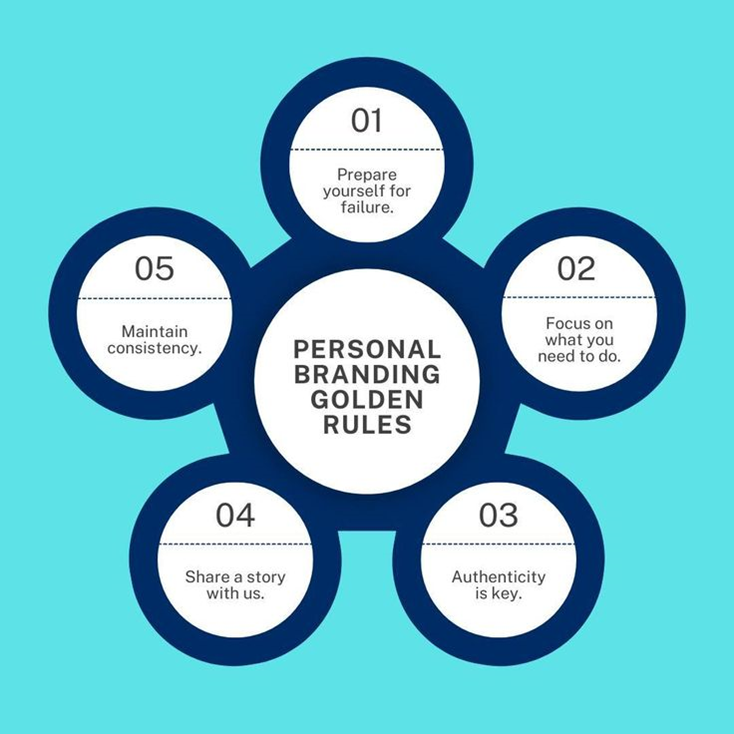
And it requires far less than founders fear. Not daily posting. Not personal exposure. Just a steady habit: share what you learn, talk about real experiences, be consistent, and focus on being useful. Thirty minutes a week, done for a year, beats a viral month done once.
The market is moving toward trust
Most business owners still treat personal branding as optional, a nice-to-have for whenever the real work slows down.
It stopped being optional a while ago.
The market is moving toward trust-based buying. People increasingly want to know who they are buying from, what that person believes, and how that person thinks, before they spend. Founders who stay invisible are not being humble. They are handing their most defensible distribution channel to competitors who show up.
The companies that win the next decade will have a leader people already know and already trust. Before the first sales call. Before the first interview. Before the first term sheet.
Because today, people don't follow companies.
They follow people they trust.
And the CEO who understands that has already taken over the real distribution department.







