









Most people still look at MSMEs as “small players.”
Small shops.
Small factories.
Small service providers.
But that view is outdated.
Because when you look at India’s economy in 2026, one thing becomes very clear:
MSMEs are not small.
They are systemically important.
I realised this during a financial review with a mid-sized trading business.
On paper, it looked like a regular ₹2–3 crore company.
But when we traced the business properly, we saw something interesting:
Their suppliers were MSMEs.
Their logistics partners were MSMEs.
Their packaging vendors were MSMEs.
Their repair and service providers were MSMEs.
In other words, the company was not standing alone.
It was part of a much larger MSME-powered network.
That’s when it became clear to me:
We are not operating in an economy merely supported by MSMEs.
We are operating in an economy built through them.
This is why MSMEs in 2026 should no longer be seen only as “small businesses.”
They are becoming Champion Assets — businesses that create employment, power supply chains, drive exports, and strengthen the economy from the ground up.
The numbers that change the narrative
Let’s start with the facts.
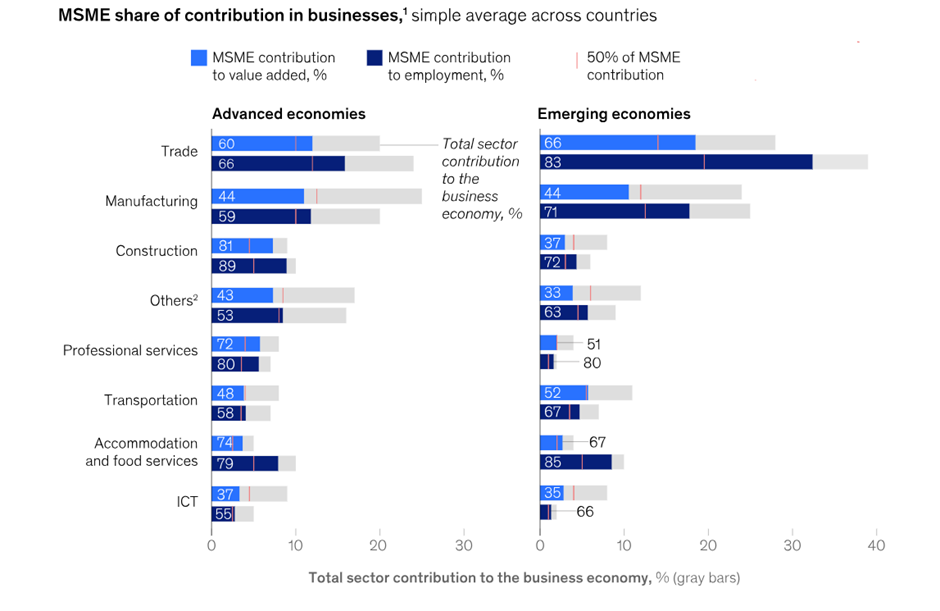
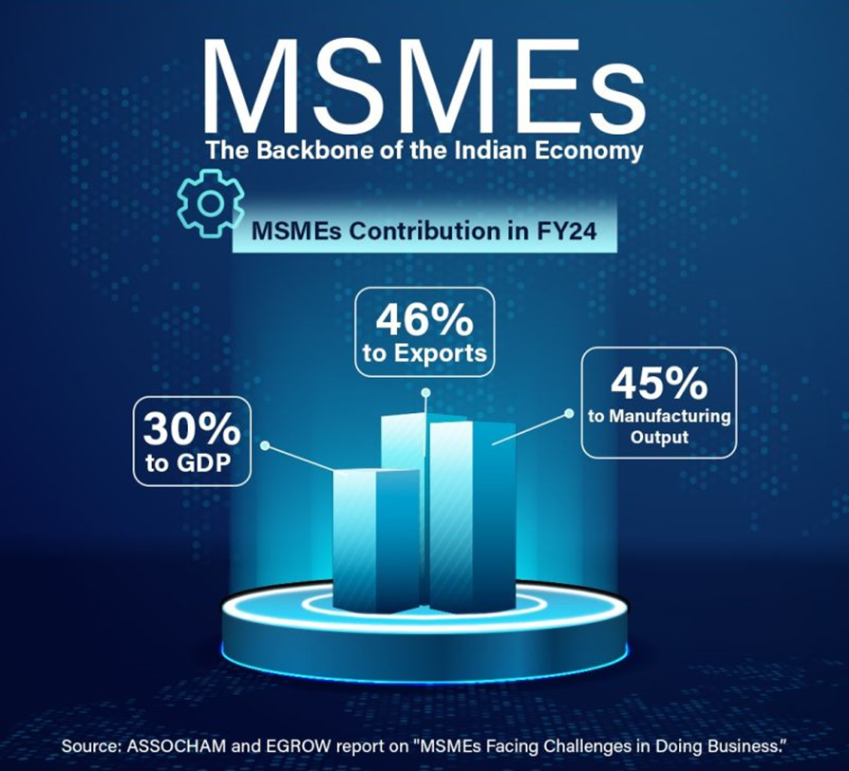
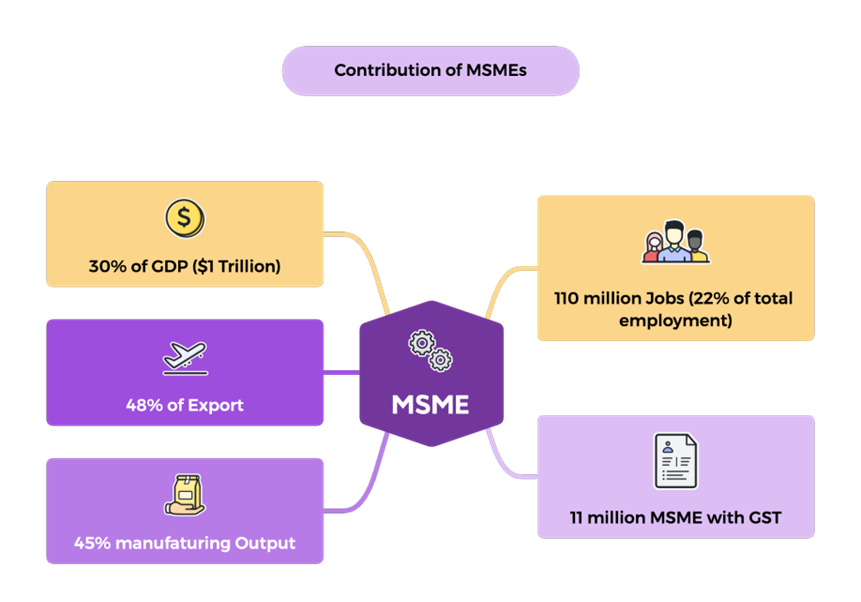
MSMEs contribute approximately:
31.1% of India’s GDP
35.4% of manufacturing output
48.58% of total exports
Over 32.82 crore jobs across 7.47 crore enterprises
Pause for a moment.
Nearly one-third of the economy.
A major share of exports.
Employment for crores of people.
Presence across towns, cities, and rural markets.
This is not a side sector.
This is the engine room of the economy.
And yet, the perception has not fully caught up with the reality.
Many people still say, “It’s just an MSME.”
But the numbers tell a different story.
MSMEs are not “just small businesses.”
They are the operating layer of India’s economic growth.
From support system to growth engine
Earlier, MSMEs were often seen as:
Ancillary units.
Low-scale producers.
Dependent vendors.
Local service providers.
But in 2026, that description is incomplete.
Today, many MSMEs are:
Integrated into supply chains.
Serving national and global customers.
Adopting digital platforms.
Creating employment at scale.
Contributing meaningfully to exports.
Even the policy direction reflects this shift.
The focus is moving from only protection to expansion.
From subsidies to scale.
From survival support to growth capital.
From informality to professionalisation.
That matters.
Because when policy starts treating a sector as a growth driver, business owners must also start seeing themselves differently.
CFO Insight:
When policy moves from protection to expansion, it signals long-term strategic importance.
MSMEs are no longer only being protected.
They are being positioned.
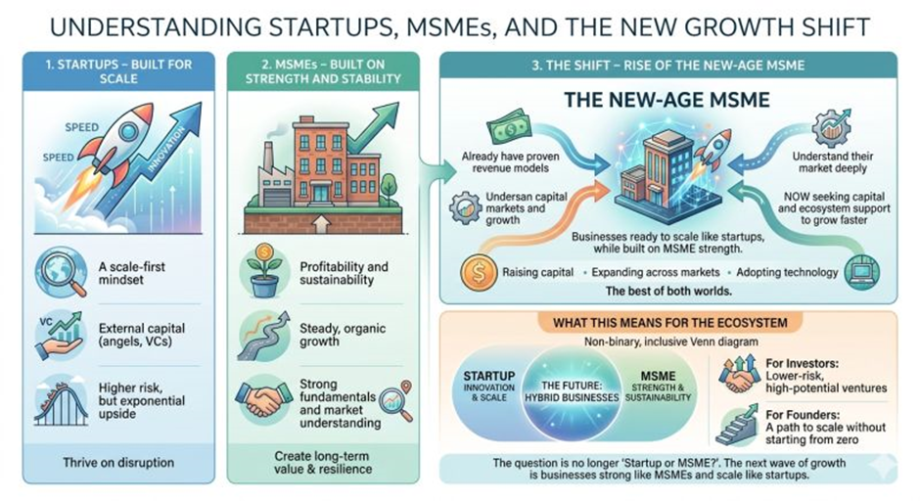
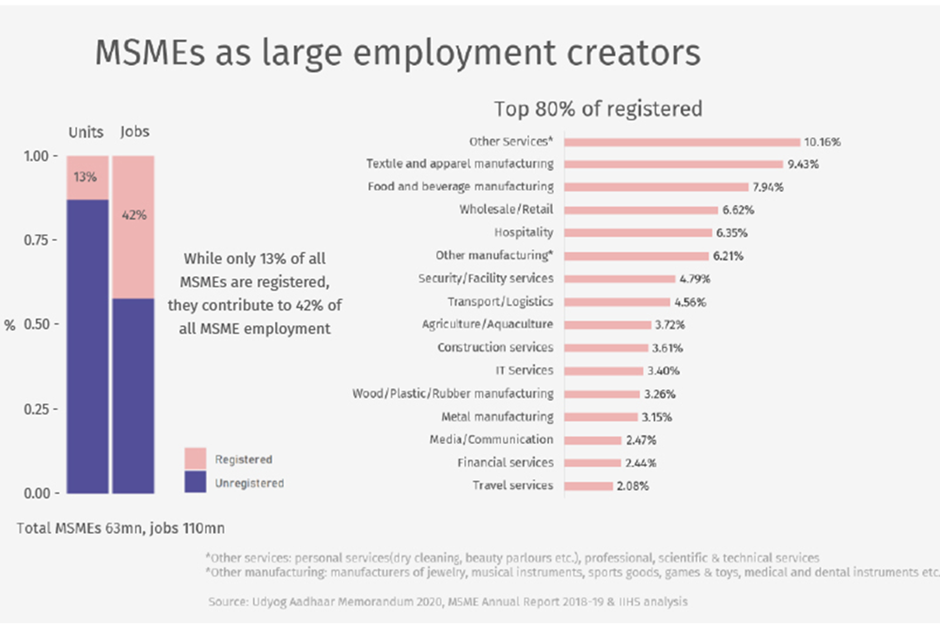
Employment: The real economic backbone
One number deserves more attention:
MSMEs employ over 32 crore people, making them one of India’s largest employment generators after agriculture.
That is massive.
But the real strength is not just the number.
It is the distribution.
MSME employment is spread across:
Rural areas.
Small towns.
Emerging cities.
Industrial clusters.
Local service markets.
This creates economic balance.
A large corporation may create thousands of jobs in one location.
But MSMEs create employment across thousands of locations.
That spread matters.
It reduces migration pressure.
It supports local income.
It keeps smaller economies alive.
It creates opportunity closer to home.
CFO Observation:
Large companies create scale.
MSMEs create spread.
And spread creates resilience.
That is why MSMEs are not only employment generators.
They are social and economic stabilisers.
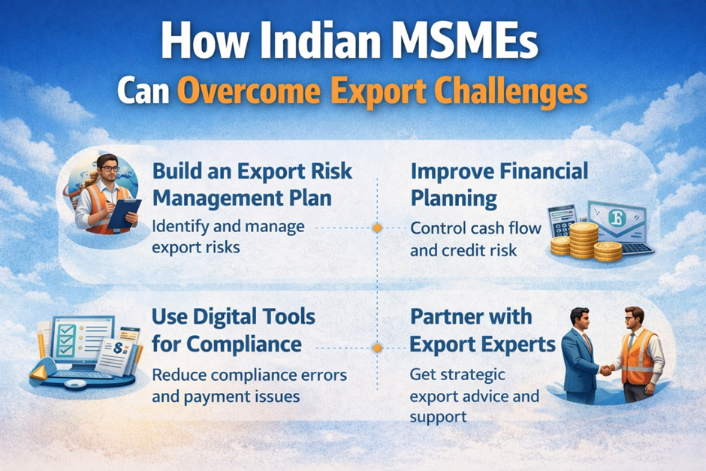
The export advantage nobody talks about enough
Nearly half of India’s exports are linked to MSMEs.
That changes the way we should look at them.
MSMEs are not only domestic players.
They are global participants.
From textiles to engineering goods.
From handicrafts to food products.
From chemicals to components.
From digital services to specialised manufacturing.
MSMEs carry India’s presence into global markets.
I have seen small exporters grow faster than expected because they had three advantages:
They served a niche.
They made decisions quickly.
They adapted to customer requirements faster than larger competitors.
That is the MSME advantage.
Big companies often win on size.
But MSMEs often win on speed, flexibility, and personal attention.
CFO Insight:
In stable markets, size is an advantage.
In changing markets, agility becomes an advantage.
And today’s global economy rewards agility.
The real strength of MSMEs: Agility
Large businesses are powerful.
But they are often slow.
Approvals take time.
Systems are layered.
Decisions move through multiple levels.
MSMEs operate differently.
They can change pricing quickly.
Modify products faster.
Shift suppliers when needed.
Test new markets without long approval cycles.
Speak directly to customers and act immediately.
I have seen MSMEs pivot their business model in weeks.
In many larger companies, the same change would take months just to approve.
This agility is becoming more valuable in 2026 because markets are no longer predictable.
Demand changes quickly.
Input costs fluctuate.
Customer expectations rise.
Technology keeps shifting.
Competition appears from unexpected places.
In such an environment, the ability to move fast is not a small advantage.
It is a survival advantage.
CFO Observation:
Stability rewards size.
Uncertainty rewards agility.
And MSMEs are naturally built for agility.
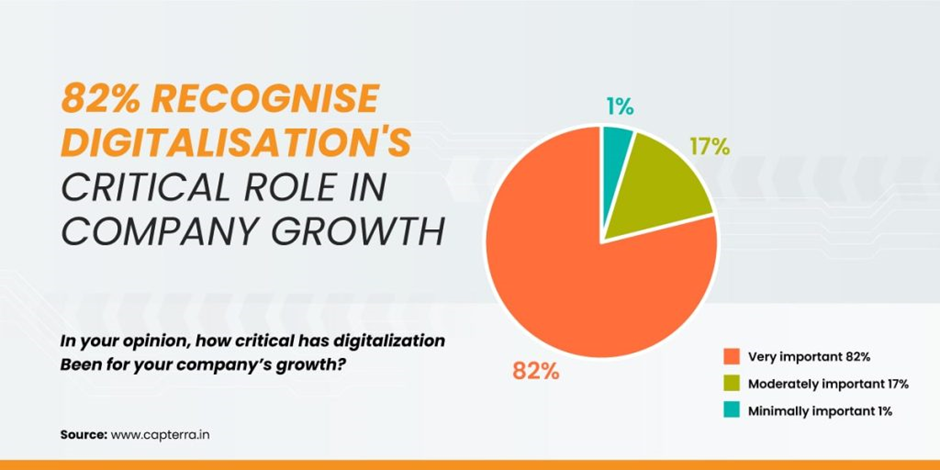
Digital platforms are changing the game
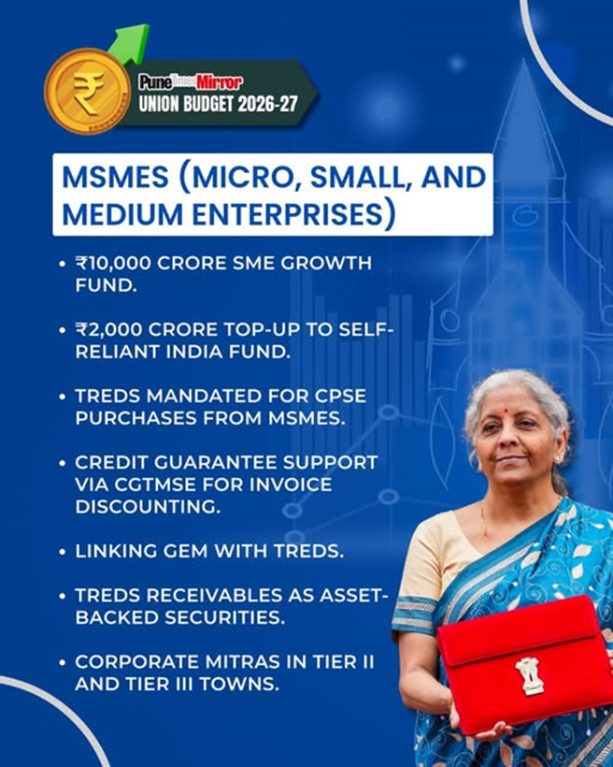
One of the biggest shifts for MSMEs is digital formalisation.
Platforms such as:
Udyam Registration
TReDS
GeM
Digital payments
Online compliance systems
Cloud accounting tools
are changing how MSMEs operate.
These platforms help MSMEs:
Access credit.
Improve visibility.
Participate in government procurement.
Reduce manual paperwork.
Track payments better.
Build formal business records.
This is important because informality has always been one of the biggest barriers for MSMEs.
Without proper records, it becomes difficult to get funding.
Without formal systems, it becomes difficult to scale.
Without visibility, it becomes difficult to win larger customers.
Digital adoption solves part of that problem.
Not instantly.
But gradually and powerfully.
CFO Insight:
Formalisation improves access.
Access improves growth.
Growth improves confidence.
MSMEs that adopt digital systems early will have a clear advantage over those that continue to run only on memory, notebooks, and informal follow-ups.
The financial reality: Growth still needs discipline
Now, let’s be practical.
MSMEs have huge potential.
But potential alone does not create growth.
Financial discipline does.
Many MSMEs still struggle with:
Delayed payments.
Working capital pressure.
Poor receivables tracking.
Overdependence on informal credit.
Weak cash flow visibility.
Low separation between business and personal finances.
I have seen businesses lose good orders not because demand was missing, but because liquidity was missing.
The customer was ready.
The product was ready.
The opportunity was real.
But the cash cycle was weak.
That is why MSME growth must be supported by stronger financial systems.
Every MSME owner should know:
How much cash is available today.
How much is stuck in receivables.
Which customers are delaying payments.
What liabilities are due in the next 30 days.
Whether margins are improving or shrinking.
Which products or customers are actually profitable.
Growth without financial control creates stress.
Growth with financial discipline creates scale.
CFO checklist for MSMEs:
Track cash flow weekly.
Review receivables ageing every 7 days.
Separate personal and business expenses.
Monitor product-wise profitability.
Avoid taking orders that damage working capital.
Build a 90-day liquidity view.
This is where many MSMEs can move from survival mode to strategic growth mode.
Why MSMEs are becoming “Champion Assets”
Now connect the dots.
MSMEs contribute to GDP.
They generate employment.
They drive exports.
They support large companies.
They create regional growth.
They adapt faster than bigger firms.
They strengthen supply chains.
That combination makes them powerful.
But the real shift is this:
MSMEs are no longer only being viewed as “small businesses.”
They are becoming strategic economic assets.
The term Champion Assets fits because MSMEs do three important things:
They create growth.
They create resilience.
They create distributed opportunity.
And most importantly:
They create impact beyond their size.
A single MSME may look small on paper.
But when thousands of MSMEs operate across supply chains, industries, districts, and export markets, they become a national economic force.
That is the real story.
The mindset shift MSME owners need
Despite all this, many MSME owners still think small.
They say:
“I am just a small business.”
“My company is too small.”
“This is only a family business.”
“We cannot think like big companies.”
That mindset is limiting.
Because your current size may be small.
But your economic role may not be.
The real shift begins when an MSME owner stops thinking only as an operator and starts thinking as a builder.
Not just:
“How do I survive this month?”
But also:
“How do I build systems?”
“How do I improve margins?”
“How do I reduce dependency?”
“How do I professionalise operations?”
“How do I become fundable?”
“How do I scale without losing control?”
This is the mindset that separates ordinary MSMEs from Champion Assets.
CFO Insight:
Identity shapes strategy.
Strategy shapes decisions.
Decisions shape growth.
When you see yourself as small, you make small decisions.
When you see yourself as a serious economic participant, your decisions change.
What MSMEs should do in 2026
The opportunity is clear.
But MSMEs must act with structure.
Here is a practical 6-point roadmap:
1. Treat your business as part of a larger system
You are not only selling products or services.
You are part of a supply chain.
Understand where you fit, who depends on you, and how you can become more valuable.
2. Strengthen financial discipline
Cash flow is not an accounting activity.
It is a survival system.
Track receivables, payables, margins, and working capital regularly.
3. Use digital platforms seriously
Register formally.
Use digital payments.
Explore GeM if relevant.
Use TReDS where applicable.
Maintain clean books of accounts.
Digital visibility improves trust.
4. Build scalability into operations
Document processes.
Reduce owner dependency.
Train second-level people.
Create basic SOPs.
Use simple dashboards.
A business that depends only on the owner cannot scale properly.
5. Focus on profitability, not just revenue
Many MSMEs chase turnover.
But turnover without margin creates pressure.
Know which customers, products, and services actually make money.
6. Think long-term, not transactionally
Do not run the business only order-to-order.
Build relationships.
Improve systems.
Create reserves.
Upgrade skills.
Invest in technology.
The MSMEs that think long-term will become stronger, more fundable, and more competitive.
Conclusion
The 2026 economy is not being built only by large corporations.
It is being powered by millions of MSMEs working across sectors, cities, towns, villages, and supply chains.
But the real opportunity is not just in being part of this system.
The real opportunity is in recognising your role within it.
Because the difference between a “small business” and a “Champion Asset” is not only size.
It is mindset.
It is structure.
It is discipline.
It is execution.
MSMEs are no longer just the backbone of the economy.
They are becoming its growth engine.
And the MSMEs that understand this early will not merely participate in India’s growth story.
They will help lead it.







