GSTIN-wise compliance, inter-branch transfers and consolidated reporting for businesses growing past one address.
Expanding your business from one location to multiple branches is a major milestone. Whether you open a warehouse in another state, a sales office in a different city, or multiple GST registrations under the same PAN, your accounting and GST compliance become significantly more complex.
The biggest challenge for businesses is maintaining one consolidated set of books while ensuring GSTIN-wise compliance for every registered branch.
The good news is that Tally Prime provides a structured way to manage multiple branches, multiple GSTINs, inter-branch transactions, stock transfers, and consolidated financial reports—all within a single accounting ecosystem.
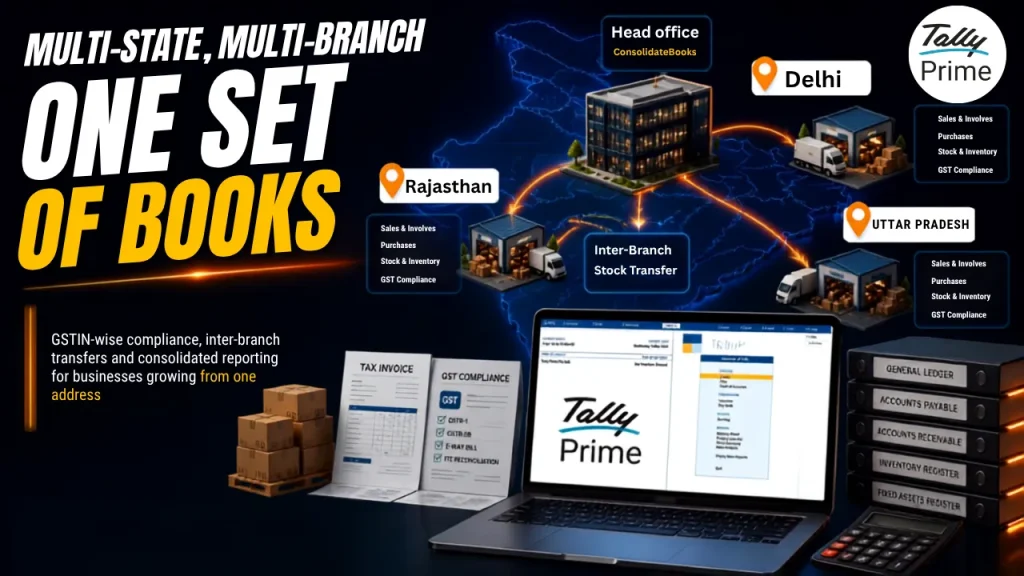
Why multi-branch accounting is different Under GST?
A business operating from a single location generally has one GST registration and one set of books.
The moment another branch is opened in a different state (or sometimes another GST registration in the same state), GST law treats each registration as a Distinct Person.
Example
|
Head Office |
Branch Office |
|
Delhi GSTIN |
Uttar Pradesh GSTIN |
|
07ABCDE1234F1Z5 |
09ABCDE1234F1Z1 |
Although the PAN is the same, both registrations are treated as separate taxable persons under GST.
This means:
- Separate GST Returns.
- Separate Electronic Credit Ledgers.
- Separate E-Way Bills where applicable.
- Taxable inter-branch supplies.
- Separate books or GST-wise accounting records.
When do you need separate GST registration?
|
Situation |
Separate GSTIN Required? |
|
Branch in another State |
Yes |
|
Warehouse in another State |
Yes |
|
Office in same State |
Optional (if separate registration taken) |
|
Business vertical with separate GST registration |
Yes |
What changes the day you open a second branch?
|
Before Expansion |
After Expansion |
|
One GST Return |
Multiple GSTR-1 & GSTR-3B |
|
Single Purchase Register |
GSTIN-wise Purchase Registers |
|
One Sales Register |
GSTIN-wise Sales Registers |
|
No Branch Transfer |
Inter-Branch Tax Invoice Required |
|
One Profit & Loss |
Branch-wise and Consolidated P&L |
|
One Balance Sheet |
Branch-wise + Consolidated Balance Sheet |
How to manage multi-branch accounting in TallyPrime?
Tally Prime offers two practical methods.
Method 1 — Separate company for every GSTIN (Recommended)
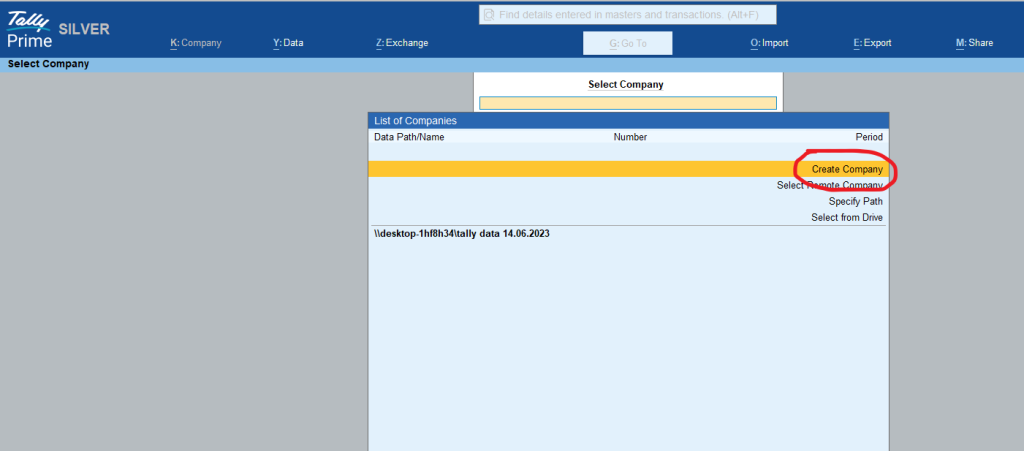
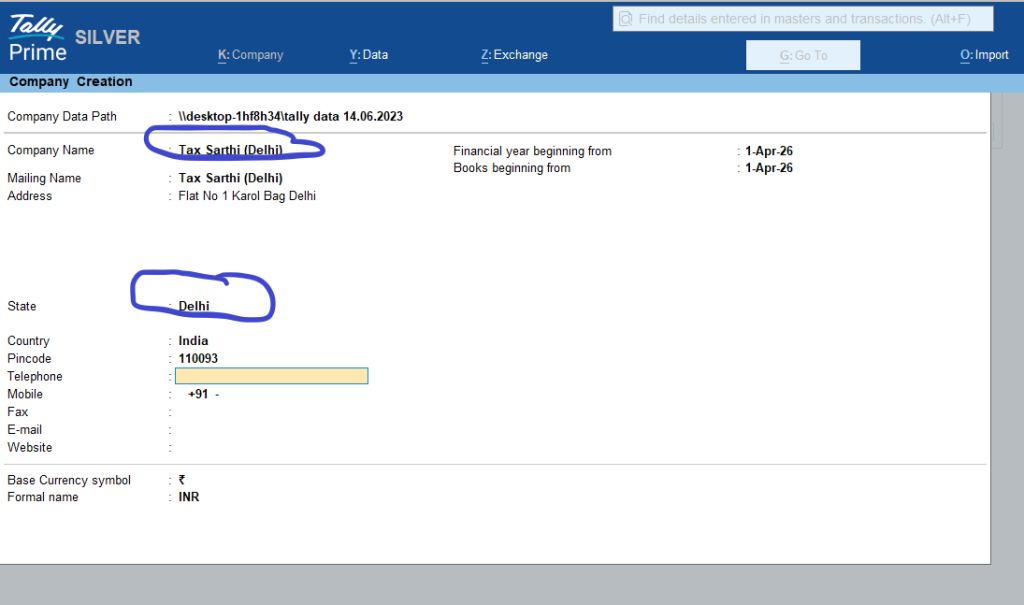
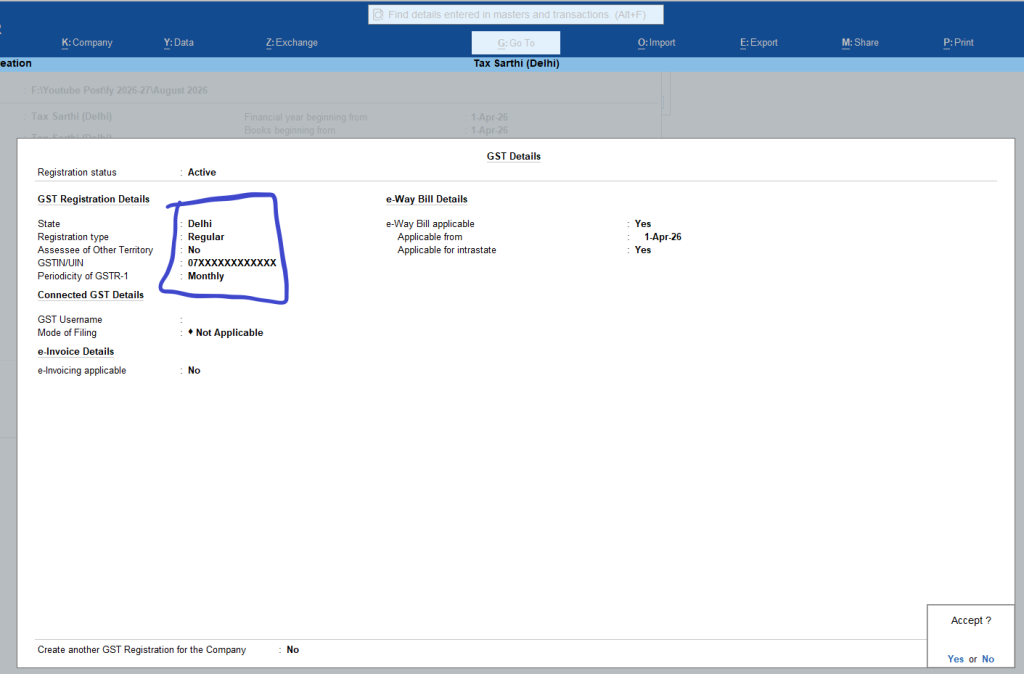
This is the most widely used and GST-compliant approach.
Company structure
|
Company |
GSTIN |
|
Tax Sarthi – Delhi |
07XXXXXXXXXXXX |
|
Tax Sarthi – Ghaziabad |
09XXXXXXXXXXXX |
|
Tax Sarthi – Rajasthan |
08XXXXXXXXXXXX |
Each company maintains:
- Separate books.
- Separate GST Returns.
- Separate E-Invoice.
- Separate GSTR Reports.
Later you can consolidate reports.
Advantages
- Fully GST compliant.
- Easy GSTR filing.
- Separate ITC.
- Easy audit.
- Easy departmental scrutiny.
Method 2 — Branch accounting within one company (Same GST registration)
Use this method only if all branches operate under one GSTIN.
Use:
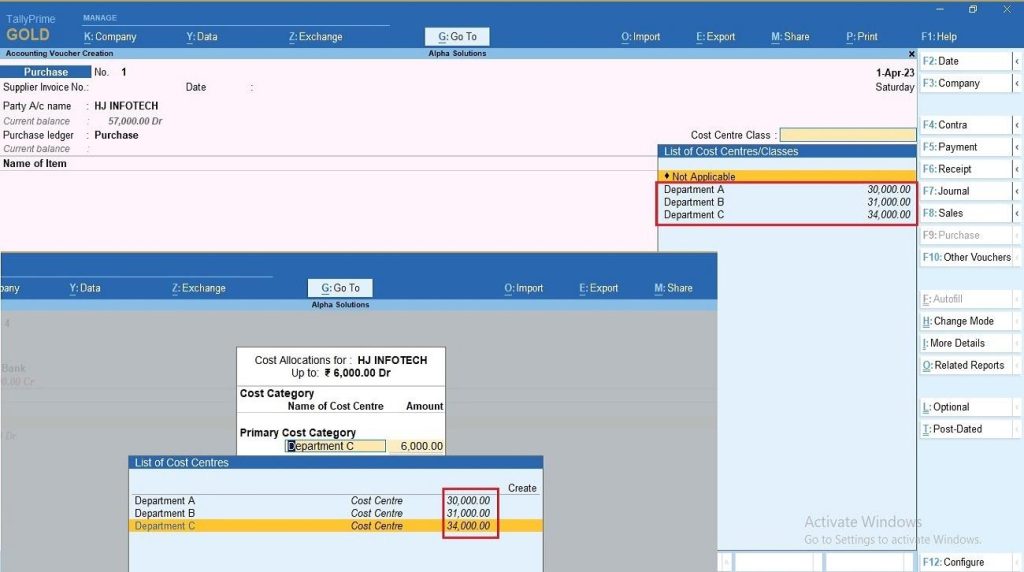
- Cost Centres
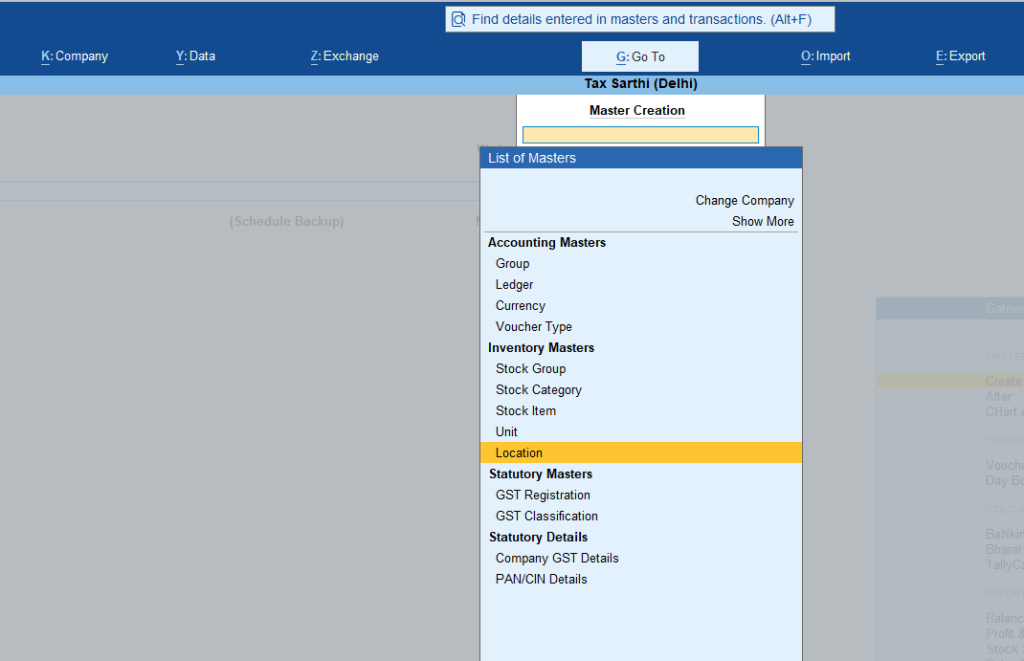
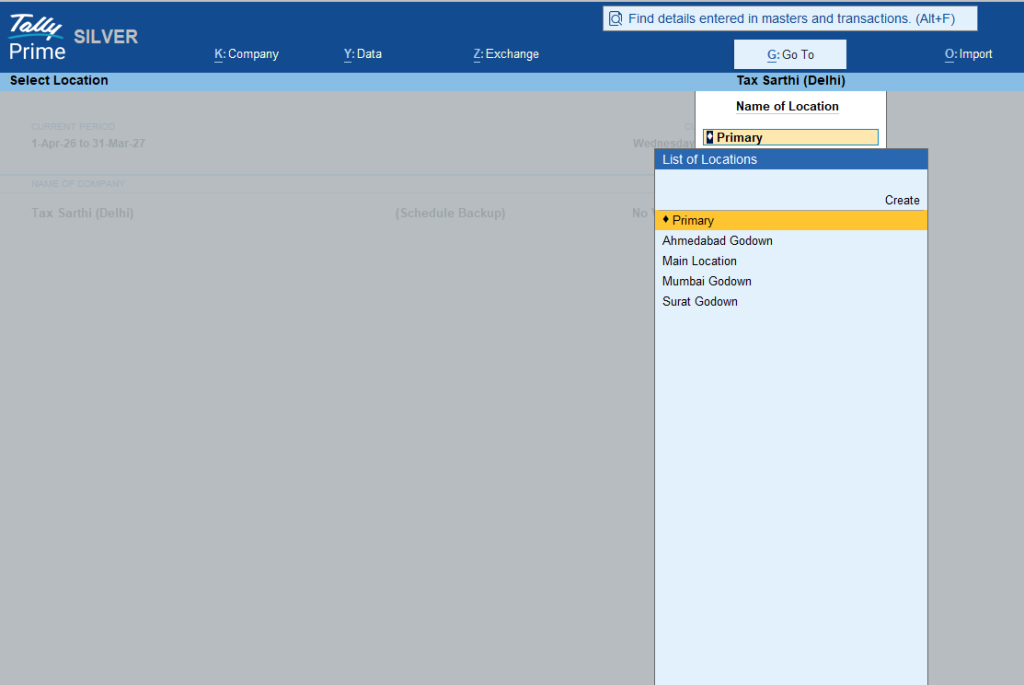
- Go-downs
- Branch Ledgers
- Voucher Classes
Step-by-step setup in TallyPrime
Step 1 – Create separate companies
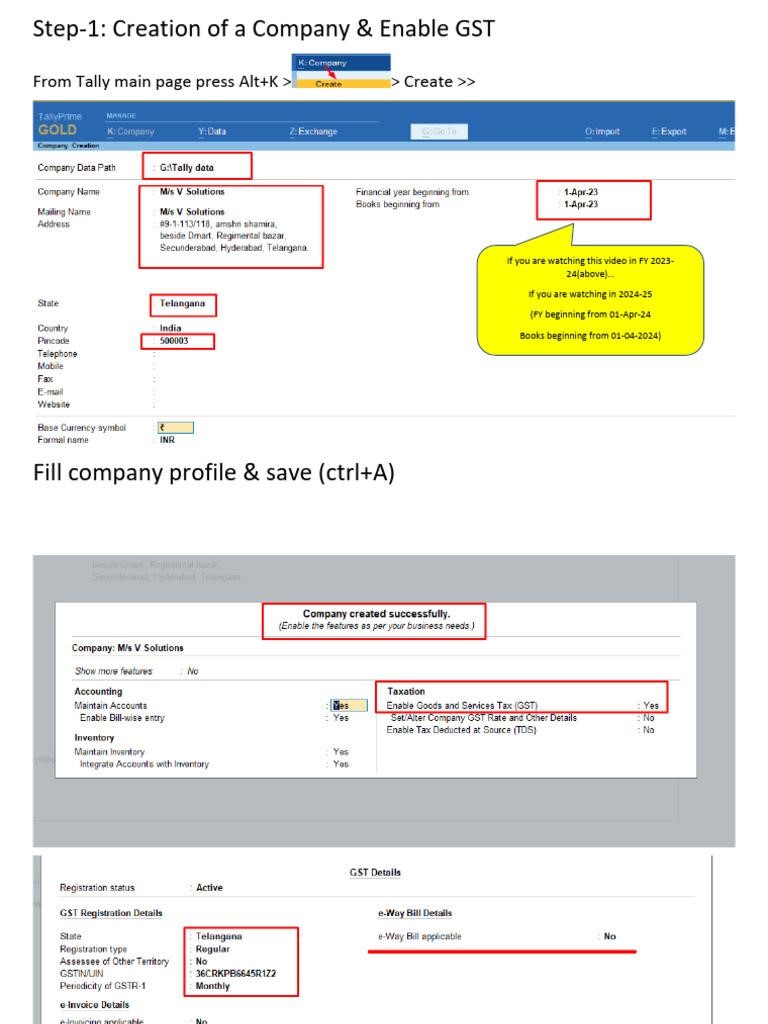
Go to:
Gateway of Tally → Create Company
Enter:
|
Company Name |
Tax Sarthi – Delhi Branch |
|
State |
Delhi |
|
GST Registration |
Regular |
|
GSTIN |
Delhi GST Number |
Repeat for every branch.
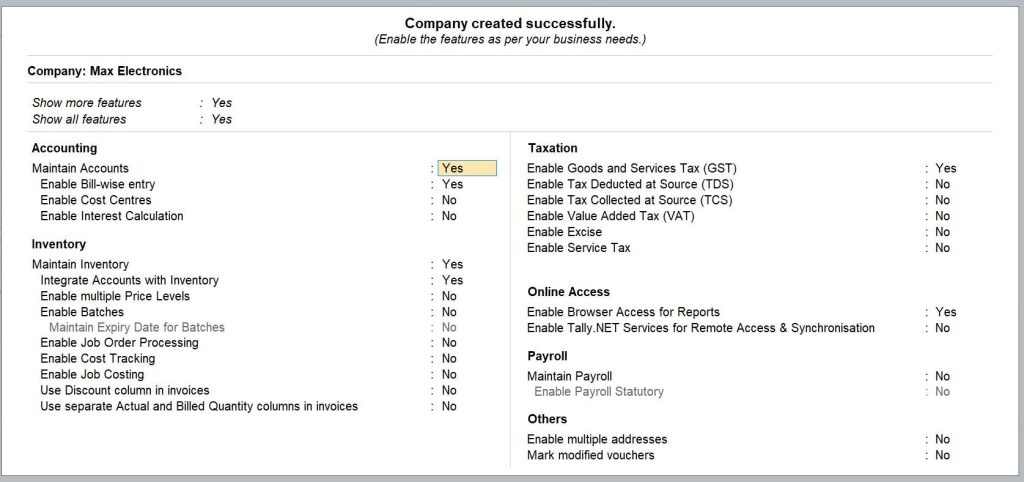
Step 2 – Enable GST in each company
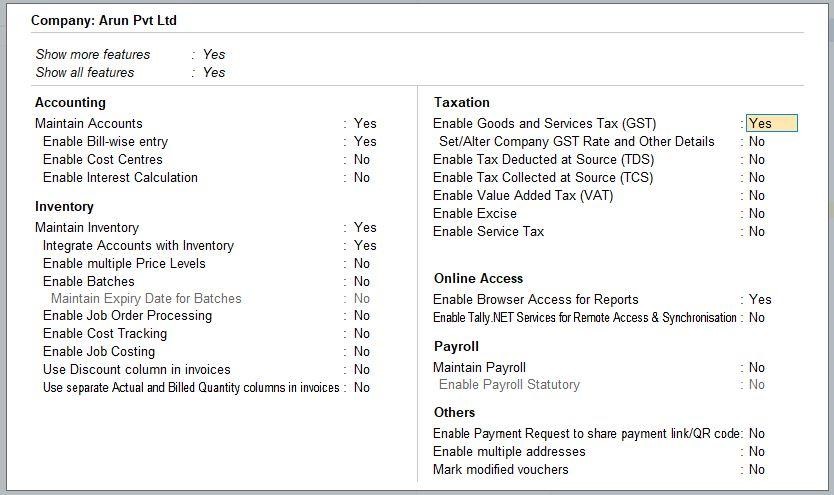
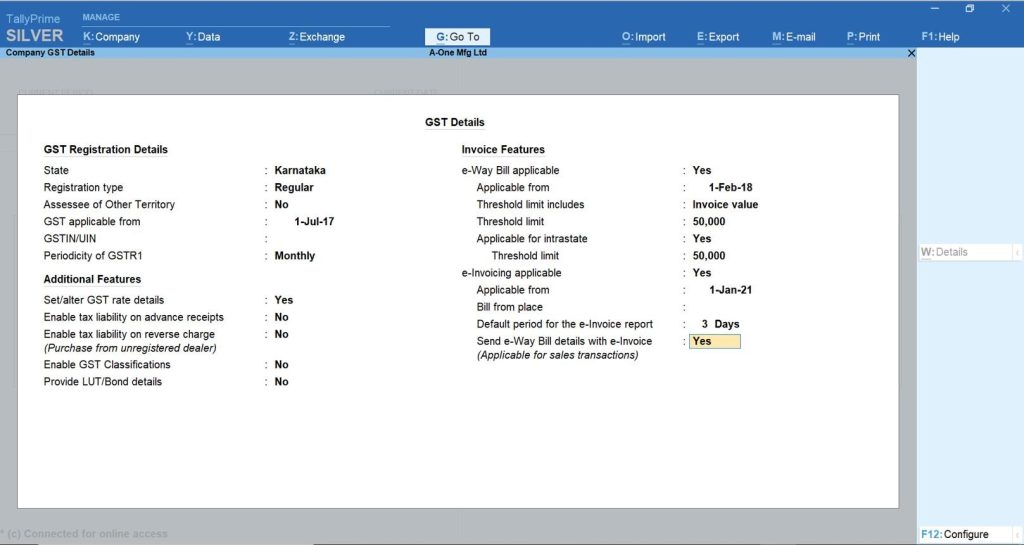
Go to:
F11 Features → GST
Enable:
- GST Applicable
- Set Alter GST Details
- Enable E-Way Bill
- Enable E-Invoice (if applicable)
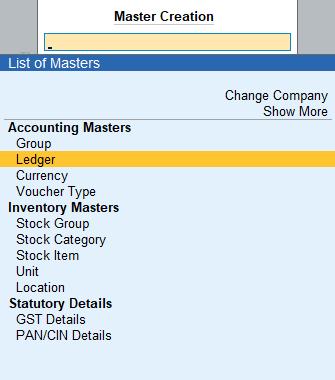
Step 3 – Create branch masters
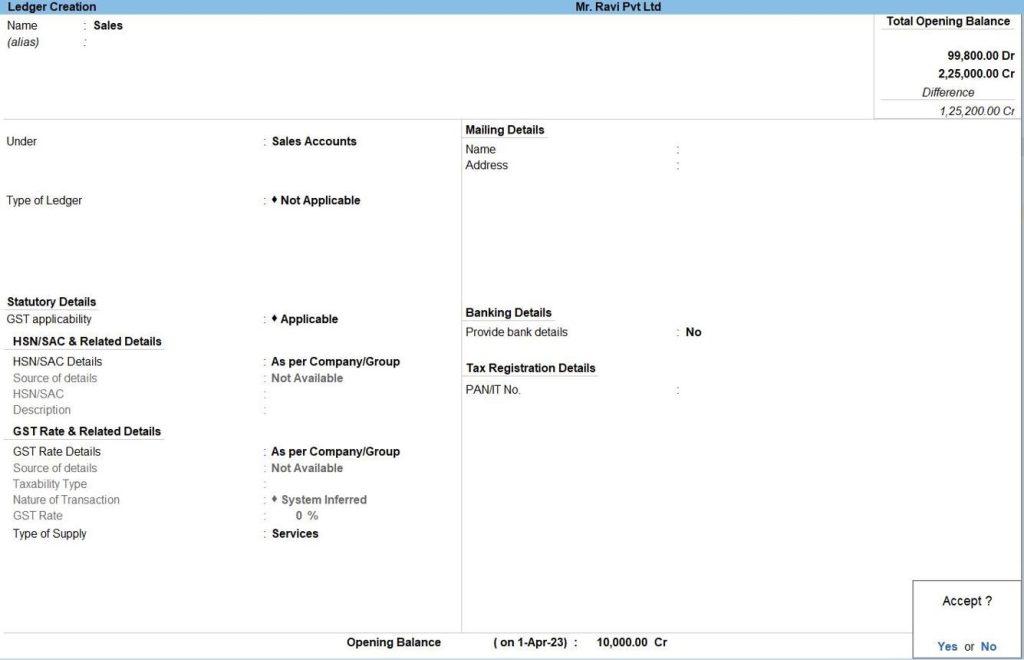
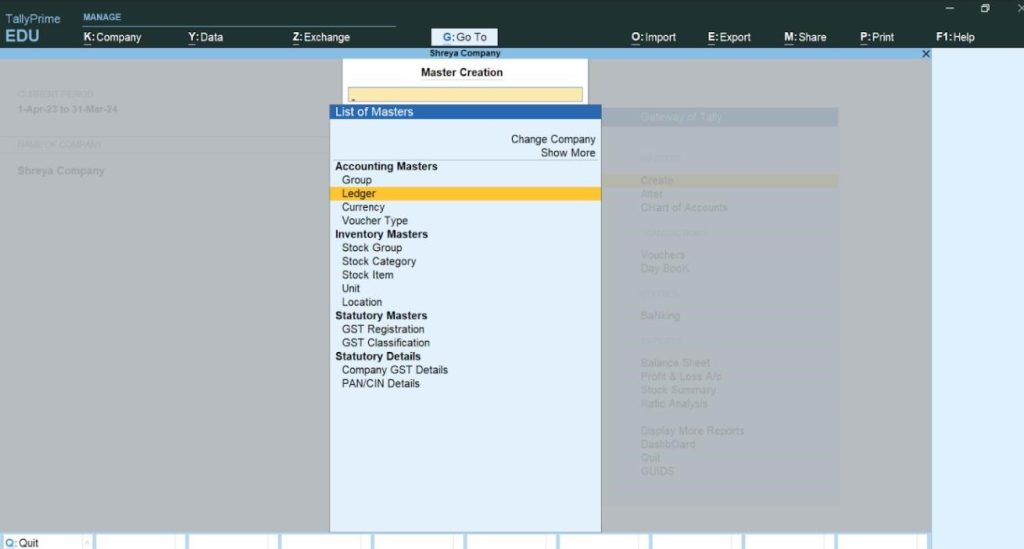
Create Ledger Group:
Branch Current Account
Ledgers:
- Delhi HO
- Ghaziabad Branch
- Jaipur Branch
These ledgers will record inter-branch receivables/payables.
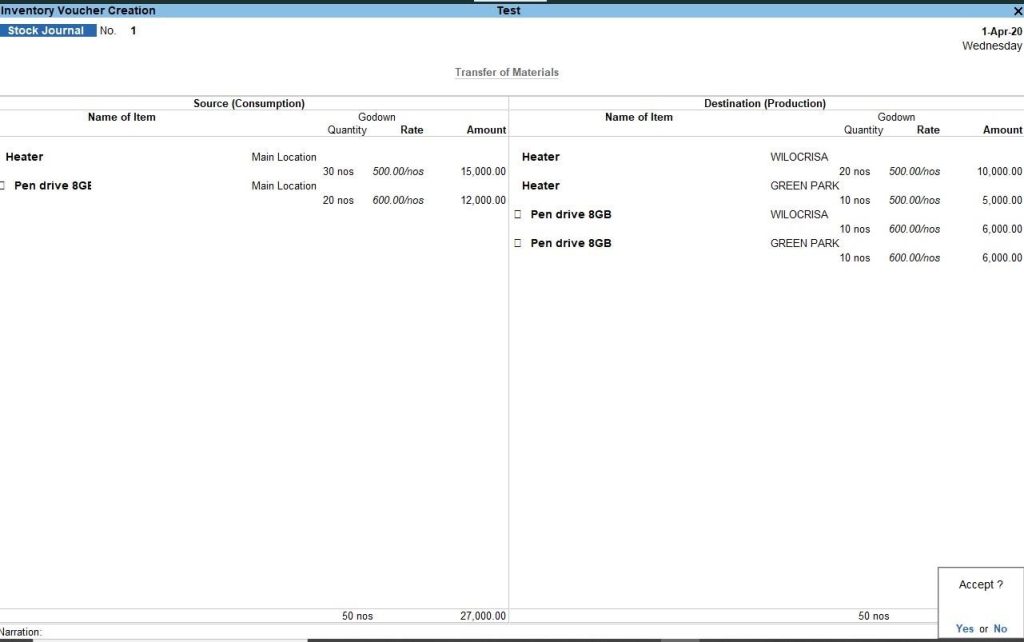
Create Godowns (location) :
|
Delhi Warehouse |
Ghaziabad Warehouse |
|
Jaipur Warehouse |
Lucknow Warehouse |
Benefits:
- Location-wise stock.
- Warehouse inventory.
- Transfer tracking.
Inter-Branch Transfer Under GST
This is where most businesses make mistakes.
Is GST Applicable on Branch Transfer?
Yes, if both branches have different GSTINs.
Example
|
Transfer |
GST Applicable |
|
Delhi GSTIN → UP GSTIN |
IGST |
|
UP GSTIN → Rajasthan GSTIN |
IGST |
|
Delhi Warehouse → Delhi Branch (Same GSTIN) |
No GST |
How to record inter-branch transfer in TallyPrime
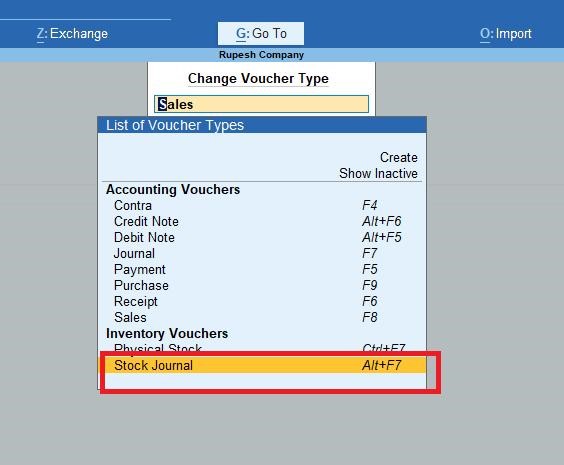
In Sending Branch
Use Sales Voucher.
Example:
|
Party |
Ghaziabad Branch Ledger |
|
Nature of Supply |
Inter-State |
|
GST Type |
IGST |
|
Stock Item |
Finished Goods |
Generate Tax Invoice.
In Receiving Branch
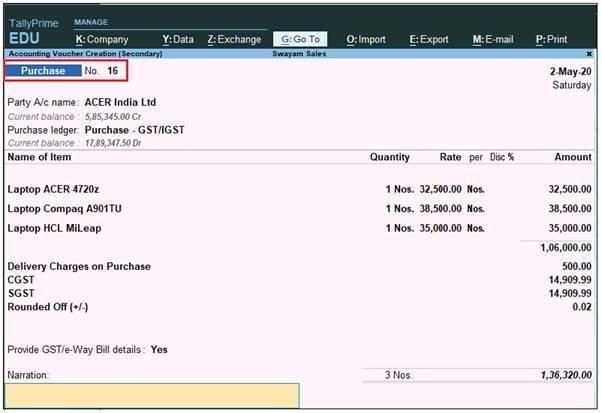
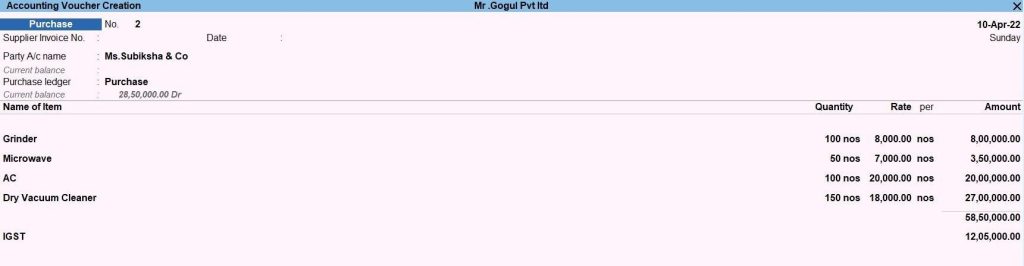
Use Purchase Voucher.
|
Supplier |
Delhi Branch |
|
Purchase Type |
Inter-State Purchase |
|
Input Tax |
IGST ITC |
This creates ITC for receiving branch.
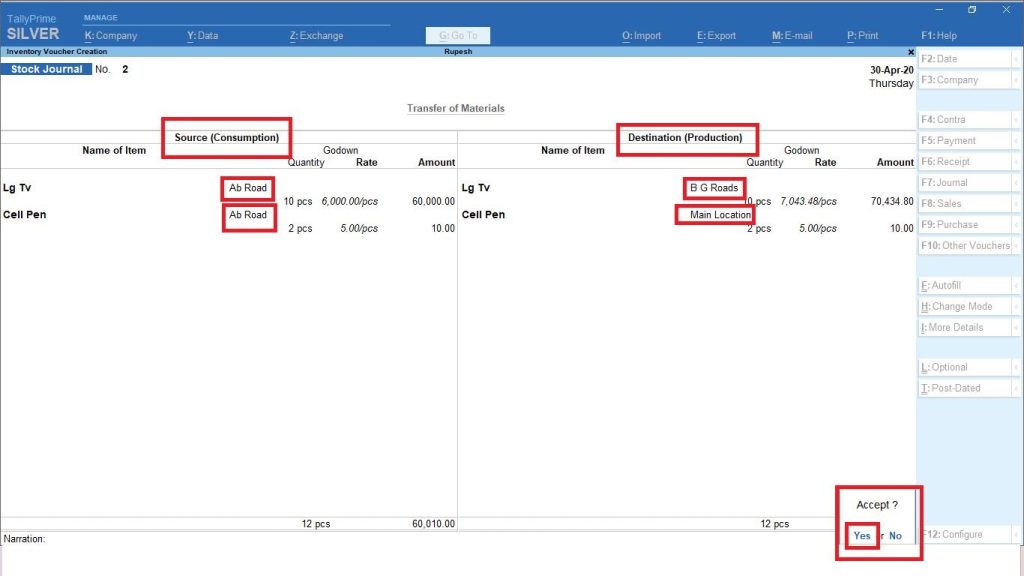
Stock Transfer Without GST (Same GSTIN)
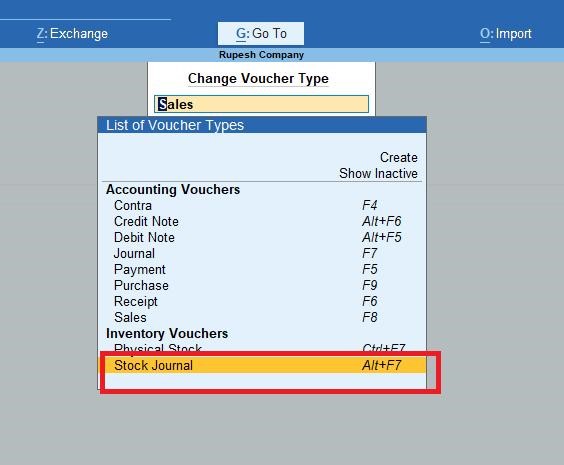
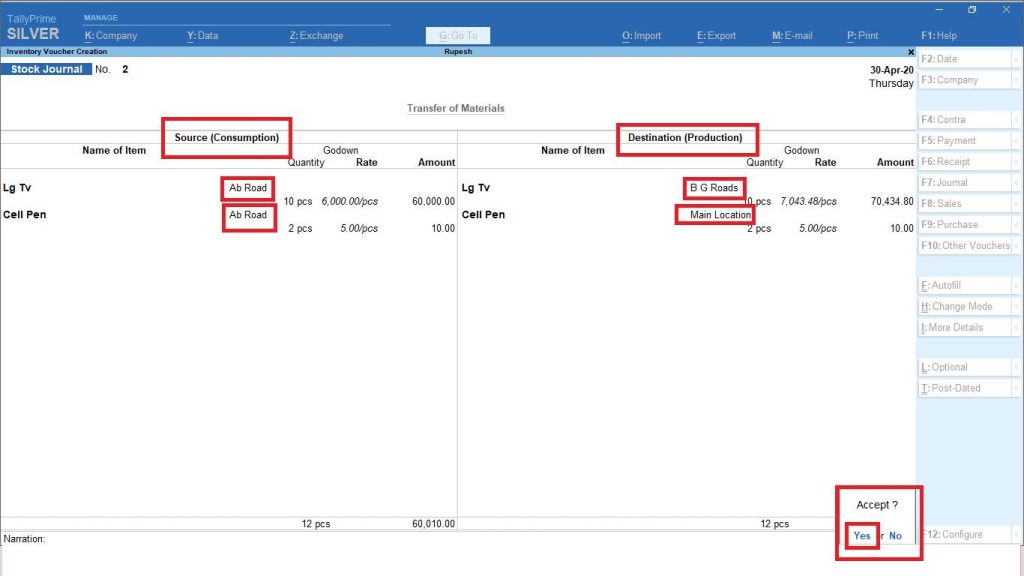
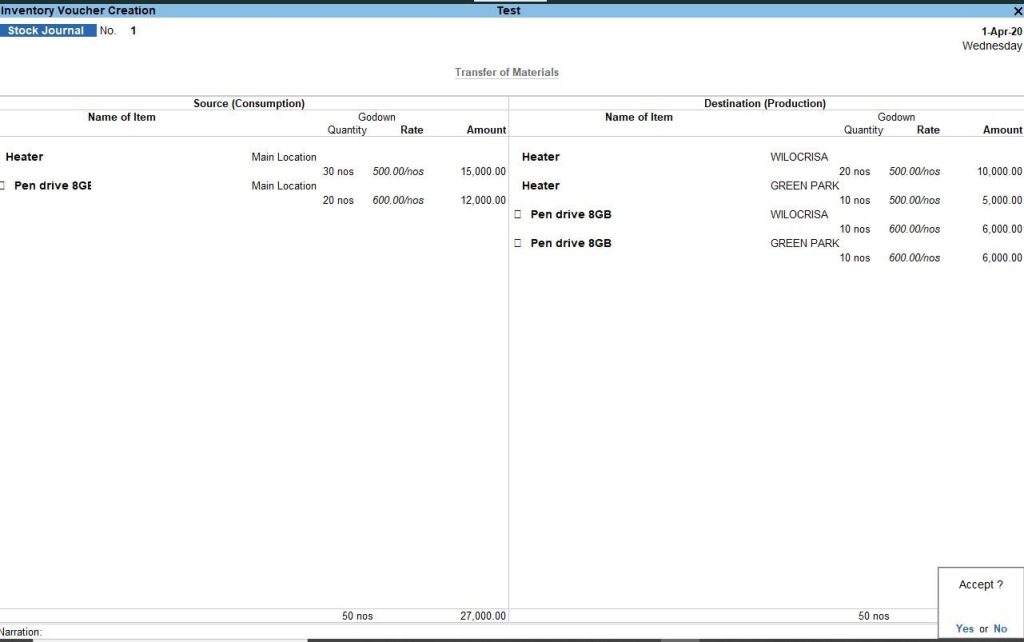
Use:
Stock Journal Voucher
Move stock between godowns.
No GST entry.
Inventory only changes.
Accounting Entry for Inter-Branch Transfer
|
Delhi Books |
Ghaziabad Books |
|
Ghaziabad Branch A/c Dr |
Purchase A/c Dr |
|
To Sales A/c |
Input IGST Dr |
|
To Output IGST |
To Delhi Branch A/c |
Branch Expense Allocation in Tally Prime
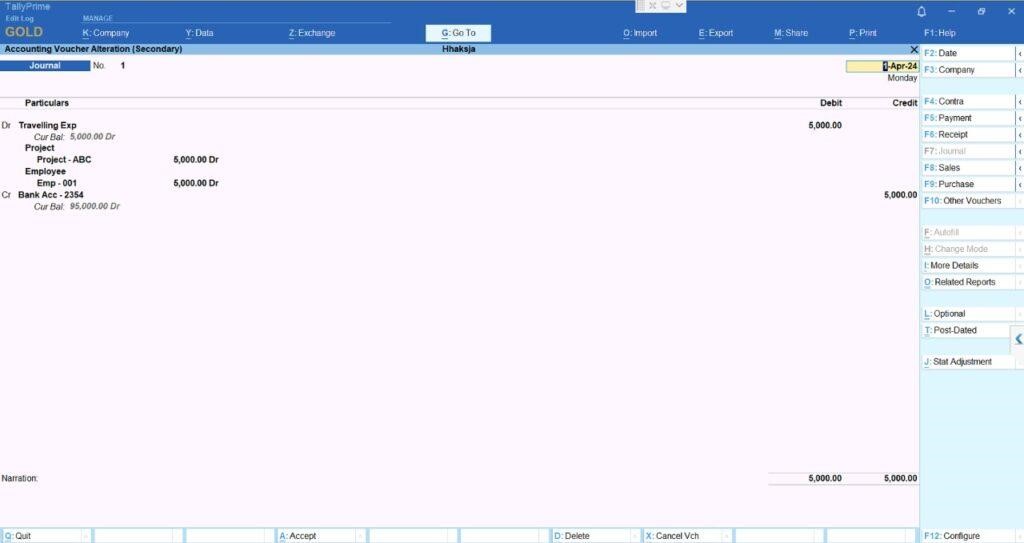
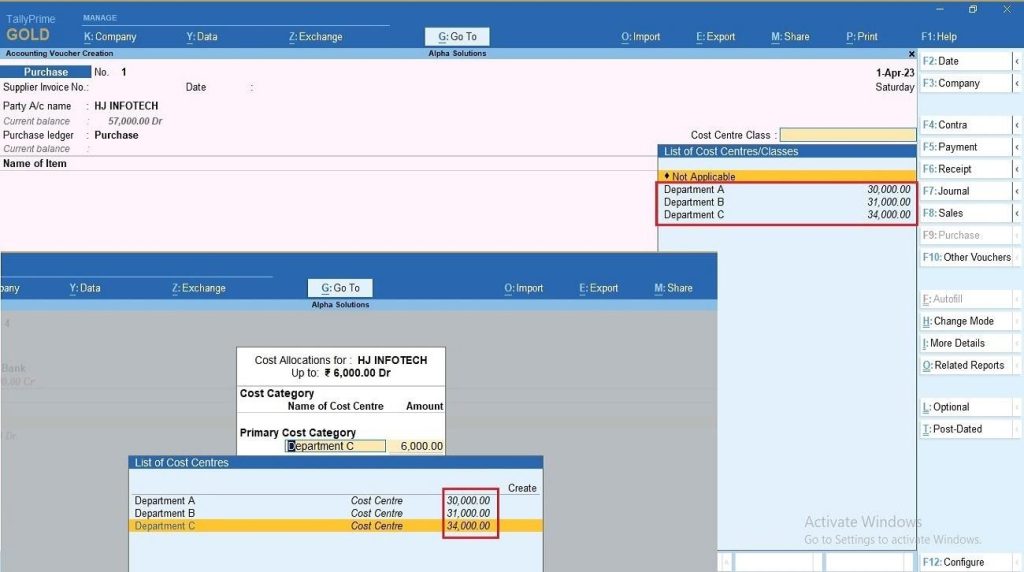
Expenses like:
- Rent
- Salary
- Electricity
- Internet
- Marketing
Can be allocated using Cost Centres.
Example
|
Expense |
Branch Allocation |
|
Salary ₹2,00,000 |
Delhi ₹1,20,000 / UP ₹80,000 |
|
Advertisement ₹50,000 |
Shared between branches |
Reports become branch-wise automatically.
GST Return Filing for Multiple GSTINs
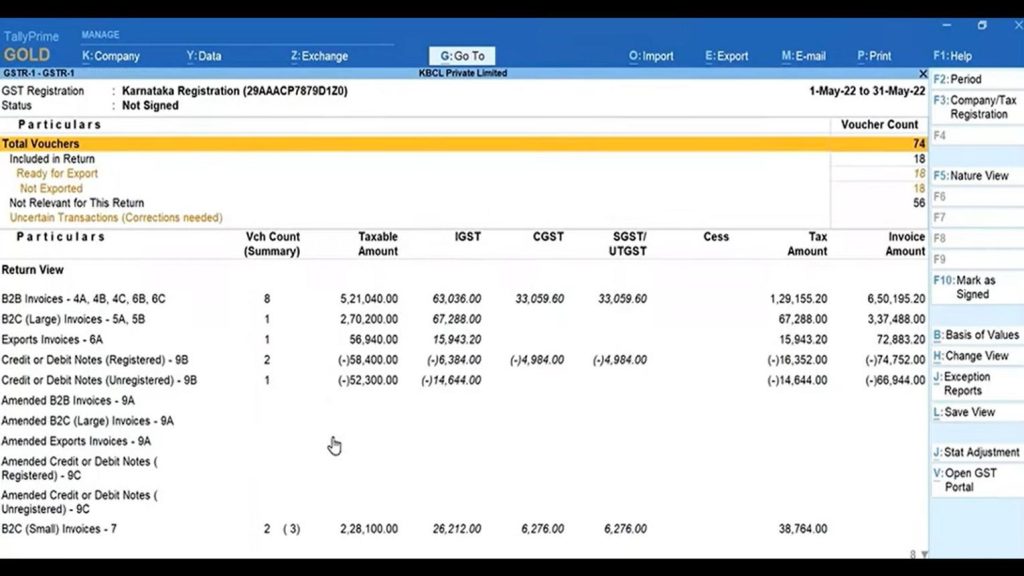
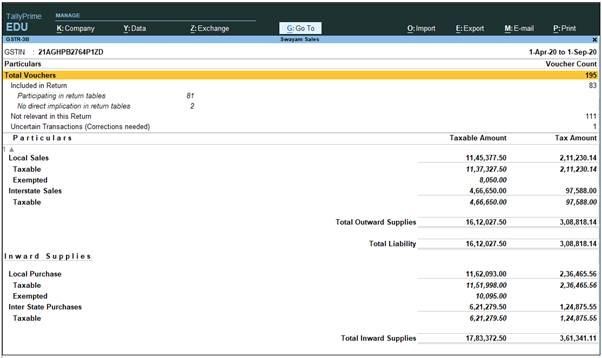
Every GSTIN files independently.
|
GST Return |
Filed For |
|
GSTR-1 |
Every GST Registration |
|
GSTR-3B |
Every GST Registration |
|
GSTR-9 |
Every GST Registration |
|
GSTR-9C |
GSTIN-wise |
GSTIN-wise GSTR reports in TallyPrime
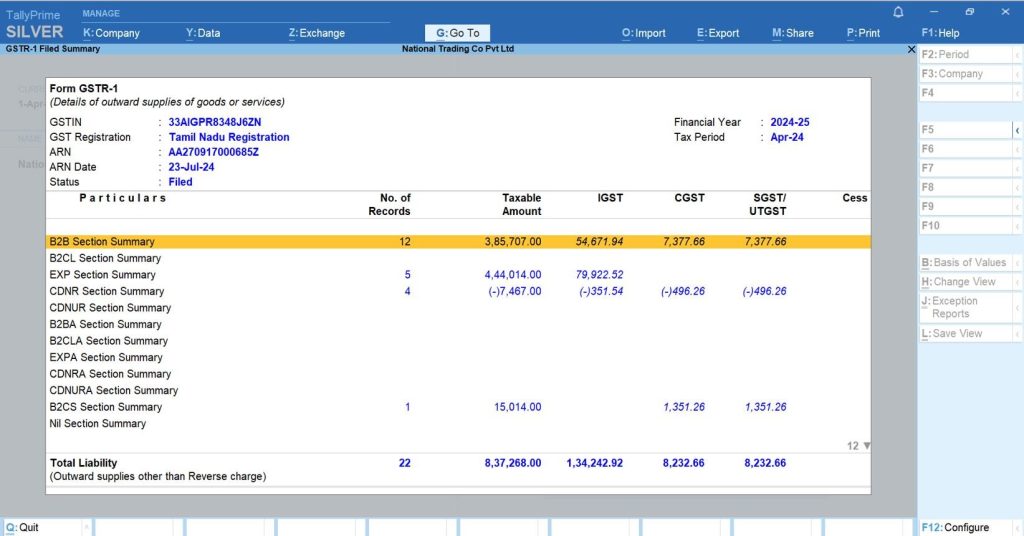
Features:
- HSN Summary.
- B2B.
- B2C.
- Export.
- Credit Notes.
- Debit Notes.
- E-Commerce.
- Advances.
Track profitability.
|
Branch |
Profit |
|
Delhi |
₹12,50,000 |
|
Ghaziabad |
₹8,30,000 |
|
Jaipur |
₹5,40,000 |
Useful for expansion decisions.
Multi-State Inventory Reporting
Track:
- Warehouse-wise stock.
- Branch stock ageing.
- Slow-moving inventory.
- Fast-moving inventory.
- Stock valuation.
Reports available:
- Customer Outstanding.
- Supplier Outstanding.
- Branch Ledger Outstanding.
- Ageing Analysis.
Inter-Branch Reconciliation
Every month reconcile:
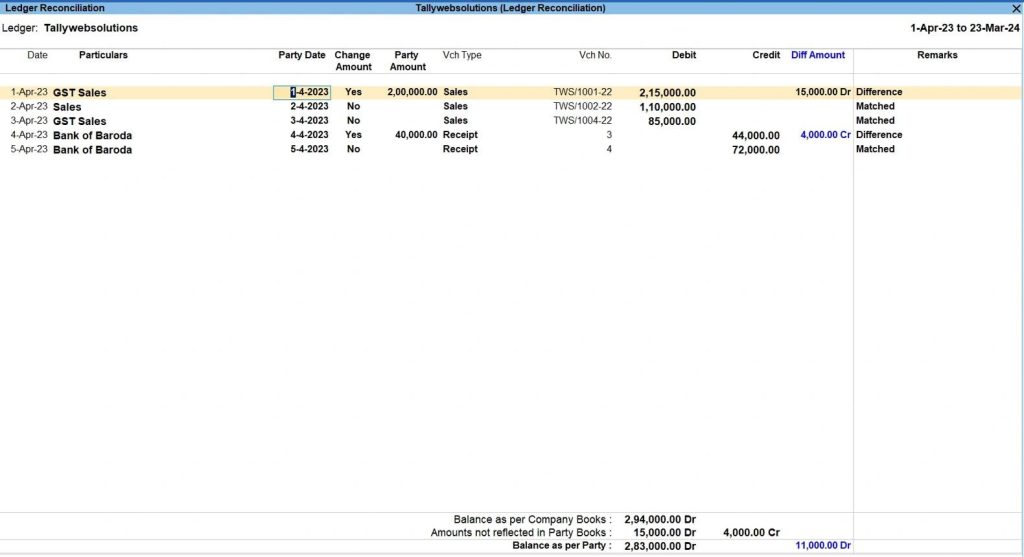
|
Delhi Books |
UP Books |
|
Receivable ₹5,00,000 |
Payable ₹5,00,000 |
|
Sales ₹2,50,000 |
Purchase ₹2,50,000 |
Mismatch means missing voucher.
GST compliance checklist for multi-branch businesses
|
Compliance Item |
Frequency |
|
GSTR-1 |
Monthly/Quarterly per GSTIN |
|
GSTR-3B |
Monthly per GSTIN |
|
IMS Invoice Review |
Monthly |
|
2B Reconciliation |
Monthly |
|
Inter-Branch Invoice Matching |
Monthly |
|
E-Way Bill Reconciliation |
Monthly |
|
ITC Reconciliation |
Monthly |
Common mistakes businesses make
|
Mistake |
Correct Practice |
|
Stock transfer without invoice across states. |
Issue GST Tax Invoice and pay IGST. |
|
Using Stock Journal for different GSTIN. |
Use Sales and Purchase vouchers. |
|
Claiming ITC in wrong GSTIN. |
Claim ITC only in receiving GST registration. |
|
One GSTR filing for all branches. |
Separate GST Returns for every GSTIN. |
|
Not reconciling inter-branch balances. |
Monthly branch reconciliation. |
Best TallyPrime workflow for businesses with multiple GST registrations
|
Step |
Tally Prime Action |
|
1 |
Create Separate Company for each GSTIN. |
|
2 |
Enable GST in each company. |
|
3 |
Create Branch Current Account Ledgers. |
|
4 |
Create Godowns for inventory locations. |
|
5 |
Use Sales & Purchase vouchers for inter-state branch transfers. |
|
6 |
Use Stock Journal only for same GSTIN stock movement. |
|
7 |
Generate GSTIN-wise GSTR reports. |
|
8 |
Create Group Company for consolidated financial reports. |
|
9 |
Reconcile inter-branch ledgers every month. |
Practical example – Delhi head office and Ghaziabad branch in TallyPrime
Suppose Tax Sarthi has:
|
Location |
GSTIN |
|
Delhi Head Office |
07XXXXXXXXXX |
|
Ghaziabad Branch |
09XXXXXXXXXX |
Scenario
- Delhi purchases goods worth ₹10,00,000.
- Transfers goods worth ₹3,00,000 to Ghaziabad.
- IGST @18% = ₹54,000.
Tally Entries
Delhi Company
- Sales Voucher.
- Party: Ghaziabad Branch.
- Tax: IGST ₹54,000.
Ghaziabad Company
- Purchase Voucher.
- Supplier: Delhi Branch.
- ITC: IGST ₹54,000.
Result
- Delhi reports outward supply in GSTR-1.
- Ghaziabad receives ITC in GSTR-2B and GSTR-3B.
- Consolidated reports eliminate internal revenue during financial reporting.
Benefits of multi-branch acounting in TallyPrime
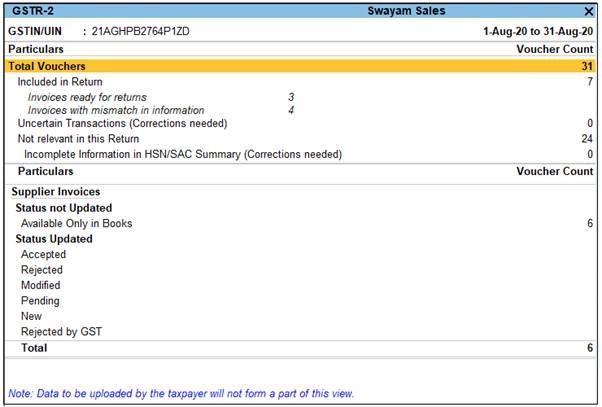
- Complete GSTIN-wise compliance under one PAN.
- Accurate inter-branch accounting with GST.
- Warehouse-wise inventory tracking.
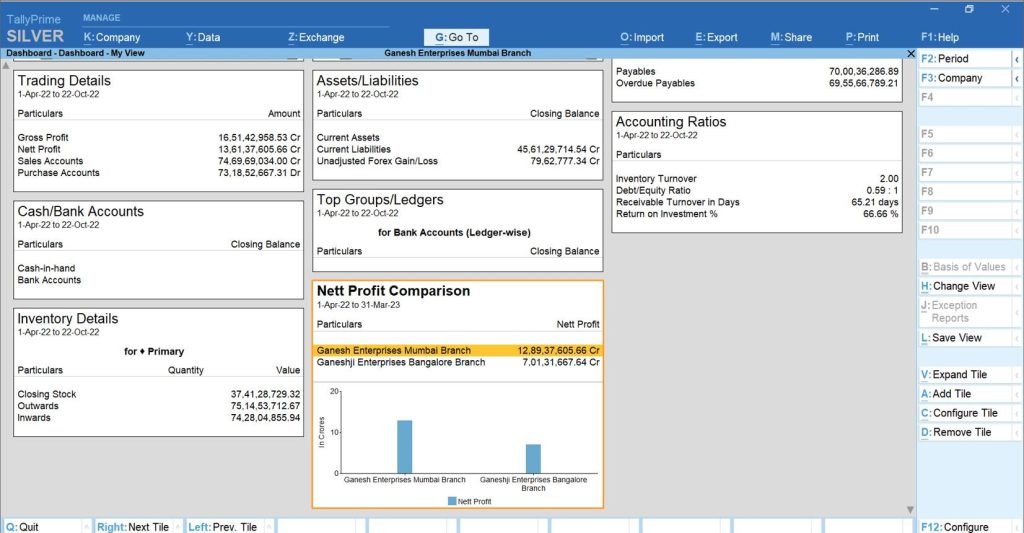
- Branch-wise Profit & Loss and Balance Sheet.
- Consolidated financial statements for management and auditors.
- Faster GST return filing through GST JSON export.
- Easy reconciliation of stock, ITC, receivables, and payables across branches.
Frequently Asked Questions (FAQs) – Multi-State, Multi-Branch Accounting in Tally Prime
Do I need a separate GST registration for every branch?
Yes. If your branch is located in a different state or Union Territory, a separate GST registration (GSTIN) is mandatory under the CGST Act. If multiple branches are in the same state, a separate GST registration is optional unless you have obtained separate registrations for business verticals.
Can I maintain all branches in one company in Tally Prime?
It depends on your GST registration. If all branches operate under the same GSTIN, you can maintain them in one company using Cost Centres and Godowns. If branches have different GSTINs, it is recommended to create a separate Tally Prime company for each GST registration.
Is GST applicable on stock transfers between branches?
Yes, if the transfer is between branches having different GSTINs. Such transfers are treated as supplies between distinct persons and are liable to GST (generally IGST for inter-state transfers). No GST is applicable on stock transfers within the same GSTIN.
Which voucher should be used for inter-branch transfers in Tally Prime?
For transfers between different GSTINs, use a Sales Voucher in the sending branch and a Purchase Voucher in the receiving branch. For transfers within the same GSTIN, use a Stock Journal Voucher.
Can the receiving branch claim Input Tax Credit (ITC) on inter-branch transfers?
Yes. The receiving branch can claim ITC of IGST or CGST/SGST charged by the sending branch, subject to the provisions of the GST Act and reflection of the invoice in GSTR-2B.
How do I generate GST returns for multiple GST registrations in Tally Prime?
Each GSTIN has its own Tally Prime company and separate GST reports. Generate GSTR-1, GSTR-3B, GSTR-9, and GST JSON files separately for each registered GSTIN.
Can I prepare a consolidated Balance Sheet and Profit & Loss for all branches?
Yes. Tally Prime's Group Company feature allows you to consolidate multiple companies and generate a combined Balance Sheet, Profit & Loss Account, Trial Balance, Cash Flow, and other financial reports.
How can I track inventory branch-wise in Tally Prime?
Create separate Godowns (Locations) for each branch or warehouse. Tally Prime provides branch-wise stock summaries, movement analysis, stock ageing, and warehouse-wise inventory reports.
How do I record common expenses like salary or rent for multiple branches?
Use Cost Centres to allocate expenses such as salary, rent, electricity, internet, and marketing among different branches. This helps generate branch-wise profitability reports.
What is the Branch Current Account ledger in Tally Prime?
A Branch Current Account ledger records receivable and payable balances between the Head Office and branches. It helps reconcile inter-branch transactions and outstanding balances.
How should inter-branch reconciliation be done?
Reconcile branch ledgers every month by matching sales, purchases, stock transfers, and receivable/payable balances between the Head Office and each branch. Any mismatch indicates missing or incorrect vouchers.
Can I transfer stock without issuing an invoice to another state branch?
No. If both branches have different GSTINs, stock cannot be transferred without a GST tax invoice. GST must be paid on the transfer as it is considered a supply under GST.
Is an E-Way Bill required for inter-branch stock transfers?
Yes. If the movement of goods exceeds the prescribed E-Way Bill threshold and the transfer is between different GST registrations, an E-Way Bill may be required as per GST rules.
What is the best accounting structure for businesses operating in multiple states?
The recommended structure is:
- One separate Tally Prime company for each GST registration.
- Branch Current Account ledgers for inter-branch transactions.
- Godowns for warehouse-wise inventory.
- Group Company for consolidated financial reporting.
Why is separate GSTIN-wise accounting important for growing businesses?
Separate GSTIN-wise accounting ensures accurate GST compliance, correct ITC claims, proper inter-branch invoicing, independent GST return filing, easier audits, and consolidated financial reporting for management and banks.