










If you're wondering whether HSN codes really matter for GST compliance, the short answer is yes.
A small mistake in an HSN code can create reporting issues, lead to GST return mismatches, and even affect Input Tax Credit (ITC) claims. I've seen businesses spend hours correcting invoices simply because an incorrect HSN code was used during billing.
TallyPrime 7.1 addresses this challenge with enhanced HSN validation features that help businesses identify and correct errors before they become GST problems.
Let's understand how it works and why it matters.
Why are HSN codes so important for GST compliance?
HSN (Harmonized System of Nomenclature) codes help classify goods for taxation purposes.
The GST system uses these codes to:
- Identify products correctly
- Apply the appropriate GST rates
- Generate accurate GST returns
- Improve data consistency across taxpayers
When HSN details are incorrect, businesses may face:
- GST filing errors
- Return mismatches
- Queries from customers
- Delays in ITC reconciliation
- Additional compliance work
Simply put, accurate HSN codes create cleaner GST data.
What challenges do businesses commonly face with HSN codes?
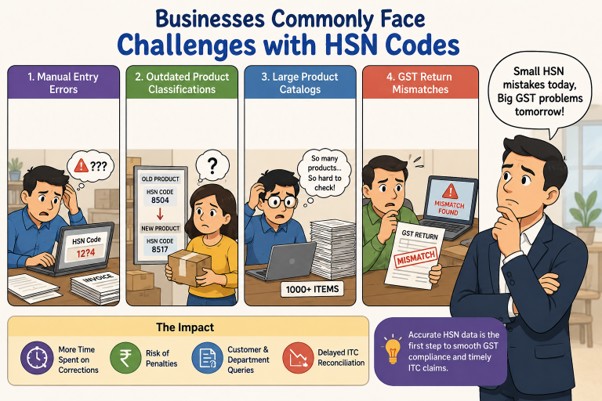
In my experience working with businesses and accountants, these issues appear regularly:
Manual entry errors
- Employees often enter incomplete or incorrect HSN codes while creating stock items or invoices.
Outdated product classifications
- Businesses continue using old classifications even after product changes.
Large product catalogs
- Companies dealing with hundreds or thousands of products struggle to verify every HSN code manually.
GST return mismatches
- Incorrect classifications can lead to reporting inconsistencies that later require corrections.
The larger the business, the bigger the impact of these seemingly small mistakes.
How does HSN validation in TallyPrime work?
Latest TallyPrime introduces validation checks that help verify HSN information before GST returns are prepared.
The system helps users:
- Identify invalid HSN codes
- Detect incomplete HSN entries
- Highlight potential errors during GST preparation
- Improve data consistency across transactions
Instead of discovering mistakes during filing, businesses can identify them earlier in the process.
This preventive approach saves significant time during month-end compliance activities.
HSN validation report
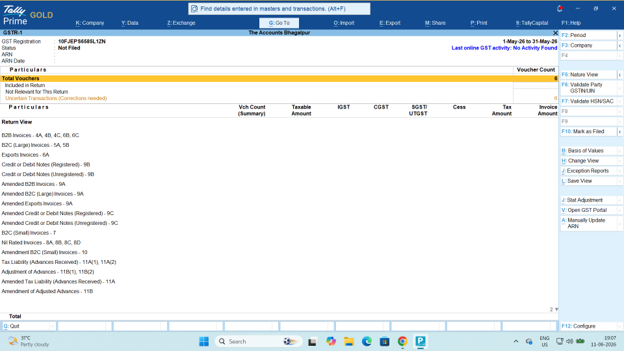
Before GSTR-1 Filing we create stock item masters and pass the sale vouchers entries. Now TallyPrime 7.1 will help a lot for HSN Code.
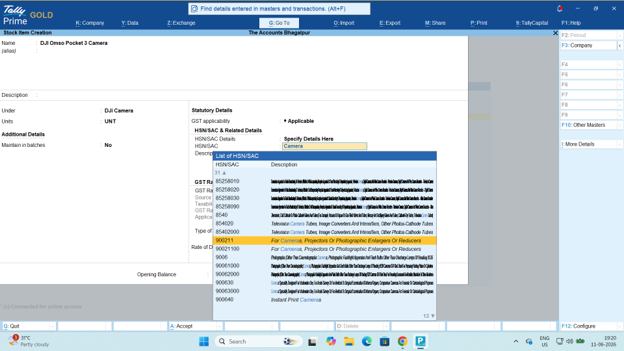
In latest TallyPrime, the list of HSN codes opens automatically when creating a stock item master, virtually eliminating the chance of error. Once an HSN code is selected from the list, its description appears automatically. Now we create a stock item (as shown in the screenshot).
Gateway of Tally → Create → Stock Item
How does better HSN validation support timely ITC claims?
ITC processing depends heavily on accurate GST data.
When invoice information is consistent and correctly classified:
- GST returns become more reliable
- Reconciliation becomes easier
- Supplier and recipient records align better
- Compliance risks reduce significantly
While ITC eligibility depends on multiple factors, maintaining accurate HSN data contributes to cleaner GST reporting and smoother reconciliation processes.
Think of HSN validation as one important layer in building stronger GST compliance.
A real-world example
One wholesale distributor I worked with had over 2,000 stock items.
During the GST review, we discovered multiple products carrying incorrect HSN codes due to old master data. The issue wasn't visible during daily operations because invoices were being generated normally.
However, when GST returns were reviewed, several classification inconsistencies surfaced.
After implementing proper validation checks and reviewing item masters:
- Product classifications became standardized
- GST reporting accuracy improved
- Reconciliation efforts reduced
- Compliance reviews became much faster
The biggest benefit wasn't avoiding penalties—it was saving time every month.
Conclusion
GST compliance becomes easier when the underlying data is accurate.
HSN codes may seem like a small detail, but they play a major role in reporting accuracy, reconciliation efficiency, and smooth ITC processes.
TallyPrime 7.1's HSN validation feature helps businesses identify classification issues early, reduce manual corrections, and strengthen overall GST compliance.
If you're still reviewing HSN codes manually, now is a good time to make validation part of your regular GST workflow.
FAQs
1. What is HSN validation in TallyPrime 7.1?
HSN validation helps businesses identify invalid, incomplete, or potentially incorrect HSN codes before GST returns are prepared and filed.
2. Can incorrect HSN codes affect GST compliance?
Yes. Incorrect classifications can lead to reporting inconsistencies, reconciliation issues, and additional compliance efforts.
3. Does HSN validation guarantee ITC approval?
No. ITC eligibility depends on multiple GST conditions. However, accurate HSN data supports cleaner GST reporting and smoother reconciliation.
4. Is HSN validation useful for small businesses?
Absolutely. Small businesses can prevent common GST errors and reduce manual correction work during filing periods.
5. How often should businesses review HSN codes?
A monthly review during GST preparation is recommended, along with periodic checks whenever new products are added.
6. Which businesses benefit most from HSN validation?
Wholesalers, distributors, manufacturers, retailers, and businesses with large product catalogs typically gain the most value.







