










How AI-powered invoice processing helps finance teams save time while keeping accounting decisions with professionals
The purchase invoice pile that took away my team’s productive hours
I remember sitting with an accounts team during month-end closing. The business was growing, vendors were increasing, and transactions were becoming more frequent.
The finance manager showed me their pending work:
A folder full of supplier invoices waiting for processing.
Some invoices came through email.
Some were scanned PDFs.
Some were images shared by vendors.
The accountant explained:
“The actual accounting entry is not difficult. The time goes into reading every invoice, checking details, and entering everything correctly.”
That was the real challenge.
The team was spending hours on repetitive activities:
- Reading invoice information
- Entering supplier details
- Capturing amounts
- Checking GST information
- Creating purchase vouchers
- Verifying entries
The finance team had the knowledge.
They just needed a better way to handle repetitive work.
That conversation highlighted something important:
AI in accounting should not replace accountants. It should remove repetitive tasks so accountants can focus on review, accuracy, and financial decisions.
Why AI-assisted accounting is becoming important for businesses
As businesses grow, accounting complexity grows with them.
A small business may process a few invoices every week.
But a growing organisation may handle:
- Hundreds of supplier invoices
- Multiple vendors
- Different invoice formats
- Frequent purchase transactions
Traditional manual entry creates pressure on finance teams.
The biggest challenges are:
- Time spent on repetitive data entry
- Possibility of manual mistakes
- Delayed voucher creation
- Difficulty during month-end closing
This is where AI-assisted accounting can create value.
But for finance professionals, speed alone is not enough.
The system must provide:
- Accuracy
- Review capability
- Transparency
- Control
How Docs by Ira in TallyPrime helps transform invoice processing
Docs by Ira in TallyPrime brings AI assistance into the invoice processing workflow by helping businesses capture information from supplier invoices and convert it into structured accounting data.
Instead of manually entering every detail from a document, finance teams can use AI assistance to reduce repetitive work.
The workflow becomes:
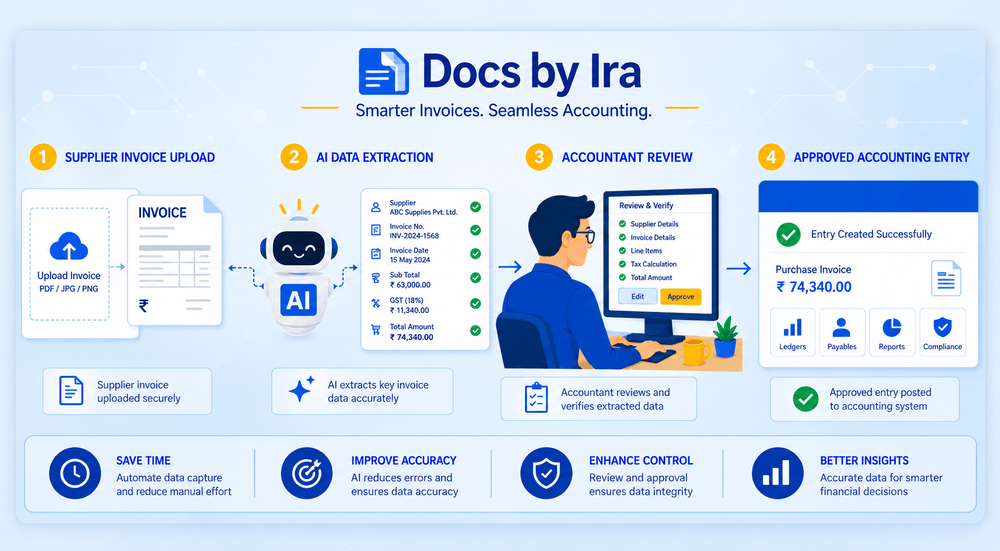
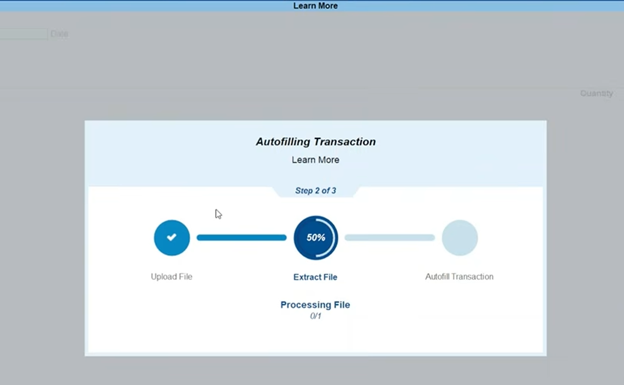
Supplier Invoice → AI-assisted data extraction → Review by accountant → Accounting entry
This creates a better balance:
- Machines handle repetitive information capture
- Accountants handle verification and decisions
Key benefits of Docs by Ira in TallyPrime
1. Saves time on manual invoice entry
One of the biggest benefits of Docs by Ira is reducing the time spent on repetitive invoice data entry.
Normally, accountants manually read:
- Supplier name
- Invoice number
- Date
- Amount
- Tax details
- Other transaction information
With AI assistance, invoice information can be processed faster, helping teams reduce manual effort.

This allows accountants to spend more time on:
- Reviewing financial data
- Vendor analysis
- Compliance preparation
- Business insights
2. Reduces human errors in data capture
Manual invoice entry involves repetitive typing, and repetitive tasks naturally increase the possibility of mistakes.
Common errors include:
- Incorrect invoice numbers
- Wrong amounts
- Missing details
- Typing mistakes
Docs by Ira helps improve accuracy by assisting in capturing invoice information digitally.
However, the important point is:
The accountant remains in control.
The information can be reviewed before final accounting.
3. Keeps accountants in control with review-based processing
A major concern with AI in finance is:
“Will the system make accounting decisions automatically?”
The answer is: accounting still needs professional judgment.
Docs by Ira supports accountants by creating an assisted workflow.
Finance teams can review:
- Extracted details
- Transaction information
- Accounting impact
before finalising entries.
This means AI improves speed without removing human control.
4. Helps businesses handle growing invoice volumes
As businesses expand, invoice volume increases.
The same finance team that managed 50 invoices earlier may now handle 500 invoices.
Without automation:
- Closing takes longer
- Teams work under pressure
- Review quality can reduce
AI-assisted invoice processing helps businesses scale accounting operations without increasing manual workload at the same speed.
5. Improves month end closing efficiency
Every finance professional knows month-end closing pressure.
Teams need to:
- Complete pending entries
- Review accounts
- Prepare reports
- Check reconciliations
When invoice processing takes less time, finance teams get better visibility earlier.
This helps create smoother closing cycles.
6. Helps maintain better accounting discipline
Automation is valuable only when accounting discipline remains strong.
Docs by Ira works within the TallyPrime ecosystem, helping businesses maintain a structured workflow instead of managing invoices through disconnected files and manual processes.
Benefits include:
- Better document handling
- Faster processing
- Reduced dependency on spreadsheets
- Improved workflow consistency
Practical Steps to Use Docs by Ira Effectively
AI works best when businesses follow a proper process.
Step 1: Organise invoice collection
Create a standard process:
- Where invoices are received
- Who reviews them
- How they are processed
Good inputs improve accounting outcomes.
Step 2: Review AI-processed information
Even with AI assistance, finance teams should verify:
- Supplier details
- Invoice amount
- GST information
- Ledger selection
- Transaction accuracy
Review keeps accounting reliable.
Step 3: Maintain clean data in TallyPrime
Automation works better when accounting masters are accurate.
Businesses should regularly review:
- Ledgers
- Supplier information
- Tax details
- Item masters
Why AI + human review is the right balance for accounting
Finance is different from many other functions.
A mistake in accounting can impact:
- GST compliance
- Vendor payments
- Financial reports
- Business decisions
That is why the future of accounting is not fully automated accounting.
It is: AI efficiency + accountant expertise
The technology handles repetitive work.
The finance professional ensures accuracy.
AI makes accounting faster, but control makes it reliable
The role of finance teams is changing.
Earlier, accountants spent more time recording information.
Today, businesses need accountants who can review, analyse, and guide decisions.
Docs by Ira in TallyPrime helps businesses move towards this future by reducing repetitive invoice processing work while keeping accounting professionals involved in validation and control.
Because the best accounting technology does not replace expertise.
It helps experts work better.







