



A godown in India is a storage facility for goods, raw materials or finished products before distribution. In traditional setups, it mainly serves bulk storage with limited technology. Modern warehouses, by contrast, support end-to-end supply chain operations, including sorting, packaging, fulfilment and dispatch.
Proper management keeps materials safe and accessible, while defining the facility’s purpose, whether bulk storage, distribution or fulfilment, guides the choice of shelving, safety measures and tracking systems.
What exactly does the godown meaning entail for Indian businesses?
For Micro, Small and Medium Enterprises (MSMEs) in India, commercial space comes at a significant premium. Leasing or maintaining storage facilities directly affects profit margins. Understanding how your storage space is used helps identify inefficiencies such as underutilised vertical space or poorly planned layouts.
A well-maintained facility safeguards against sudden supply chain disruptions. Poorly managed storage can lead to lost inventory, expired products and higher labour costs due to inefficient retrieval processes.
Efficient storage management turns a passive storage area into a value-generating business asset by improving picking speed, reducing errors and enhancing order fulfilment timelines.
How can you optimise space utilisation in your current storage facility?
Maximising available square footage requires a strategic approach to both floor plans and shelving configurations. The following strategies can help improve storage capacity:
- Implement narrow aisle racking systems to increase the number of storage bays within the same floor area.
- Use stackable bins for loose items to free up floor space for bulkier goods.
- Categorise inventory by turnover rate to keep fast-moving goods near the loading docks.
- Remove obsolete machinery or dead stock occupying premium shelving areas.
- Adopt inventory classification methods, such as ABC analysis, to effectively prioritise space allocation.
What are the best practices for vertical space management?
Utilising the height of your building is as important as managing the floor area. The following techniques help maximise vertical clearance safely and effectively:
- Install mezzanine floors to create secondary storage levels without expanding the building footprint.
- Deploy heavy-duty pallet racks that reach safely to the ceiling.
- Utilise automated storage and retrieval systems to handle high-level stock without risking worker injury.
- Store lightweight items on the highest shelves to maintain rack stability.
- Ensure compliance with load-bearing limits and safety norms when expanding vertical storage.
How does layout planning impact overall inventory movement?
A well-designed layout reduces unnecessary movement and improves operational efficiency. The following measures enhance inventory flow:
- Group related items together to minimise workers' travel time.
- Use clear signage and zone markings to help operators quickly identify storage locations.
- Design a unidirectional flow for goods movement to reduce congestion and improve throughput.
- Allocate dedicated staging areas for quality checks to isolate defective goods.
- Maintain primary and secondary movement paths to enable smoother navigation of material handling equipment and reduce operational delays.
Why is real-time inventory tracking crucial for warehouse management?
Maintaining accurate stock visibility helps prevent both overstocking and stockouts. Modern inventory management relies on digital tools such as warehouse management systems (WMS), barcode scanning and radio frequency identification (RFID) tracking.
Accurate tracking supports better demand forecasting and procurement planning. It also ensures compliance with GST requirements, as precise stock records are essential for audits and reporting.
Using batch numbers and expiry tracking ensures proper stock rotation, first in, first out (FIFO) or first expired, first out (FEFO), particularly in industries like FMCG and pharmaceuticals
Real-time data synchronisation across multiple locations provides a centralised view of inventory, enabling faster and more informed business decisions.
How is India transitioning from traditional godowns to modern warehousing?
India’s logistics sector is evolving, with a clear shift from traditional godowns to organised, technology-driven warehousing systems. Key factors driving this transition include:
- Growth of e-commerce and quick commerce
- Increased demand for faster deliveries
- Expansion of third-party logistics (3PL) providers
- The government focuses on infrastructure and logistics efficiency
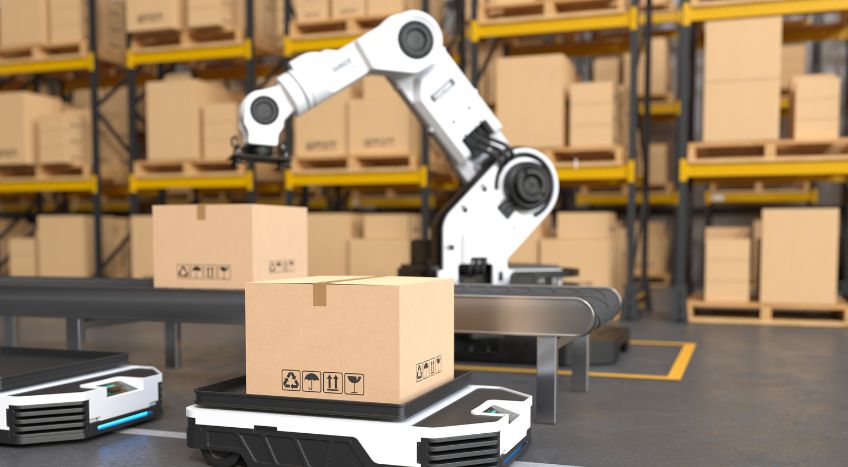
Modern warehouses now serve as integrated supply chain hubs, supporting storage, sorting, packaging and last-mile distribution.
Conclusion
Optimising warehouse or godown space is essential for Indian businesses, as it directly affects costs, efficiency and scalability. Combining smart layout planning, vertical utilisation and real-time inventory tracking can make your storage a strategic asset. Start with practical improvements and gradually introduce technology to enhance visibility, reduce waste and streamline operations.
Efficient storage management improves picking speed, reduces errors and ensures timely order fulfilment. Clear layouts and proper vertical utilisation maximise capacity, while real-time tracking prevents stock discrepancies.
Simplify inventory management with TallyPrime to maintain accurate stock records, stay GST compliant and make informed decisions. Get started today to turn your warehouse into a well-organised, high-performing space.














