






In India, many construction materials are classified under the 18% GST slab — the actual rate structure ranges from 5% and 18%, depending on the product and its use. The GST on iron, steel and TMT bars in India largely depends on the classification under the Harmonized System of Nomenclature (HSN) system.
This has a direct impact on invoicing, input tax credit (ITC) eligibility and accuracy of compliance. Even when the rate remains the same, misclassification or reporting errors can lead to issues with returns, reconciliation and audits.
What determines the GST rate
GST rates are determined based on the product classification under the HSN system.
- Chapter 72 primarily covers iron and steel products, while Chapter 73 covers finished articles, which define how goods are taxed.
- Each product has a designated HSN code based on its form, i.e., rods, sheets, or structural sections.
This classification is associated with the applicable GST rate. Thus, proper reporting of the HSN is crucial for compliance.
GST rate on different iron and steel products
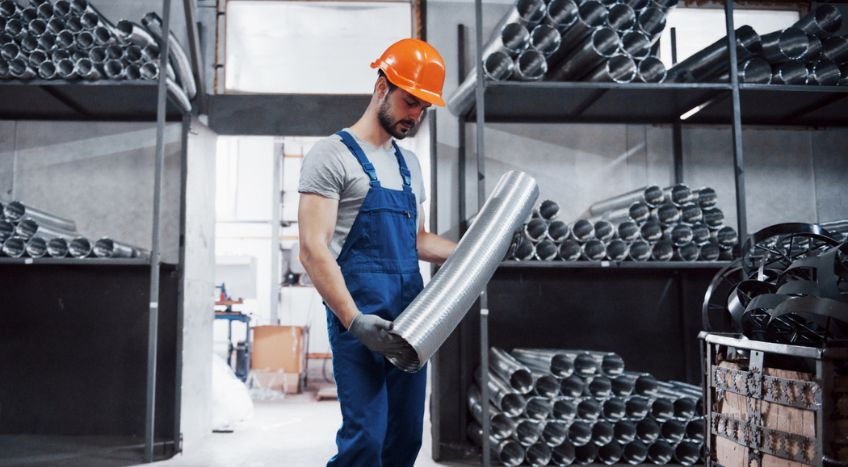
Taxation of iron and steel products in India depends not only on the material but also on the stage of production and the product's end use.
The following table lists some important iron and steel products along with the GST rate:
Chapter 72: Iron and Steel (Primary + Intermediate Goods)
|
HSN Code |
Product Category |
GST Rate |
|
2601 |
Iron ore and concentrates |
5% |
|
2618 |
Granulated slag (slag sand) |
5% |
|
7201 |
Pig iron and spiegel iron |
18% |
|
7202 |
Ferroalloys |
18% |
|
7203 |
Direct reduced iron and ferrous products |
18% |
|
7204 |
Ferrous waste and scrap |
18% |
|
7205 |
Granules and powders of iron/steel |
18% |
|
7206 |
Iron and non-alloy steel in ingots/primary forms |
18% |
|
7207 |
Semi-finished products (billets, blooms, slabs) |
18% |
|
7208–7212 |
Flat-rolled products (all types) |
18% |
|
7213–7215 |
Bars and rods (including TMT) |
18% |
|
7216 |
Angles, shapes, sections (structural steel) |
18% |
|
7217 |
Wire of iron or non-alloy steel |
18% |
|
7218–7229 |
Stainless steel and alloy steel (all forms) |
18% |
|
7323 |
Household articles (utensils, kitchenware) |
5% / 12% / 18% (depends on type) |
|
7324 |
Sanitary ware |
18% |
|
7325 |
Other cast articles of iron or steel |
18% |
|
7326 |
Other articles of iron or steel |
12% / 18% |
Chapter 73: Articles of Iron and Steel (Finished Goods)
|
HSN Code |
Official Category |
GST Rate |
|
7301 |
Sheet piling, welded sections |
18% |
|
7302 |
Railway track materials |
18% |
|
7303–7306 |
Pipes, tubes, hollow profiles |
18% |
|
7307 |
Pipe fittings |
18% |
|
7308 |
Structures and structural parts |
18% |
|
7309–7311 |
Tanks, containers, gas cylinders |
18% |
|
7312 |
Stranded wire, ropes, cables |
18% |
|
7313 |
Barbed wire, fencing wire |
18% |
|
7314 |
Wire mesh, grill, netting |
18% |
|
7315 |
Chains |
18% |
|
7316 |
Anchors |
18% |
|
7317 |
Nails, pins, staples |
18% |
|
7318 |
Nuts, bolts, screws |
18% |
|
7319 |
Sewing needles, pins |
18% |
|
7320 |
Springs |
18% |
|
7321 |
Stoves and domestic appliances |
18% |
|
7322 |
Radiators and heating equipment |
18% |
How GST is applied to iron and steel transactions
GST on iron and steel depends on whether the transaction is intra-state or inter-state, which determines the applicable tax components.
Intra-state supply
GST is divided into CGST and SGST when the goods are supplied in the same state.
- CGST is charged by the central government, and SGST by the state government.
- GST is split equally between the Centre and the State in intra-state transactions. For example, a total GST of 18% is charged as 9% CGST and 9% SGST, while a 5% GST is split as 2.5% CGST and 2.5% SGST.
- Both components must be clearly shown on the invoice for proper compliance.
For suppliers, an incorrect tax breakdown may result in errors in return filings and mismatches during reconciliation.
Inter-state supply
In case of inter-state transactions, GST is charged as IGST at 18%.
- IGST is used when goods are moved across state lines or are sold interstate.
- It merges the split system of CGST and SGST into one tax element.
Proper IGST reporting in returns can facilitate the smooth flow of input credit between states.
ITC on Iron and steel
The ITC on iron and steel depends on how the goods are used and whether the conditions under GST are met, such as having a valid tax invoice, receiving the goods, ensuring the supplier has paid the tax to the government, and filing GST returns.
When is ITC available?
To claim ITC, certain specific conditions must be met.
- The tax invoice should contain valid GST information and have a correct HSN code and supplier GSTIN.
- The supplier should have filed GST returns so that the transaction is captured in GSTR-2B.
- Before claiming credit, the goods should be received and properly recorded in the business books.
Under these circumstances, suppliers can offset input GST against output liability, enhancing their cash flow and reducing the overall tax burden.
When is ITC restricted?
ITC is not permitted in certain cases, even if GST has been paid, including:
- When iron and steel are used for the construction of immovable property for one's own use.
- When goods are used in non-taxable/exempt supplies.
This difference is crucial. For example, steel used for resale allows ITC, but the same steel used for constructing a company building does not, except when it is used in plant and machinery, where ITC is allowed as per GST provisions.
When GST becomes a cost for suppliers
GST becomes a direct expense where ITC is not allowed or compliance requirements are not met.
This typically happens when:
- Purchases fall under categories where ITC is blocked, such as:
- Motor vehicles for personal use
- Food, beverages, catering, health services
- Club memberships, insurance, employee perks
- Construction of immovable property (other than plant and machinery)
- Goods or services are used for non-business purposes
- Personal consumption
- Mixed use without proper segregation
- Goods are lost, stolen, destroyed, or written off (ITC must be reversed in such cases)
- Tax is paid due to fraud, suppression or demand orders (ITC is not allowed on such payments)
- Supplier non-compliance blocks ITC eligibility
- The returns have not been filed by the supplier
- The invoice has not appeared in GSTR-2B
- The reported data does not match the records
- Documentation or compliance errors occur
- Incorrect invoice details
- Missing GSTIN or invalid documentation
- Failure to meet ITC conditions under Section 16
- Outward supplies are exempt or non-taxable
- Missing time limit for claiming ITC
Conclusion
GST on iron, steel and TMT bars is straightforward in terms of rates but depends heavily on appropriate classification and compliance. Most products are covered under the 18% slab, yet proper invoicing, precise HSN coding and a clear understanding of the ITC rules are the keys to smooth operations.
When suppliers have high volumes of transactions to manage, using solutions such as TallyPrime can ensure accurate GST invoicing, track ITC eligibility and simplify return filing. This improves compliance and safeguards margins through effective tax management.