For taxation under GST purposes, rental services are classified using Service Accounting Codes (SAC), not HSN codes, which are meant for goods. These codes usually begin with 99.
Rental income from immovable property, like commercial buildings, office spaces, warehouses and godowns, is primarily classified under SAC 9972. This category covers renting and leasing of property for business or commercial purposes. On the other hand, renting or leasing of movable assets like machinery and equipment falls under SAC 9973, which applies to leasing services for goods instead of real estate.
SAC 9972: Renting of immovable property services
The table below outlines the main classifications under SAC 9972, which covers renting and leasing of immovable properties like residential and commercial spaces, along with their applicable GST treatment.
|
SAC Code |
Service Description |
GST Rate (%) |
Notes |
|
9972 |
Renting/leasing services of immovable property |
As applicable |
Covers rental of land, buildings and other immovable assets |
|
997211 |
Renting or leasing of residential property (houses, flats, etc.) |
Nil (if used for residence); 18% under RCM (in specified cases) |
GST applies under reverse charge when rented to a registered person, subject to conditions |
|
997212 |
Renting or leasing of non-residential/commercial property (shops, offices, warehouses, etc.) |
18% |
Applicable to commercial leasing and business use properties |
Note: GST applicability and rates may change based on the latest government notifications and clarifications.
Rental HSN code (SAC 9973) and GST rate
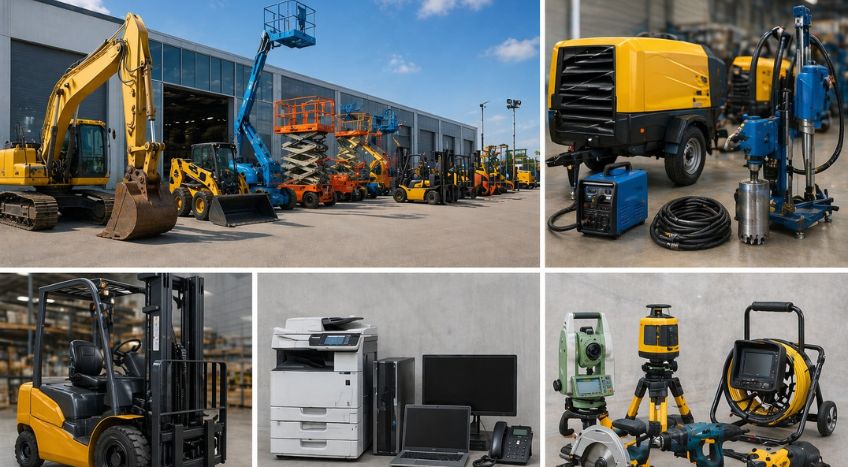
The table below provides a detailed breakdown of SAC 9973, which covers leasing and rental services for movable goods such as machinery, equipment, and other assets, along with their applicable GST rates and related classifications.
|
SAC Code |
Service Description |
GST Rate (%) |
CESS (%) |
Rate Revision |
|
9973 |
Leasing or rental services, with or without an operator |
12 / 18 |
Nil* |
18% / 5% / 12% |
|
997311 |
Leasing/rental of transport equipment (including containers), with or without an operator |
12 / 18 |
Nil* |
18% / 5% / 12% |
|
997312 |
Leasing/rental of agricultural machinery and equipment, with or without an operator |
12 / 18 |
Nil* |
18% / 5% / 12% |
|
997313 |
Leasing/rental of construction machinery and equipment, with or without an operator |
12 / 18 |
Nil* |
18% / 5% / 12% |
|
997314 |
Leasing/rental of office machinery and equipment (excluding computers), with or without an operator |
12 / 18 |
Nil* |
18% / 5% / 12% |
|
997315 |
Leasing/rental of computers, with or without an operator |
12 / 18 |
Nil* |
18% / 5% / 12% |
|
997316 |
Leasing/rental of telecommunication equipment, with or without an operator |
12 / 18 |
Nil* |
18% / 5% / 12% |
|
997319 |
Leasing/rental of other machinery and equipment, with or without an operator |
12 / 18 |
Nil* |
18% / 5% / 12% |
|
997321 |
Leasing/rental of home entertainment equipment (TVs, radios, projectors, audio systems, etc.) |
12 / 18 |
Nil* |
18% / 5% / 12% |
|
997322 |
Leasing/rental of video tapes and disks |
12 / 18 |
Nil* |
18% / 5% / 12% |
|
997323 |
Leasing/rental of furniture and household appliances |
12 / 18 |
Nil* |
18% / 5% / 12% |
|
997324 |
Leasing/rental of leisure and recreational equipment |
12 / 18 |
Nil* |
18% / 5% / 12% |
|
997325 |
Leasing/rental of household linen |
12 / 18 |
Nil* |
18% / 5% / 12% |
|
997326 |
Leasing/rental of textiles, clothing, and footwear |
12 / 18 |
Nil* |
18% / 5% / 12% |
|
997327 |
Leasing/rental of DIY (do-it-yourself) machinery and equipment |
12 / 18 |
Nil* |
18% / 5% / 12% |
|
997329 |
Leasing/rental of other goods not elsewhere classified |
12 / 18 |
Nil* |
18% / 5% / 12% |
|
997331 |
Licensing services for the use of software and databases |
12 / 18 |
Nil* |
18% / 5% / 12% |
|
997332 |
Licensing services for broadcasting or exhibiting films, audio, and TV programs |
12 / 18 |
Nil* |
18% / 5% / 12% |
|
997333 |
Licensing services for reproduction of original artworks |
12 / 18 |
Nil* |
18% / 5% / 12% |
|
997334 |
Licensing services for reprinting and copying books, journals, and manuscripts |
12 / 18 |
Nil* |
18% / 5% / 12% |
|
997335 |
Licensing services for the use of R&D products |
12 / 18 |
Nil* |
18% / 5% / 12% |
|
997336 |
Licensing services for trademarks and franchises |
12 / 18 |
Nil* |
18% / 5% / 12% |
|
997337 |
Licensing services for use of minerals, including exploration and evaluation rights |
12 / 18 |
Nil* |
18% / 5% / 12% |
|
997338 |
Licensing services for use of natural resources (including telecom spectrum) |
12 / 18 |
Nil* |
18% / 5% / 12% |
|
997339 |
Licensing services for other intellectual property and resources (not elsewhere classified) |
12 / 18 |
Nil* |
18% / 5% / 12% |
*Note: CESS exemption applies only when certified by the Director (Sports), Ministry of Youth Affairs and Sports, that the services are related to events under the FIFA U-17 Women’s World Cup.
How does GST apply to rent received?
You must charge GST on rent if:
- You are a GST-registered landlord.
- Your property is rented for commercial purposes.
- Your total income exceeds the GST threshold limit (₹20 lakh or ₹10 lakh for special category states).
GST does not apply in the following cases:
- Your residential property is rented out for personal use.
- Your total rental income is below the GST exemption threshold.
- Your lease involves certain types of agricultural land.
Conclusion
Since rental income often constitutes a significant portion of a property owner’s earnings, using the correct rent SAC code along with the applicable GST rate is essential to avoid interest charges and penalties.
However, managing these classifications, tracking GST rates and ensuring compliance manually can be complex, especially if you handle multiple properties or rental streams.
With TallyPrime, you can easily manage rental income, automate GST calculations, generate compliant invoices and track input tax credit seamlessly, all on one platform.