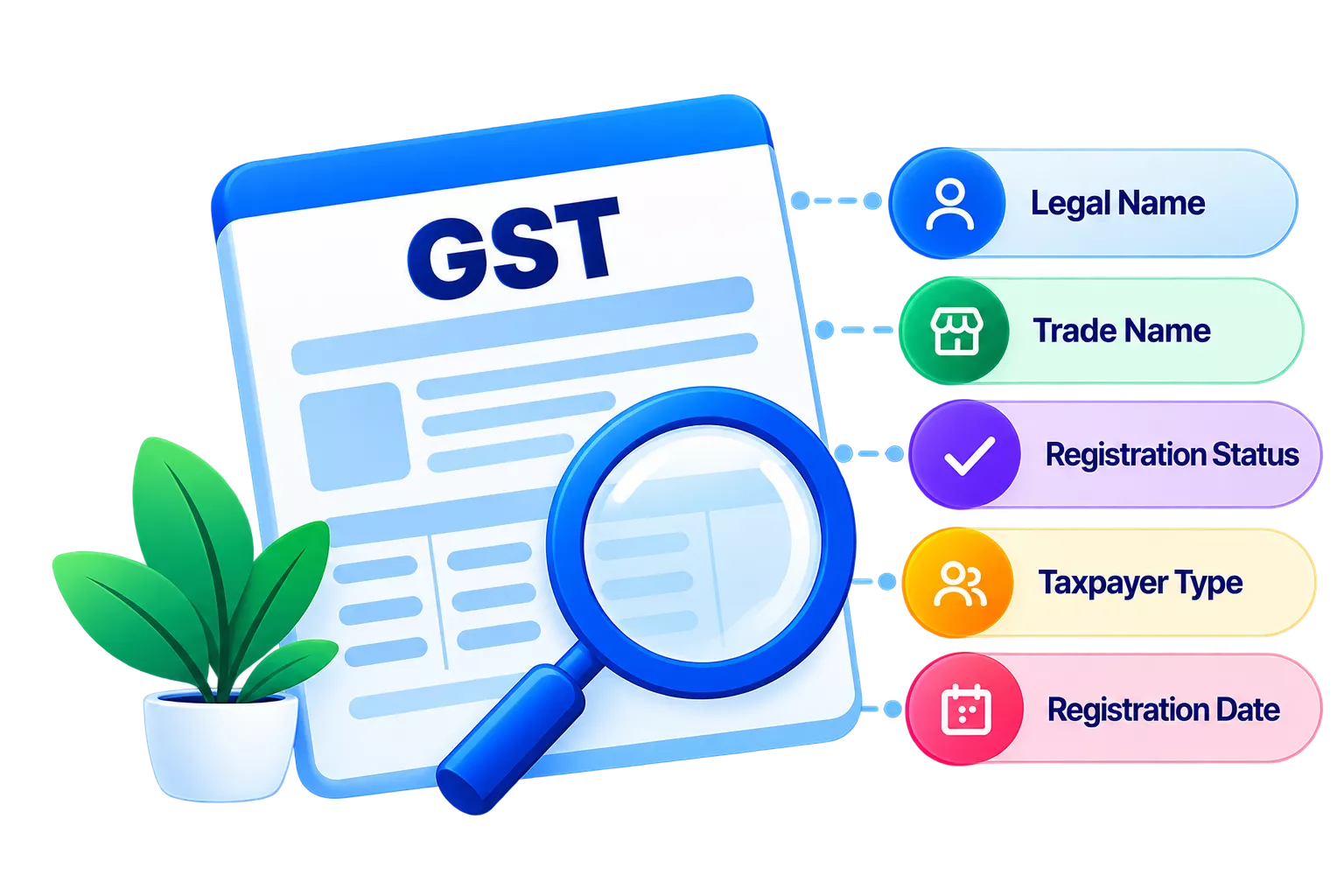
GST assessment entails determining the tax payable by a business under the Goods and Services Tax (GST) system. It ensures that the tax reported on returns aligns with actual transactions and that any discrepancies are detected during verification.
For businesses, assessment does not involve only departmental checks. It has a direct impact on the accuracy of returns, input tax credit claim, and the risk of notices, making it a critical element of ongoing GST compliance.
GST assessment process

The GST assessment process is a systematic and sequential process, which starts with the filing of returns, followed by verification, clarification and determination of the tax payable.
Filing of GST returns
Return filing is the initial step in the GST assessment process, where businesses report outward supplies, tax liability and input tax credit through returns such as GSTR-1 and GSTR-3B.
GST, being self-assessment in nature, implies that it is up to the taxpayer to compute and declare the correct tax. Any mistake at this point, be it due to turnover, tax rate or ITC, can lead to discrepancies during verification.
Review and verification
When returns are filed, tax authorities examine the data provided to ensure accuracy and identify discrepancies. This includes comparing data between returns and identifying mismatches.
Typical checks include:
- Consistency of outward supplies reported across different returns.
- Checking input tax credit against supplier filings.
- Detection of unusual variations in turnover or tax liability.
The aim here is to identify anomalies that might need further explanation.
Issuance of notice
If discrepancies are detected during verification, a notice may be issued to the taxpayer. The notice identifies certain problems and requests clarification or correction within a specified period.
Some of the frequent causes of issuing notices are:
- Inconsistent results between GSTR-1 and GSTR-3B
- Incorrect or excess ITC claims
- Underpayment of tax
A notice does not necessarily lead to a penalty, but it must be responded to promptly and properly.
Response by taxpayer
After receiving a notice, the taxpayer is required to respond within the specified time by providing explanations, supporting documents, or corrections where necessary.
A well-prepared response:
- Helps resolve the disagreement at an initial stage.
- Minimises the possibility of escalation to further proceedings.
- Supports accurate record-keeping and compliance.
Final assessment order
After reviewing the response, the tax authority issues a final order determining the tax payable.
This may entail:
- Acceptance of the taxpayer’s explanation with no changes.
- Determination of additional tax payable.
- Initiation of recovery or penalty proceedings in serious cases.
Compliance requirements under GST assessment
Businesses are required to follow certain compliance practices so as to minimize the risks associated with the assessment.
Proper and prompt filing of returns
To reduce the assessment risk, businesses should make sure that they report all transactions with the right tax rate, classification and ITC details.
Record keeping
Documents must support the figures reported in GST returns.
This includes maintaining:
- Tax invoices containing full GST information.
- Record of purchasing and expenses.
- Input tax credit (ITC) claims supporting documents.
Reconciliation of data
Periodic reconciliation of books of accounts with GST returns will help identify discrepancies before they are flagged by authorities.
Businesses should consistently:
- Compare outward supplies to GSTR-1.
- Check tax payable as reported in GSTR-3B.
- Reconcile the ITC and GSTR-2B.
Timely reconciliation minimises the risks of notices and makes compliance easier.
Response to notices on time
It is important to respond to the notices on time to prevent escalation.
A timely response ensures that:
- Issues are resolved without escalation.
- Additional tax exposure is minimised.
- Penalties due to non-response are avoided.
Common issues in GST assessment
Certain issues in the GST assessment process can trigger actions from the authority. These issues arise from errors in reporting, gaps in compliance or limitations in understanding GST rules, which can be complex in practice.
- Mismatch between returns and actual transactions: Differences between figures reported in GST returns and the actual sales, purchases, or e-way bill data can trigger scrutiny, as authorities cross-verify multiple data sources.
- Incorrect tax application: Applying the wrong GST rate or misclassifying goods/services can result in underpayment or overpayment of tax, which may be flagged during assessment.
- Non-filing or delayed filing of returns: If returns are not filed, the tax officer can initiate a best judgement assessment (Section 62 of the CGST Act), where tax liability is estimated based on available data rather than the taxpayer’s actual books.
- Inadequate or incomplete documentation: Failure to maintain proper invoices, contracts or supporting records makes it difficult to justify reported figures during scrutiny.
Non-compliance consequences
Failure to comply with GST assessment requirements can lead to financial and operational consequences for businesses.
- Additional tax liability may arise due to discrepancies.
- Late or wrong payments may be subject to interest and penalties.
- Authorities may initiate recovery of dues and take legal action in serious cases.
These consequences not only augment the costs but also interfere with cash flow and business.
Final Remarks
GST assessment ensures that tax reporting reflects actual business activity and complies with regulatory requirements. Those businesses that pay attention to the correct filing of returns, good documentation and frequent reconciliation are in a better position to avoid conflict and extra liability.
These processes are hard to manage manually as operations increase. TallyPrime can facilitate smoother filing of returns, monitoring discrepancies at the earliest, and reporting consistency to keep businesses on track and minimise risks associated with GST assessment.