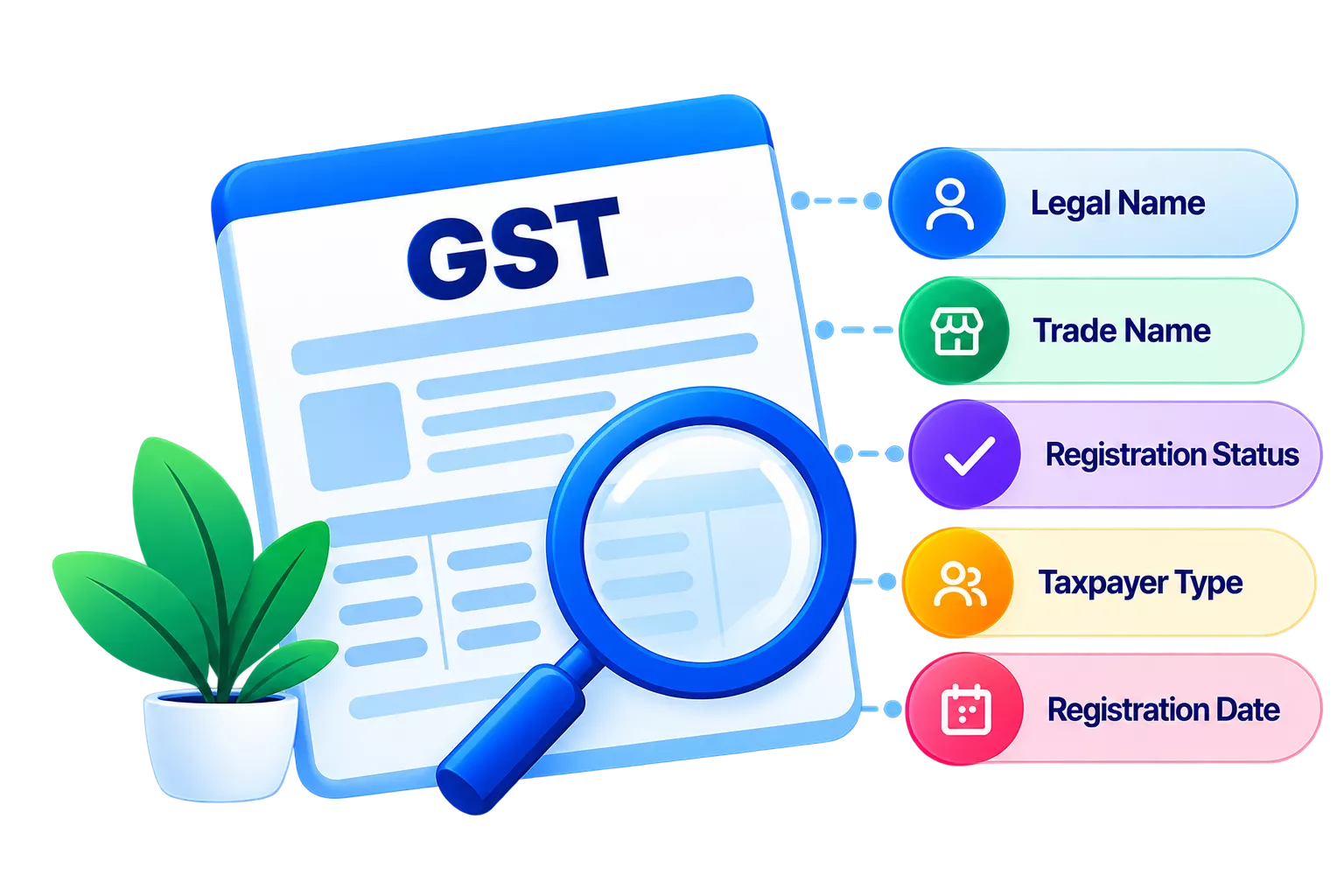
The GST Act, 2017, governs the levying and collection of indirect taxes in India, replacing earlier taxes such as excise duty, service tax, value added tax (VAT) and octroi with a single GST system.
It is a destination-based tax applied on the supply of goods and services, where businesses can claim input tax credit on taxes paid at each stage, ensuring that the final tax burden is borne only by the end consumer.
What is the constitutional and legislative framework of GST?
GST derives its authority from the 101st Constitutional Amendment Act, 2016, which inserted Article 246A into the Constitution. This provision gives both Parliament and State Legislatures the power to enact GST laws.
The framework operates through four complementary statutes that together govern all transactions in India:
- Central GST (CGST) Act, 2017: Governs the central component of tax on intra-state supplies.
- State GST (SGST) Acts, 2017: Mirror legislation enacted by each state to collect the state’s share of intra-state tax.
- Union Territory GST (UTGST) Act, 2017: Applies in Union Territories without a legislature.
- Integrated GST (IGST) Act, 2017: Applies to inter-state supplies and imports, administered by the Central Government.
What is the GST tax structure and rates?
GST follows a tiered rate structure. The GST Council, a constitutional body comprising the Union Finance Minister and state finance ministers, decides and revises these rates. The current GST rate slabs are:
- 0%: Essential goods such as fresh vegetables, milk and eggs.
- 5%: Basic necessities, including packaged food items and life-saving drugs
- 12%: As notified by the government.
- 18%: Most services, electronics and capital goods. This is the most commonly applied rate.
- 28%: Luxury goods, demerit goods and certain motor vehicles. A cess is also applicable on select items over this slab.
Who needs to register under the GST Act?
Under Section 22 of the CGST Act, every supplier whose aggregate turnover exceeds the prescribed threshold must register for GST. The current thresholds are:
- ₹40 lakh: For businesses supplying goods (₹20 lakh for special category states)
- ₹20 lakh: For businesses supplying services (₹10 lakh for special category states)
Certain categories of businesses must register under GST regardless of turnover. These include:
- Businesses making interstate supplies
- E-commerce operators
- Casual taxable persons
- Non-resident taxable persons
- Businesses liable to pay tax under reverse charge
Registration is completed through the GST Portal. Once registered, a business receives a 15-digit GSTIN (Goods and Services Tax Identification Number) based on its state code and PAN.
What are the key rules of the GST composition scheme?
Small businesses with an aggregate turnover up to ₹1.5 crore (₹75 lakh for special category states) can opt for the composition scheme under Section 10 of the CGST Act. Under this scheme, taxpayers pay GST at a flat rate on turnover and are not required to maintain detailed input tax credit (ITC) records.
Flat rates under the composition scheme:
- 1% of turnover: For manufacturers and traders (0.5% CGST + 0.5% SGST)
- 5% of turnover: For restaurants not serving alcohol
- 6% of turnover: For other service providers (3% CGST + 3% SGST)
Key restrictions:
- Composition dealers cannot collect GST from customers
- They cannot claim ITC
- They cannot make interstate supplies
What are the rules and restrictions for claiming Input Tax Credit (ITC)
ITC is the mechanism by which a business offsets the GST paid on purchases against the GST collected on sales. Under Section 16 of the CGST Act, certain conditions must be satisfied before ITC can be claimed.
Core conditions for claiming ITC:
- The taxpayer must hold a valid tax invoice or debit note.
- Goods or services must have been received.
- The supplier must have filed returns, and the tax must appear in the taxpayer’s GSTR-2B.
- The taxpayer must have filed their own GST return.
Blocked credits under Section 17(5):
Certain expenses are not eligible for ITC, including:
- Motor vehicles used for personal purposes (exceptions apply for transportation, driving schools or stock-in-trade).
- Food, outdoor catering and club memberships.
- Works contract services are used for the construction of immovable property.
- Goods or services used for personal consumption.
What are the GST returns under the GST rules, and who needs to file them
Under Chapter IX of the CGST Act and the corresponding GST Rules, registered taxpayers are required to file periodic returns to report their outward supplies, tax liability and compliance details. Missing due dates or filing incorrect returns can attract late fees and interest.
The key returns are set out below:
|
Return |
Who Files |
Frequency |
|
|---|---|---|---|
|
GSTR-1 |
Registered supplier (outward supplies) |
Monthly / Quarterly (QRMP) |
|
|
GSTR-3B |
All regular taxpayers |
Monthly / Quarterly |
|
|
GSTR-9 |
Regular taxpayers with turnover above ₹2 crore |
Annually |
|
|
GSTR-4 |
Composition scheme dealers |
Annually (quarterly payments) |
|
|
GSTR-5 |
Non-resident taxable persons |
Monthly |
|
|
GSTR-7 |
Tax deductors (TDS under GST) |
Monthly |
Under the Quarterly Return Monthly Payment (QRMP) scheme, taxpayers with turnover up to ₹5 crore can file GSTR-1 and GSTR-3B quarterly while making monthly tax payments through a challan. This reduces the compliance burden for smaller businesses.
What is the time of supply and place of supply?
These two concepts determine when a tax liability arises and which government (Central, State or both) receives the tax.
Time of supply
For goods, the time of supply is the earlier of the invoice date or the date of receipt of payment. For services, it is the earliest of the invoice date (if raised within 30 days of service completion), the service completion date or the payment receipt date.
Place of supply
The place of supply determines whether a transaction is intra-state (CGST + SGST) or inter-state (IGST). For physical goods, it is generally the location where the goods are delivered. For services, the rules vary depending on the nature of the service; the default rule is the recipient's location.
Getting the place of supply wrong results in the wrong type of tax being paid, which cannot be adjusted against the correct tax liability.
What are the key penalties and offenses under the GST Act
Under Chapter XIX of the CGST Act, offences and penalties are clearly defined to ensure strict compliance. Non-compliance is not treated lightly.
- Late filing of returns: A late fee of ₹100 per day per return, subject to a maximum cap.
- Short payment or non-payment of tax: Interest at 18% per annum on the outstanding amount from the due date until actual payment.
- Tax evasion: A penalty equal to 100% of the tax amount, or ₹10,000, whichever is higher.
- Fraudulent ITC claims: A penalty equal to 100% of the wrongly claimed ITC, along with recovery of tax and applicable interest.
- Non-registration: A penalty of 10% of the tax due, subject to a minimum of ₹10,000.
What are the e-invoicing and e-way bill rules under GST
E-invoicing and e-way bills are digital compliance requirements under GST that apply to businesses based on turnover and movement of goods. They help standardise invoicing and track the transportation of goods.
E-Invoicing
Businesses with an aggregate turnover of more than ₹5 crore must generate e-invoices through the Invoice Registration Portal (IRP). The IRP assigns a unique Invoice Reference Number (IRN) and a QR code to each invoice. Any invoice not registered on the IRP is invalid for ITC, meaning the recipient cannot claim credit on such purchases.
E-Way Bills
An e-way bill is required for the movement of goods worth more than ₹50,000, either between states or within a state (depending on state-specific rules). It is generated on the e-Way Bill portal and must accompany the consignment. Goods found in transit without a valid e-way bill are liable to detention and penalty.
Conclusion
The GST Act is not a one-time reference but a continuously evolving framework shaped by GST Council decisions and government notifications. Businesses that stay clear on registration requirements, ITC rules, return filing timelines and e-invoicing compliance are better positioned to avoid interest, penalties and blocked credits that directly impact cash flow.
As compliance becomes more transaction-heavy, manual tracking increases the risk of errors and mismatches. TallyPrimehelps reduce this complexity by integrating GST compliance into daily accounting, enabling automatic return preparation, ITC reconciliation with GSTR-2B and seamless e-invoice generation directly from the billing screen.