Fasteners such as bolts, nuts, screws, washers, rivets and similar components are classified under HSN 7318 in GST and typically attract 18% GST as essential joining and assembly components used across construction, machinery, furniture and industrial manufacturing.
This classification under Chapter 73 (articles of iron and steel) ensures uniform tax treatment for metal fastening products and makes correct HSN reporting critical for accurate invoicing and GST compliance in business transactions.
What Is the HSN Code and GST Rate for Fasteners?
Fasteners under GST are generally classified under Chapter 73 of the HSN system and attract a 18% GST rate. These include essential joining components such as bolts, nuts, screws, washers, rivets and similar iron and steel articles used in construction, machinery, furniture and industrial assembly.
Correct classification under the appropriate HSN sub-heading is important for accurate GST invoicing and compliance.
|
Category |
HSN Code / Number |
Description |
|
Screws, bolts, nuts (general category) |
7318 |
Covers screws, bolts, nuts, washers, rivets, cotter pins and similar fastening articles of iron or steel. |
|
Coach screws |
73181100 |
Heavy-duty screws used in wood and structural applications. |
|
Wood screws |
73181200 |
Screws designed for fastening wood materials. |
|
Screw hooks & screw rings |
73181300 |
Hooks and rings with screw threads used in fittings and fixtures. |
|
Self-tapping screws |
73181400 |
Screws that create their own thread during installation. |
|
Other screws and bolts |
73181500 |
Includes machine bolts, hex bolts and general-purpose threaded fasteners. |
|
Nuts |
73181600 |
Includes hex nuts, lock nuts, flange nuts and similar fastening components. |
|
Other threaded fasteners |
73181900 |
Covers threaded fasteners not specifically classified elsewhere. |
|
Spring washers |
73182100 |
Washers used to prevent loosening due to vibration. |
|
Other washers |
73182200 |
Flat washers and similar components used with bolts and nuts. |
|
Rivets |
73182300 |
Permanent fasteners used in metal joining applications. |
|
Cotters and cotter pins |
73182400 |
Pins used to secure fasteners in mechanical assemblies. |
|
Circlips |
73182910 |
Retaining rings used to hold components in place. |
|
Other non-threaded fasteners |
73182990 |
Includes miscellaneous fastening items not elsewhere classified. |
|
Nails, tacks, drawing pins |
7317 |
Includes nails and similar fastening items used in wood and construction. |
|
Anchors & Grapnels |
7316 |
Marine/nautical anchors, grapnels and their parts. |
What Are Fasteners Under Chapter 96 (Buttons, Snap Fasteners & Zippers) and Their HSN Codes?
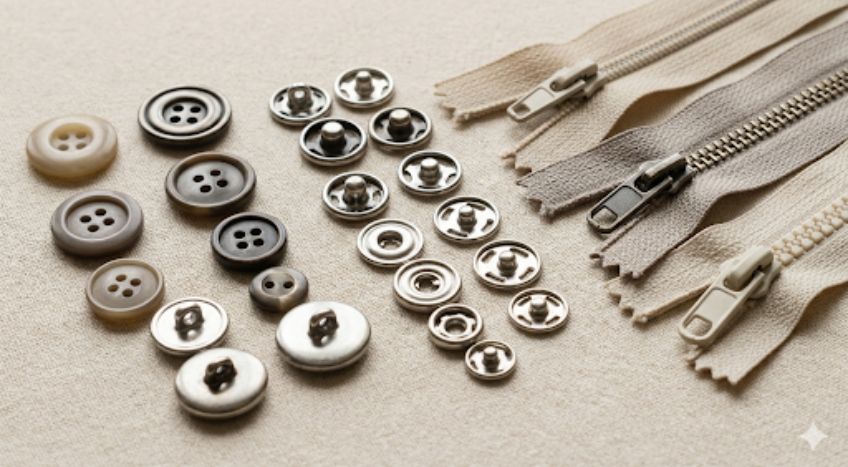
Fasteners under Chapter 96 are consumer-focused fastening components used mainly in garments, footwear, bags and accessories, unlike industrial fasteners covered under Chapter 73.
These items typically include snap fasteners, press studs and zippers. While they were earlier associated with the 12% and 28% GST slabs, post the recent rate rationalisation, many sub-categories now fall under 0%, 5% or 18% GST, depending on classification and usage. Businesses should always verify the latest applicable GST rate before issuing an invoice.
Here is the breakdown of this chapter:
|
Category |
HSN Code / Number |
Description |
|
Press-fasteners, snap-fasteners, press-studs |
960610 |
Covers press-fasteners, snap-fasteners, press-studs and their parts used in garments and accessories. |
|
Press-fasteners (metal) |
96061010 |
Metal press-fasteners and similar fastening components. |
|
Press-fasteners (other) |
96061020 |
Other types of press-fasteners and parts. |
|
Slide fasteners (zippers) |
96071100 |
Slide fasteners (zippers) used in garments, bags and accessories. |
|
Parts of slide fasteners |
96072000 |
Components and parts of zippers. |
What common mistakes should businesses avoid when classifying fasteners under HSN?
Even though fasteners are widely used across industries, incorrect HSN classification can lead to GST errors, mismatched reporting and compliance issues. Businesses should avoid these common mistakes while assigning HSN codes:
- Confusing nails with threaded fasteners: Nails fall under HSN 7317, while screws, bolts and similar threaded fasteners fall under HSN 7318. Mixing these categories often results in incorrect GST reporting.
- Applying one HSN code to all hardware items: Not all hardware items are fasteners. Tools, fittings and fabrication accessories may fall under different HSN chapters, so using a single blanket code can lead to misclassification.
- Wrong classification of anchors: Marine anchors are classified under HSN 7316. However, construction or industrial anchor fasteners may fall under HSN 7318 or even HSN 7326, depending on the material, structure, threading and intended use.
- Missing product specifications during classification: Key details such as thread type, design (self-tapping vs standard) and application area directly affect HSN selection. Ignoring these specifications often leads to incorrect classification and invoicing errors.
How to find the right fastener HSN code
Selecting the correct HSN code for fasteners is essential for accurate GST reporting, invoicing and compliance. Since fasteners include a wide range of products, classification should always be based on specific product characteristics rather than a general category.
To classify fasteners correctly, consider the following:
- Type of fastener: screw, bolt, nut, nail, anchor, etc.
- Threading: whether the product is threaded or non-threaded
- Material: iron, steel, stainless steel or other base metals
- Application: usage in construction, machinery, furniture or industrial assembly
Evaluating these factors carefully helps ensure correct HSN selection and reduces the risk of GST classification errors.
Conclusion
Fasteners may appear simple, but accurate GST classification depends on correctly identifying the right HSN code, with most items commonly falling under HSN 7318 at 18% GST. The real complexity lies in distinguishing between subcategories such as screws, nails, and anchors, where small differences in design and usage directly affect classification.
For businesses dealing with multiple hardware SKUs, maintaining precise HSN mapping and consistent invoicing is essential to ensure compliance and avoid reporting errors. Using a solution like TallyPrime helps streamline this process by improving classification accuracy, automating GST calculations and simplifying inventory and billing management for smoother, error-free operations.