



A proprietorship is the simplest business structure in India, owned and managed by a single individual with no separate legal identity between the owner and the business. While a proprietorship does not require formal incorporation, proprietors must obtain specific registrations and licences to legally operate certain business activities and establish proof of business existence for banks, tax authorities and government departments.
The key registrations typically required include a PAN card, GST registration where applicable, Shop and Establishment registration and Udyam registration for MSME benefits.
Key features of a sole proprietorship
The meaning of sole proprietor extends beyond simple ownership. It defines a specific legal and financial relationship between the individual and the business.
- Sole ownership: The business is entirely owned and managed by a single individual.
- No separate legal identity: The business and the proprietor are legally considered the same entity. The law does not distinguish between the owner and the business.
- Complete decision-making authority: The proprietor has full control over business decisions, operations and profits.
- Unlimited liability: The owner is fully responsible for all business obligations, including debts. Personal assets may be used to repay business liabilities if required.
- Access to MSME benefits: A sole proprietorship can apply for Udyam registration to access government schemes, subsidies, credit support programmes, priority sector lending and certain financial products.
Is proprietorship registration mandatory in India?
A proprietorship firm is not required to register under Indian law. However, businesses typically obtain specific licences and registrations to establish their identity and conduct certain business activities. These registrations may also be required by tax authorities, banks or local regulators, depending on the nature of the business.
Proprietorship firms commonly hold the following registrations:
- Proprietor’s PAN
- Aadhaar of the proprietor for identity verification
- State-specific registration under the Shop and Establishment Act, where required
- Udyam registration
- GST registration, where applicable
In practice, proprietorships are identified by at least one business registration, such as GST registration, a Shop and Establishment licence, an Udyam registration certificate or a municipal trade licence. Banks and authorities use these documents as proof of business existence.
Documents required for registration
The following documents are generally required depending on the type of registration or licence being obtained:
- PAN card
- Aadhaar card
- Address proof
- Business address proof, such as a rent agreement, property document or utility bill
- Passport-sized photograph
- Bank account details
Additional registrations or licences may be required depending on the nature of the business, including a trade licence issued by the local municipal corporation, an FSSAI licence for food-related businesses, Professional Tax registration in certain states or an Import Export Code for import and export activities.
How to register a proprietorship firm: Step-by-step
Here is a step-by-step process to guide you through registering your proprietorship firm:
Step 1: Select a name for the business
Proprietorship firms do not require formal approval of the business name. Choosing a professional and unique name helps build a clear identity for the business. The chosen name is typically used on invoices, bank accounts, GST registration and other business documents.
Step 2: Obtain a PAN for the proprietor
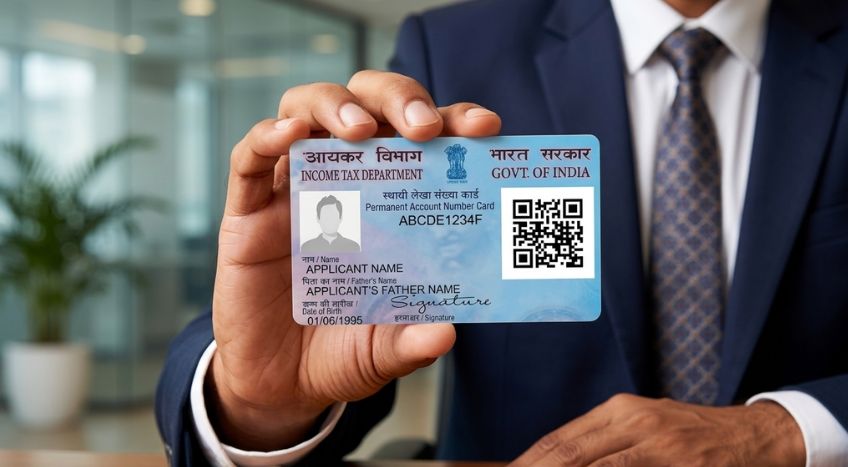
The proprietor must have a PAN issued by the Income Tax Department of India. It is required for financial transactions, taxation and other regulatory registrations. Since a proprietorship has no separate legal identity, the business uses the proprietor’s personal PAN for taxation and compliance purposes.
Step 3: Open a business current account
A business current account helps maintain clear financial records. Banks typically require proof of address, identity and supporting business documents to open an account.
Step 4: Register under the Shop and Establishment Act
If the business operates from commercial premises or employs workers, registration under the Shop and Establishment Act of the relevant state may be required. This registration is typically issued by the state labour department or local municipal authority. Rules, applicability and the registration process vary between states. Some states allow online registration or provide exemptions for certain small or home-based businesses.
Step 5: Apply for GST registration if applicable
GST registration is required if annual turnover exceeds ₹40 lakh for goods businesses or ₹20 lakh for service businesses. GST registration may also be mandatory below these thresholds in certain cases, such as interstate supply of goods or services, selling through e-commerce platforms or when reverse charge provisions apply.
Step 6: Obtain Udyam Registration
Proprietors can register under the MSME category through the official Udyam registration portal at udyamregistration.gov.in. The process is entirely online and based on self-declaration with Aadhaar authentication. After completing the process, the proprietor receives an Udyam Registration Number (URN) and a digital certificate. Udyam registration provides access to MSME benefits, including priority sector lending, government tenders and certain subsidy schemes.
Conclusion
A proprietorship is one of the easiest business structures to establish in India. There is no single incorporation process. Instead, obtaining the relevant registrations establishes the business's legal identity and enables access to banking and government services. The specific registrations required depend on the nature, location and scale of the business.
TallyPrime helps proprietors manage bookkeeping, GST compliance, income tax records and financial reporting from day one, keeping accounts accurate and ensuring the business remains prepared for tax filings and regulatory requirements as it grows.














