










Schedule III of the Companies Act, 2013 prescribes the format and minimum disclosure requirements for the financial statements of companies in India, including the balance sheet, the statement of profit and loss and the notes to the accounts. It ensures that any reader, whether an investor, lender, auditor or regulator, can understand and compare a company’s financial position using a consistent structure.
Before Schedule III existed, companies had some flexibility in how they presented financial data. The standardised format removed that ambiguity, making compliance clearer and financial reporting more transparent across industries.
What Does Schedule III Cover?
Schedule III specifies the structure and content requirements for three core financial documents:
- Balance sheet: Lists all the company’s assets, liabilities and equity as at the end of the financial year.
- Statement of profit and loss: Captures revenues, expenses and the resulting profit or loss for the year.
- Notes to accounts: Provide detailed explanations and disclosures to support each line item in the above two statements.
Schedule III does not prescribe accounting policies. Those are governed by the applicable accounting standards (either Indian Accounting Standards, commonly called Ind AS, or the older AS framework). What Schedule III controls is the structure and categorisation of how figures are presented.
Which companies must follow Schedule III?
Schedule III applies to all companies registered under the Companies Act, 2013, with a few exceptions. The following categories are exempt or follow a different framework:
- Insurance companies: Governed by the Insurance Act, 1938, and use formats prescribed by the Insurance Regulatory and Development Authority of India (IRDAI).
- Banking companies: Follow the Banking Regulation Act, 1949, and the formats prescribed by the Reserve Bank of India (RBI).
- Electricity companies: These are subject to the Electricity Act, 2003.
- Statutory companies: Any other category of company that is required to follow a prescribed financial statement format under the law specifically applicable to that entity.
For all other companies, including private limited companies, public limited companies, one-person companies and producer companies, Schedule III applies.
What are the divisions under Schedule III?
The schedule divides the companies into 3 different divisions:
- Division 1: Financial statements prepared by a company in compliance with the Companies (Accounting Standards) Rules, 2006.
- Division 2: Financial statements prepared by a company in accordance with the Companies (Indian Accounting Standards) Rules, 2015.
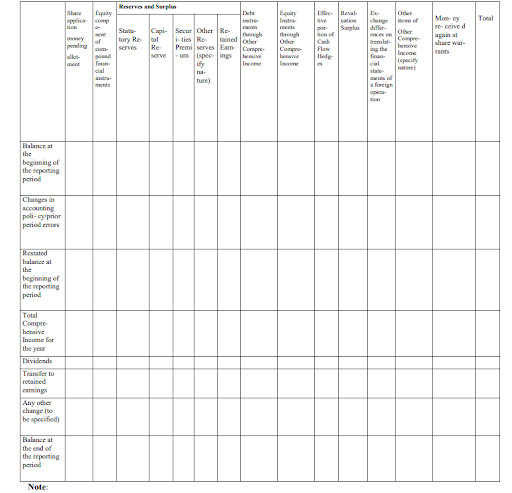
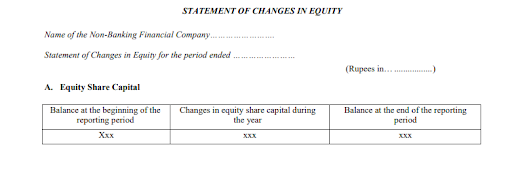
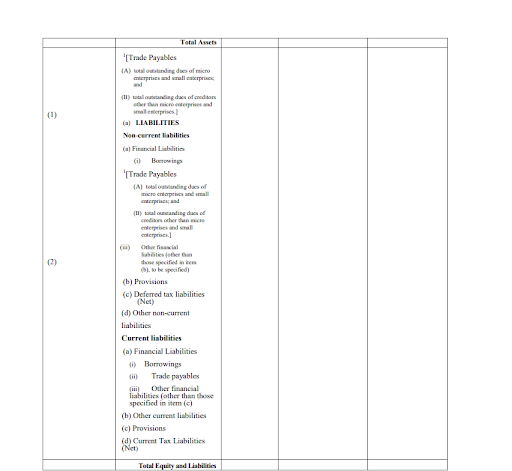
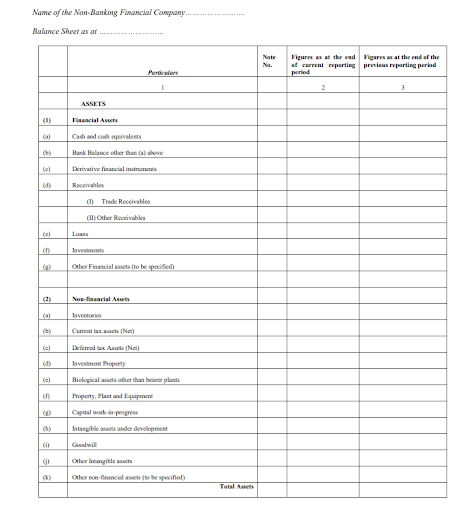
- Division 3: Financial statements prepared by a Non-Banking Financial Company (NBFC) in accordance with the Companies (Indian Accounting Standards) Rules, 2015.
What is the format of the balance sheet under Schedule III
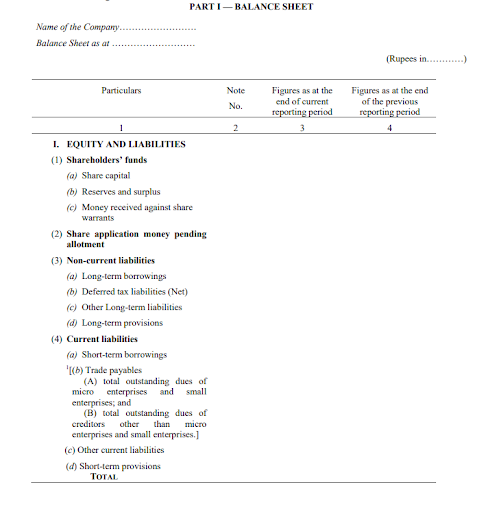
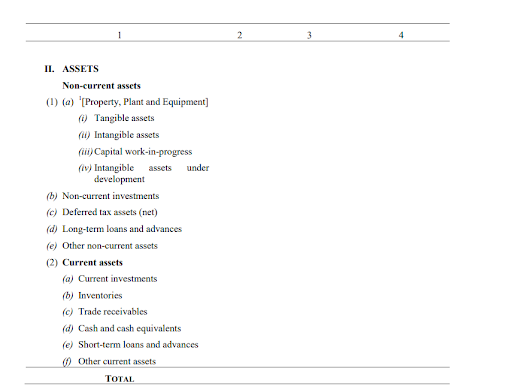
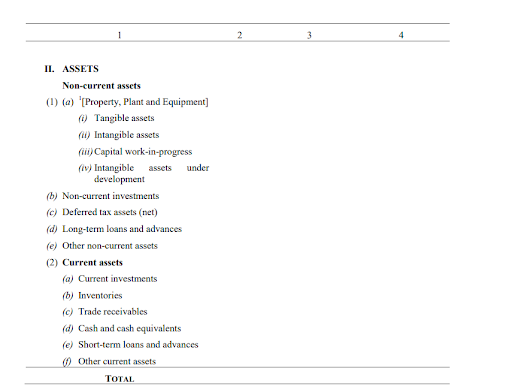
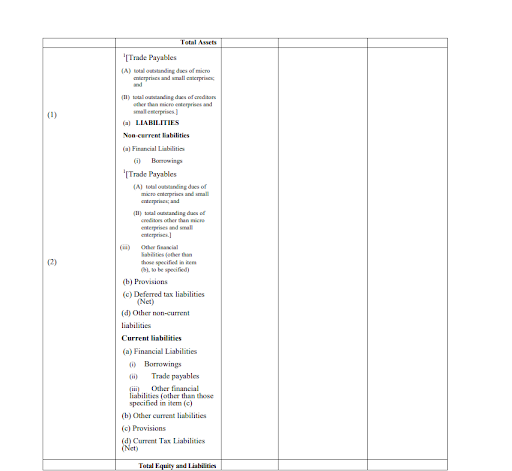
The balance sheet under Schedule III must be presented in a vertical format (as opposed to the older horizontal T-account format). It is organised into two main sections: equity and liabilities on one side and assets on the other. Here is the format:
Format for Division 1 companies
Format for Division 2 companies
Format for Division 3 companies
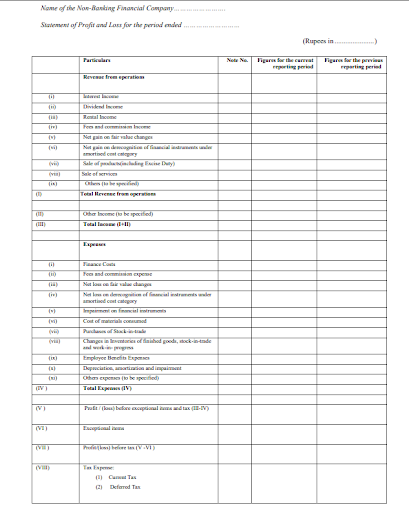
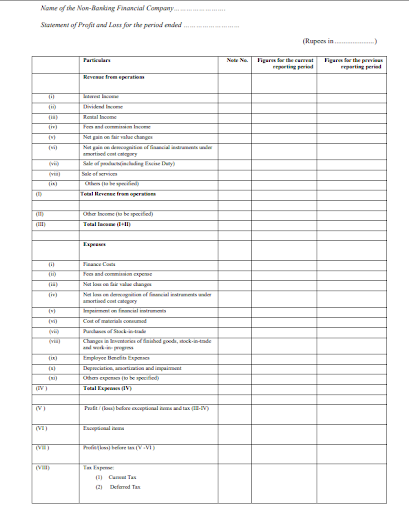
What is the format of the statement of profit and loss under Schedule III
The statement of profit and loss is structured to show revenue from operations and other income at the top, followed by expenses classified by nature. Key line items include:
- Revenue from operations
- Other income
- Cost of materials consumed
- Purchases of stock-in-trade
- Changes in inventories
- Employee benefit expenses
- Finance costs
- Depreciation and amortisation
- Other expenses
Format for Division 1 Companies
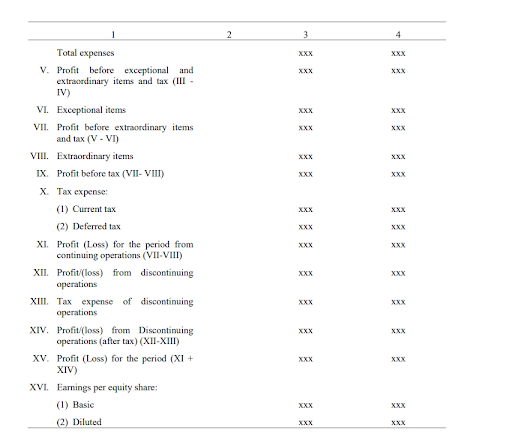
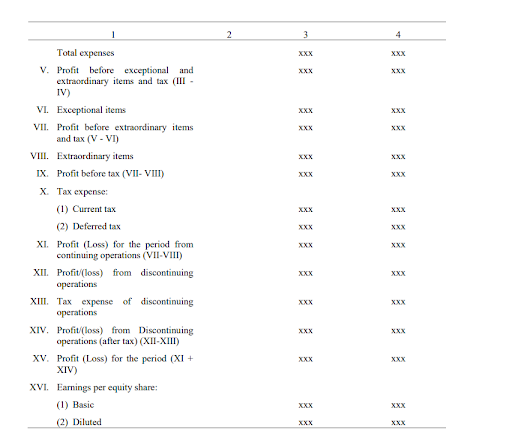
Format for Division 2 companies
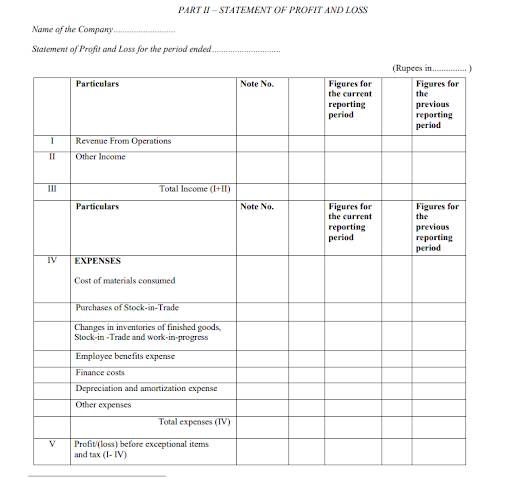
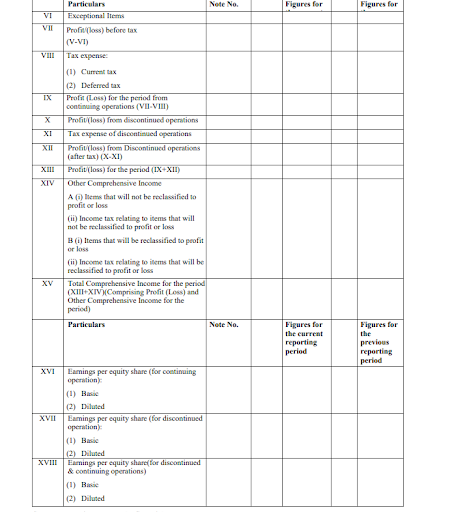
Format for Division 3 companies
What is the requirement of notes to accounts and disclosure
Notes to accounts are not supplementary; they are a mandatory part of the financial statements under Schedule III. Each note must:
- Correspond to a specific line item in the balance sheet or profit and loss statement.
- Provide a breakdown of the figures, such as the split between secured and unsecured borrowings or between freehold and leasehold assets.
- Include the accounting policies applied to that item.
Schedule III also mandates specific disclosures in the notes, including details of shares held by each shareholder holding more than 5% of the share capital, the movement in provisions, and the ageing analysis of trade receivables and payables (a requirement added through the 2021 amendments).
Failure to include required notes is treated as a non-compliance and may attract observations in the auditor’s report.
Conclusion
Schedule III gives financial statements in India a common language. Whether you are a first-time investor reviewing a balance sheet or a lender assessing credit risk, the standardised format means you know exactly where to look and what each section contains.
For companies, particularly those preparing accounts manually or across multiple entities, keeping track of all Schedule III requirements adds to the compliance burden. TallyPrime is advanced accounting software that helps develop balance sheets and profit and loss statements, generating them directly to match the prescribed format, with the required note references and comparative figures populated automatically.














