As your business grows from a small team of five to a workforce of fifty, the complexity of paying them grows exponentially. For MSME owners in India, payroll is not just about bank transfers; it is a minefield of statutory compliances involving Provident Fund (PF), Employee State Insurance (ESI), Professional Tax, and TDS.
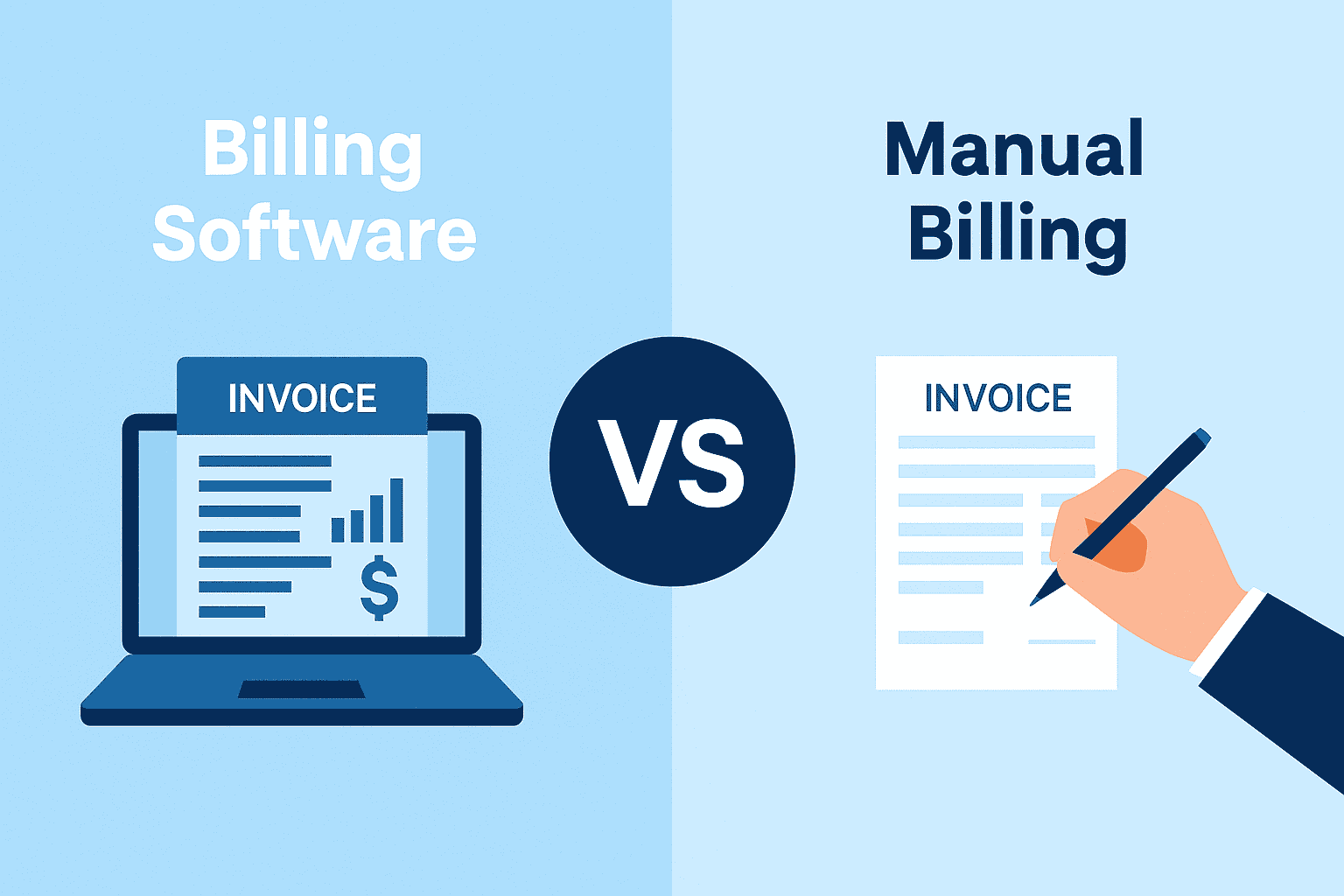
Sooner or later, every business owner faces a crossroads: Do you build an internal team to handle this (In-House), or do you hand it over to a specialist agency (Outsourced)?
Both paths have distinct advantages and pitfalls. Making the wrong choice can lead to data leaks, compliance penalties, or unnecessary costs. In this blog, we dissect both options to help you decide which fits your business DNA.
In-House vs Outsourced Payroll Services: Pros and Cons
Before we weigh the pros and cons, let’s clarify what each approach entails in the Indian context.
In-house payroll
In this model, your internal team manages the entire payroll process. You calculate wages, track attendance, manage leave, and file statutory returns using your own infrastructure and software. You retain full control over the data and the process.
Outsourced payroll
Here, you hire an external third-party agency. You send them the attendance data at the end of the month, and they handle the calculations, tax deductions, and compliance filings. They send back the final salary sheet for you to approve and disburse.
The case for in-house payroll
Keeping payroll internal is the traditional route for Indian businesses, and for good reason. It gives companies full control over processes, data, and timelines, especially useful for organisations that prefer oversight and quick decision-making.
Data security: Your payroll data contains sensitive information such as salaries, PAN details, and bank account numbers. When everything stays within your own systems, you reduce the number of touchpoints and the risk of external breaches. For businesses that operate in tightly regulated sectors or handle confidential employee information, this control can be non-negotiable.
Immediate access: Need to roll out a last-minute incentive, update attendance, or process a loan recovery before salary day? With an in-house team, adjustments can be made instantly. There’s no dependency on a third-party vendor’s turnaround time, which becomes especially valuable during month-end crunches or sudden compliance updates.
Cost control: For small to mid-sized companies, outsourcing can feel like an unnecessary expense, especially when an existing accounts or HR team can manage payroll with the right software. Maintaining payroll internally often means predictable costs, fewer external fees, and more flexibility to scale processes at your own pace.
The case for outsourced payroll
Outsourcing is often positioned as a way to "free up time," but its value runs deeper, especially for businesses navigating complex compliance requirements or rapid growth.
Statutory expertise: Labour laws in India evolve frequently, whether it’s PF wage ceilings, ESI contribution rates, or state-specific professional tax rules. Dedicated payroll agencies stay updated by design. Their specialised knowledge reduces the risk of non-compliance, penalties, or missed regulatory deadlines.
Time savings: Payroll is detail-heavy, including attendance, arrears, reimbursements, shift differentials, compliance filings, and audit-ready reports. By handing these tasks to a specialised vendor, your internal team can shift focus to strategic work like workforce planning, employee engagement, or financial analysis. This becomes increasingly valuable as the organisation grows or enters new markets with varying regulations.
Critical comparison factors
To make an informed choice between the two payroll options, you must compare these models against specific business metrics.
Compliance risk
- In-house: The risk lies with you. If your team is unaware of a legal update, you face a penalty. However, with the right software, this risk is mitigated entirely.
- Outsourced: The agency handles compliance, but ultimately, the legal liability often remains with the principal employer (you). You must still audit their work.
Flexibility and transparency
- In-house: You have 100% transparency. You can drill down into any pay-slip to see exactly how a figure was calculated.
- Outsourced: It often operates like a "black box." You input data and get an output. Correcting errors after the fact can be a slow, bureaucratic process.
Data privacy
- In-house: High security. Only authorised personnel access the data.
- Outsourced: You share sensitive employee data with a third party. You must trust their security protocols blindly.
Empowering in-house payroll with TallyPrime
The biggest argument against in-house payroll is the fear of manual errors and the complexity of compliance. "What if my accountant makes a mistake?" is a common worry.
TallyPrime nullifies this concern by bringing agency-level expertise directly into your office. It bridges the gap between the control of in-house processing and the accuracy of outsourcing.
Automated calculations: You define the salary structure once, and TallyPrime automates the calculation of Gross Salary, PF, ESI, and TDS based on attendance. This eliminates manual calculation errors.
Statutory peace of mind: TallyPrime generates the exact Challans and reports required for filing returns (PF, ESI, PT, Income Tax). You don’t need to be a tax expert; the software guides you.
Integrated accounting: Unlike outsourcing, where payroll data sits separately from your books, TallyPrime integrates payroll entries directly into your accounts. Your financial reports reflect salary expenses instantly, giving you a real-time view of your cash flow.
Conclusion: In-House vs Outsourced Payroll Services
The choice between in-house and outsourced payroll ultimately depends on your priorities. If you are a large corporation with thousands of employees, outsourcing might make sense. However, for the ambitious Indian MSME that values data security, cost control, and agility, an automated in-house system is often the superior choice.
With tools like TallyPrime, you do not need to outsource to get professional results. You can maintain full control over your most valuable asset, your people, while ensuring 100% compliance with the law.