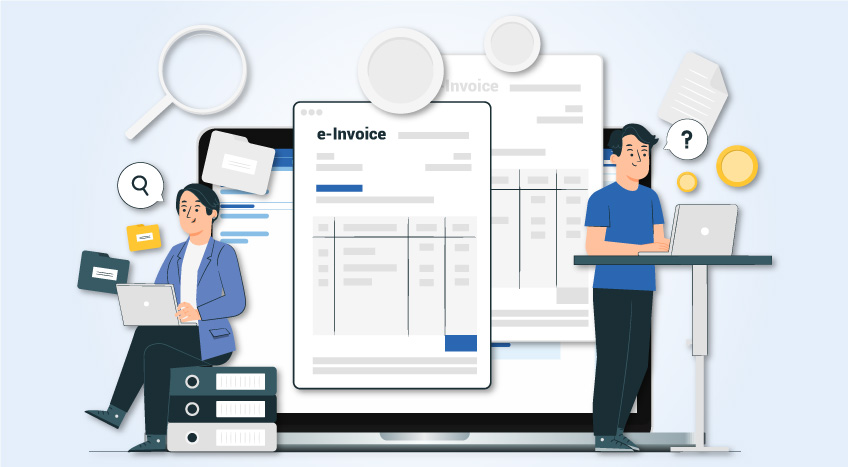
e-Invoicing solutions are the backbone of invoice generation. There are standalone tools that generate e-Invoices, and integrated tools that can do much more than just e-invoicing. Standalone tools are useful for micro businesses, while integrated e-invoicing software solutions are best for SMEs and larger enterprises. Standalone e-invoicing solutions are limited in scope but include only the minimum required to generate and transmit e-invoices. Integrated solutions are more flexible and efficient, as they can perform more tasks without lagging and offer better value for money. e-Invoicing solutions are a must in today’s landscape when automation is a necessity rather than a requirement.
Standalone vs integrated e-invoicing systems
Definitions
Standalone software is designed to operate independently but may include integration capabilities. A standalone e-invoicing system generates, validates, and submits e-invoices to the buyer. Some e-invoicing solutions in the UAE can send tax information to the FTA. These systems require manual data entry and offer limited automation. Most such systems can operate offline and offer limited features because the business is in its early stages.
Integrated software streamlines various accounting and bookkeeping processes into a single application. It provides seamless integration and promotes a smoother data flow across various applications. These systems feature high-level, complex automation that requires minimal human intervention, thereby promoting greater flexibility. Integrated e-invoicing solutions are often cloud-based, ensuring secure access from anywhere.
Users
Standalone solutions are built for micro and small businesses, which typically generate lower invoice volumes than medium and large enterprises. Sole proprietors and startups often opt for standalone solutions, as they offer the bare minimum needed to generate e-invoices in the digital era, without the complications of an integrated suite. It is often less user-friendly and can be a little complex for new users.
Integrated solutions are applicable to all businesses but are used mostly by SMEs and large enterprises, as their invoice creation volumes are much higher. These solutions are best for growing businesses that need adaptability and synchronisation features that will expand with the business. Integrated solutions feature a user-friendly interface that provides extensive help and easy navigation, enabling users to complete tasks quickly and efficiently.
Scalability
Standalone e-invoicing solutions are scalable to a certain extent. Some are built to handle high invoice volumes and offer great processing capabilities, too. However, standalone e-invoicing solutions are not operationally scalable, making them inferior to integrated e-invoicing tools. Standalone e-invoicing systems do not integrate with businesses' finance workflows, thereby limiting their applicability in the new e-invoicing ecosystem.
Integrated accounting software for UAE e-invoicing offers greater scalability. As invoice volume increases, the software can easily handle it without any fluctuations or operational issues. It will scale with the business and accommodate its needs as required. This enables businesses to focus on their core operations rather than worrying about invoice creation, transmission, exchange, and receipt. An integrated solution is always a better choice for businesses seeking greater operational scalability that works seamlessly with the finance workflow.
Authentication and security
A standalone system adds a unique identifier for authentication; it is often simplistic, but it does the job. It works for micro businesses, but not for growing businesses whose needs will change over time and as invoice volume increases. Standalone systems use simpler authentication mechanisms to ensure only authorised people have access to business data. In a highly connected digital economy, this is often insufficient.
Integrated systems often employ a more complex authentication process that includes validation and a secure connection to the government tax portal. They have more stringent regulations in place to authenticate users and ensure data safety. Whether creating, transmitting, sending, or storing data, integrated systems are better at these tasks thanks to advanced features that enhance data security.
Cost
Standalone solutions are less expensive than integrated solutions, making them more appealing to new business owners seeking to understand the foundation of business management and invoicing. They can charge more for add-ons when businesses require additional features. However, this lower cost means they offer limited capabilities, which can lead to longer invoice processing times and integration complications, as the software is designed to operate on its own.
Integrated solutions are often on the expensive side due to the extensive features they provide and their ease of integration with government portals and other recognised systems worldwide. Such solutions often have flexible pricing and use a subscription model. They provide more value for money. In the long run, integrated e-invoicing solutions in the UAE save a business more, especially if they are already PEPPOL-certified and can work seamlessly within the network.
Compliance
Standalone e-invoicing solutions may vary in their level of compliance. While some software tools comply with UAE standards, others do not. Businesses often need to rely on manual checking or purchasing add-ons for compliance. The standalone tools built now are becoming highly compliant, even though manual intervention and checking are still needed to ensure adherence. This can become labour-intensive quickly and cause business management issues over time.
Integrated e-invoicing solutions are more adept at compliance as they are usually made with legal regulations in mind. In the UAE, many integrated solutions comply with FTA regulations. Businesses do not need to check compliance manually as everything is done automatically. Even compliance is automatically ensured when using integrated software tools, freeing up valuable time that would otherwise be spent verifying e-invoices.
What works better in the UAE?
In view of the recent e-invoicing developments, the answer to whether integrated accounting software vs standalone e-invoicing works better is simple. The e-invoicing solution must be compatible with PEPPOL and capable of creating, sending, and receiving e-invoices in XML format. Businesses must ensure that their current system meets the e-invoicing standards set by the Ministry of Finance. The e-invoicing system also requires integration with ASPs to ensure secure invoicing.
If the standalone invoicing system cannot integrate with service providers or is not compatible with e-invoicing standards, it is best for businesses to opt for more sophisticated integrated software. This will ensure a smooth transition from current invoicing practices to the new e-invoicing requirements. Training staff and engaging with ASPs are also critical to success with e-invoicing systems. As e-invoicing is mandatory for B2B, G2G, B2G, and G2B transactions, businesses should begin preparing early.
In the UAE, a business can achieve success with either a standalone software or an integrated solution. Standalone software is best for beginners, but an integrated solution is the need of the hour for SMEs and larger businesses. With the e-invoicing rollout in the UAE, businesses should choose an e-invoicing solution that is compliant with the standards set by the FTA and MoF. They should ensure they are ready for the transition by the time they are mandatorily required to implement e-invoicing in their businesses.