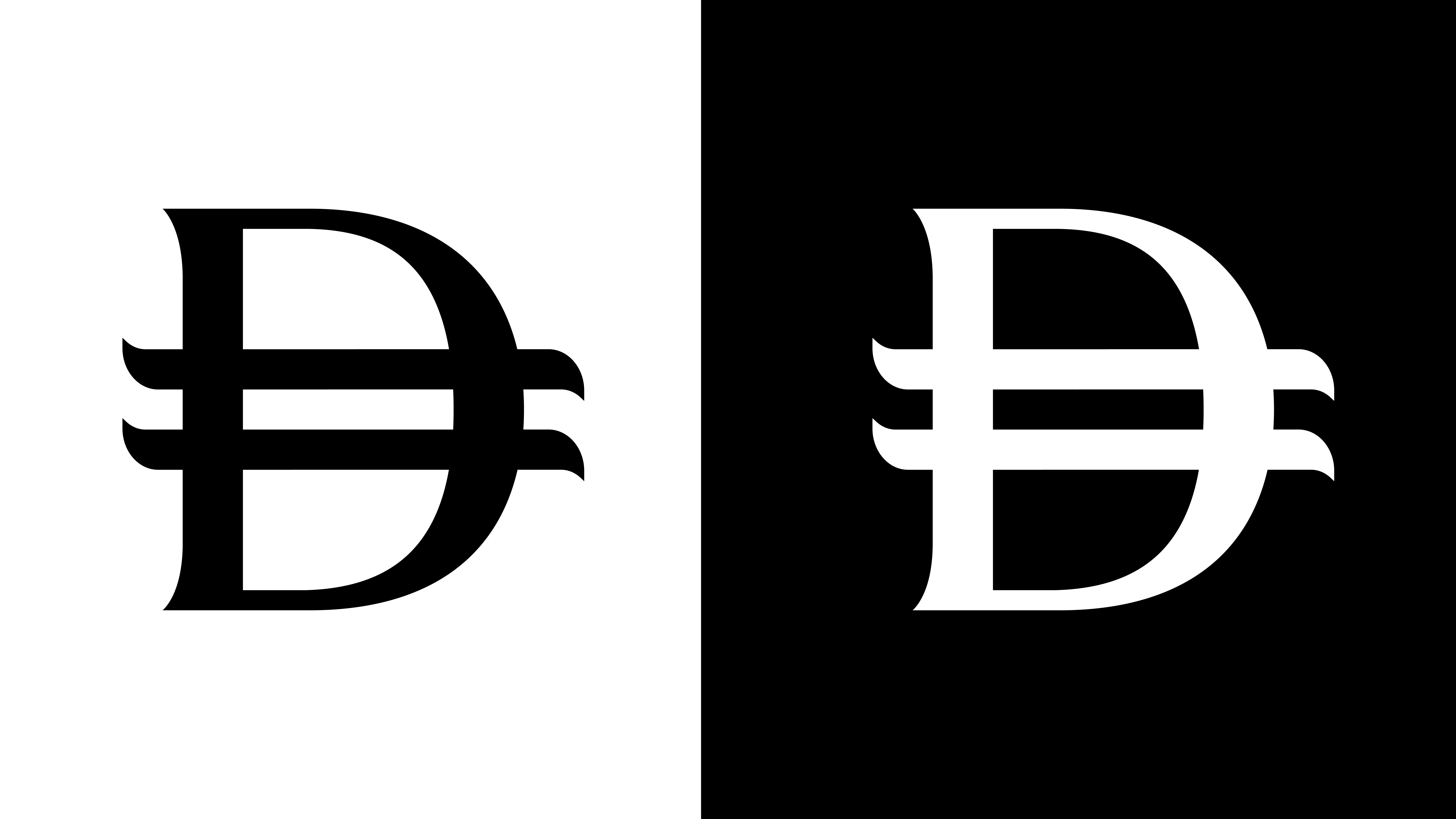
The Central Bank of the UAE (CBUAE) unveiled a new official symbol for the UAE Dirham on 27 March 2025, giving the country's currency a distinct visual identity for physical and digital use. The symbol is based on the letter ‘D’ from Dirham and features two horizontal lines representing the stability of the currency.
The change is more than a visual update. CBUAE says the new Dirham symbol is intended for use across receipts, invoices, price tags, online shopping, cheques, ATMs, banking applications, accounting systems and other financial platforms.
For businesses, however, there is an important distinction between the UAE Dirham symbol, the AED currency code and the commonly used Arabic abbreviation د.إ. Understanding these differences can help businesses use the right representation across invoices, financial records, Excel sheets and digital systems.
UAE currency quick facts: Symbol, code and full form
Here are the essential details on the UAE currency:
|
Question |
Answer |
|
UAE currency name |
UAE Dirham |
|
UAE currency code |
AED |
|
AED full form |
United Arab Emirates dirham |
|
Common short form |
AED / Dirham |
|
New Dirham symbol |
Official currency symbol introduced by CBUAE (see below) |
|
Arabic abbreviation |
د.إ |
|
Issuing authority |
Central Bank of the UAE |
Note: AED is the ISO 4217 currency code for the UAE Dirham. "Arab Emirates Dirham" is sometimes used as an informal expansion of AED, but United Arab Emirates dirham is the clearer and more accurate description of the currency.
AED sign, AED code and dirham symbol: What is the difference?
The terms "AED sign", "AED symbol", "dirham symbol" and "UAE currency code" are often used interchangeably, but they do not mean exactly the same thing.
|
Term |
Meaning |
Where it is used |
|
AED |
ISO 4217 currency code for the UAE Dirham |
Banking, accounting, invoices, international payments and financial systems |
|
UAE dirham symbol |
New official visual currency sign introduced by CBUAE |
Prices, invoices, receipts and digital and printed applications |
|
د.إ |
Common Arabic abbreviation for the UAE Dirham |
Arabic financial and commercial usage |
|
UAE dirham |
Name of the national currency |
General currency reference |
The distinction matters because AED is a code, not the new visual symbol. Businesses can continue using AED in systems and documents where the new symbol is not yet supported. The Unicode proposal for the new sign notes that the UAE dirham has historically been represented using AED or د.إ, while the new symbol was created to provide a dedicated typographic sign.
Why did the UAE introduce the new dirham symbol?
The new UAE Dirham symbol forms part of the country's broader efforts to strengthen the currency's identity and support its increasingly digital economy.
Strengthening the Dirham's global identity
A dedicated currency sign makes the Dirham easier to identify across financial and commercial environments. CBUAE introduced the symbol as part of its efforts to strengthen the UAE Dirham's position as a global currency and support the country's role as an international financial hub.
Supporting digital financial systems
Modern currencies need to work consistently across digital platforms. The new symbol is intended for applications ranging from banking and accounting systems to e-commerce and digital payments.
Supporting the UAE's digital economy
The symbol was announced alongside developments in the UAE's Digital Dirham programme. CBUAE has been developing the infrastructure and digital wallet ecosystem for the digital dirham, including applications for retail and wholesale use.
Aligning with international financial standards
The introduction of a dedicated symbol also supports greater consistency in how the UAE currency is represented internationally. The announcement was made in conjunction with the UAE joining the FX Global Code, reinforcing the country's focus on international financial-market standards.
When will the new UAE dirham symbol be available?
The CBUAE unveiled the symbol in March 2025, but an officially designed symbol does not automatically become available as a standard character across every computer, application or accounting platform.
A major development came in 2026. The Unicode Technical Committee accepted the UAE DIRHAM SIGN for encoding in Unicode 18.0, with the character assigned the code point U+20C3. Unicode 18.0 is scheduled for release in September 2026. This is an important update to older information stating that the symbol was still awaiting Unicode approval.
However, Unicode encoding is only one part of widespread adoption. Fonts, operating systems, applications and accounting platforms also need to implement the character. The Unicode Consortium notes that vendors can begin working with the character information, but product updates should follow the formal Unicode 18.0 release.
How to use dirham symbol in Excel
Here’s how you can add and use it for invoices, reports and financial records.
Using AED as text
The simplest option is to display amounts as:
AED 1,000.00
This is easy to understand and remains suitable for business reports, invoices and financial statements.
Using a custom number format
For numeric cells, you can create a custom format that displays AED before the amount.
For example:
AED #,##0.00
This keeps the underlying cell value numeric while displaying the currency code alongside the amount.
Using the Arabic abbreviation
Where appropriate for Arabic-language documents, businesses can use:
د.إ
Using the new Dirham symbol after software support
Once Unicode 18.0 is released and the relevant fonts, operating systems and Excel versions support U+20C3, businesses can use the new Dirham sign directly in spreadsheets and templates.
The important point is that Unicode approval does not guarantee immediate Excel support. Businesses should confirm that their specific Excel version, operating system and fonts can display the character correctly before replacing established AED formats.
How the New UAE Dirham Symbol Will Impact Businesses in UAE
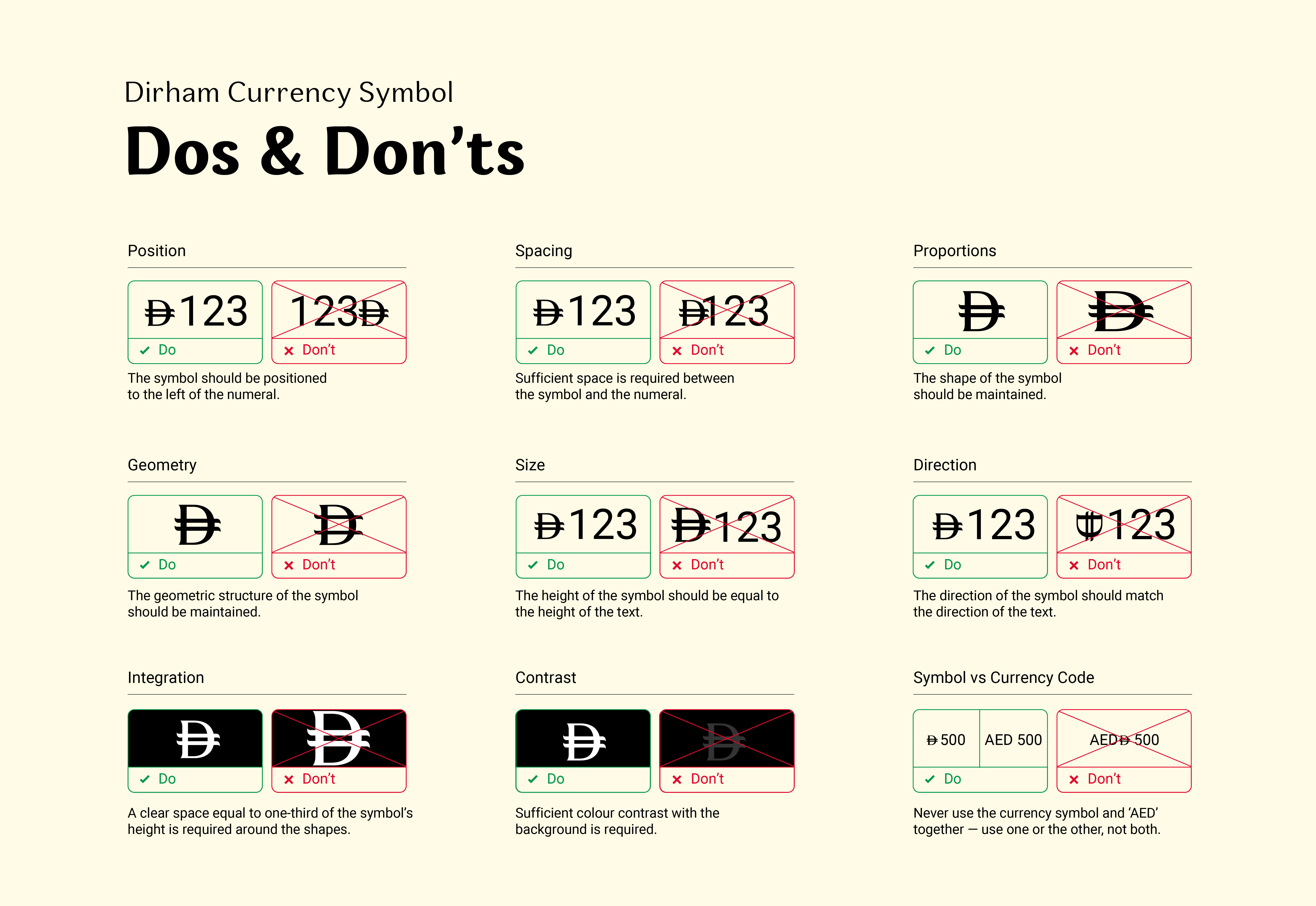
The new symbol is expected to influence several areas of day-to-day business operations.
Updating invoices and financial documents
CBUAE specifically identifies invoices, receipts, price tags and cheques among the applications for the new currency symbol. Businesses may therefore need to update templates and document formats as software support becomes available.
Updating accounting and ERP systems
Accounting systems, billing platforms and ERP software will need appropriate font and character support to display the new symbol correctly. For businesses, the transition is not simply about replacing "AED" with a new character. The symbol must be correctly stored, displayed, printed, exported and exchanged between systems.
Updating price displays
Retailers and other customer-facing businesses may eventually use the new sign on price tags, websites, e-commerce platforms and digital displays.
CBUAE has specifically stated that the symbol is intended for price tags and online shopping, among other applications.
Maintaining compatibility with existing data
Businesses should not immediately remove AED from historical records or system integrations. AED remains the recognised ISO currency code and is likely to remain important for banking, financial reporting, APIs and international transactions.
A sensible approach is to support the new symbol for visual presentation while retaining AED as the currency code wherever systems require an ISO 4217 identifier.
Preparing for digital payments
The new symbol is also associated with the UAE's wider digital-currency and financial infrastructure initiatives. CBUAE has developed the Digital Dirham ecosystem, including a digital wallet, as part of the country's digital transformation of payments.
However, businesses should distinguish between the new Dirham symbol and the Digital Dirham. The symbol is a currency representation, while the Digital Dirham is a digital form of the UAE currency. They are related initiatives, but they are not the same thing.
New UAE dirham notes and currency updates
The new UAE Dirham symbol and banknotes are separate subjects.
The symbol is a visual representation of the UAE's currency that can be used on invoices, receipts, price tags, accounting systems and digital platforms. Banknotes, on the other hand, are physical currency issued and circulated under the authority of the Central Bank of the UAE. CBUAE maintains separate information on circulated currency and the new Dirham symbol.
Businesses searching for "new Dirham notes" or "AED new notes" should therefore not confuse a change in currency representation with the introduction or redesign of physical banknotes.
For most businesses, the more immediate concern is ensuring that invoices, accounting records, price displays, spreadsheets and software can correctly handle the new symbol as technical support becomes available.
How TallyPrime supports UAE dirham symbol in business records
The introduction of a new currency symbol has practical implications for accounting and business-management software. Businesses need their systems to interpret currency data consistently when transactions are entered manually or imported from external applications.
TallyPrime is designed to correctly interpret and display dirham symbols when transactions are pushed from third-party applications or integrated systems. This helps businesses maintain consistency when recording transactions, preparing invoices and reviewing financial reports.
By keeping currency information clearly represented within your accounts, TallyPrime can help reduce confusion caused by inconsistent currency symbols and make financial records easier to read and manage.
Conclusion
The technical rollout of the new symbol is progressing. The UAE dirham Sign has been accepted for Unicode 18.0 as U+20C3, scheduled for release in September 2026. However, widespread use will depend on subsequent support from fonts, operating systems and individual applications.
Businesses can therefore prepare by reviewing invoice templates, Excel sheets, accounting software, ERP integrations and other systems that display currency information. Maintaining AED as the underlying currency code while adopting the new symbol as software support becomes available can help businesses transition without compromising compatibility.